 FabricKnowledge Lab
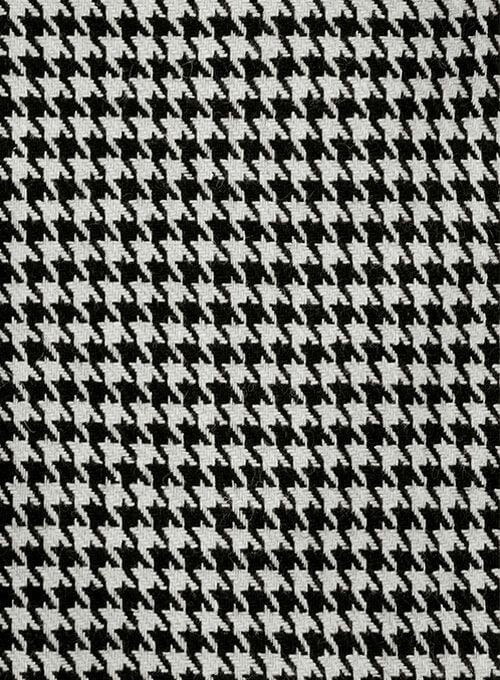
A textured cloth associated with outerwear
Tweed is commonly associated with wool yarn, a substantial woven surface, and clothing such as jackets, coats, trousers, and caps. Sewport's guide connects it with Scottish clothing traditions and later British tailoring. Those associations explain part of its visual identity, but tweed is not one unchanging pattern. Its appearance can vary with yarn thickness, fiber blending, color mixtures, weave, and finishing. A lightly colored checked jacket and a dark herringbone cap can both fit within the broader family while presenting different textures and uses. The full fabric specification is therefore more informative than the name alone.
Color can be built before weaving
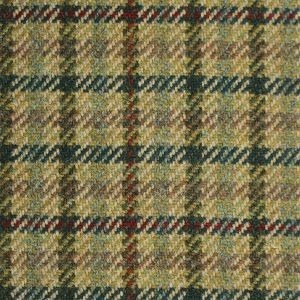
The guide discusses cleaning, carding, spinning, dyeing, and blending wool during production. Combining differently colored material within yarn and arranging yarns during weaving provides more than one route to a complex surface. This helps explain why tweed may reveal small color variations when examined closely, even when it appears uniform from a distance. Those variations are textile design choices rather than evidence that every sheep breed produces a ready-made pattern. The woven arrangement and the prepared yarn work together to create the final visual effect, with finishing contributing to the handle and appearance.
Pattern names describe different arrangements
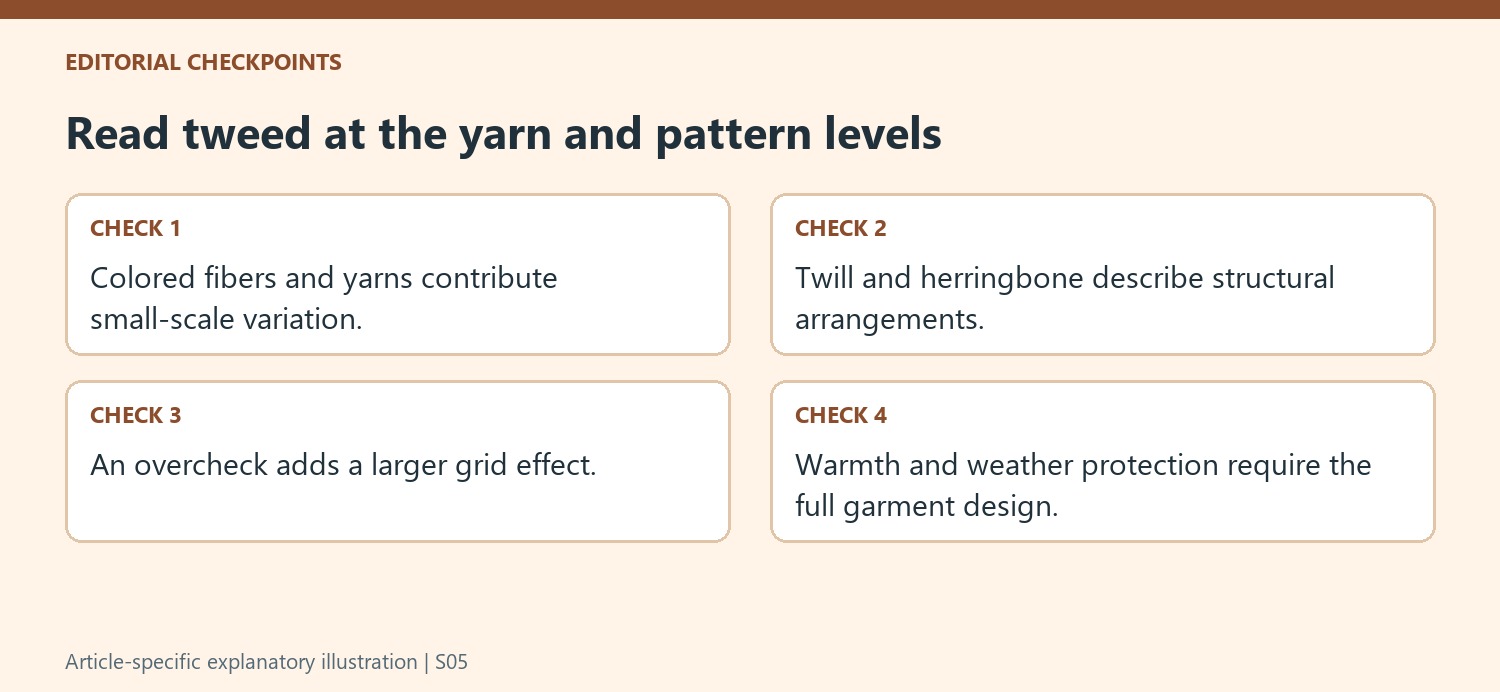
Sewport lists twill, herringbone, checks, stripes, overchecks, barleycorn, and houndstooth among tweed-related patterns. An overcheck can add a larger grid over an underlying surface, while herringbone produces a directional zigzag effect. These descriptions help buyers compare cloth without assuming that pattern alone determines performance. A jacket's weather protection, warmth, and comfort also depend on weight, density, lining, and garment construction. Tweed's traditional outdoor association is useful context, but it should not be converted into a waterproofing guarantee or a universal care instruction for every modern fabric sold under the name.
Look at the color at more than one scale
A tweed may read as one overall tone from a distance while showing several colored fibers or yarn effects on closer inspection. The source's discussion of dyeing, mixing, and yarn preparation helps explain that layered appearance. The large-scale pattern is another design level, established through the woven arrangement. A broad check can therefore sit over a subtly mixed ground without either effect being a printed imitation of the other. For a purchaser choosing cloth for a jacket or cap, both scales matter: the small texture contributes to the surface character, while the repeated pattern influences the overall visual rhythm. A single distant photograph may not convey both features equally well.
Pattern names help organize comparisons
Herringbone, stripes, checks, and overchecks give buyers a vocabulary for describing visibly different arrangements. Herringbone emphasizes directional reversals, while an overcheck adds a larger grid to an underlying cloth. The source also lists barleycorn and houndstooth, showing that tweed extends well beyond a single traditional look. These names are useful when selecting appearance, but they do not establish that two fabrics have the same weight or fiber quality. A close comparison should keep pattern, composition, and texture together. That makes it possible to choose between two similarly colored options without assuming that a familiar pattern name guarantees identical drape, warmth, or suitability for the intended garment.
Tailoring and outdoor associations still need a product specification
The guide links tweed with jackets, coats, trousers, and several cap styles. Those applications explain its strong cultural association with substantial outerwear and tailoring, but the finished garment remains a constructed object. A lined coat and an unlined cap use different quantities and arrangements of cloth and may contain different additional materials. Likewise, the traditional association with weather resistance should not be translated into a waterproof certification for every modern tweed. A practical specification should identify weight, density, composition, finish, and intended role before making a performance claim. The final item's instructions should govern cleaning, since its lining, structure, trims, and other components can matter as much as the outer fabric's name.









Comments
0