 FabricKnowledge Lab
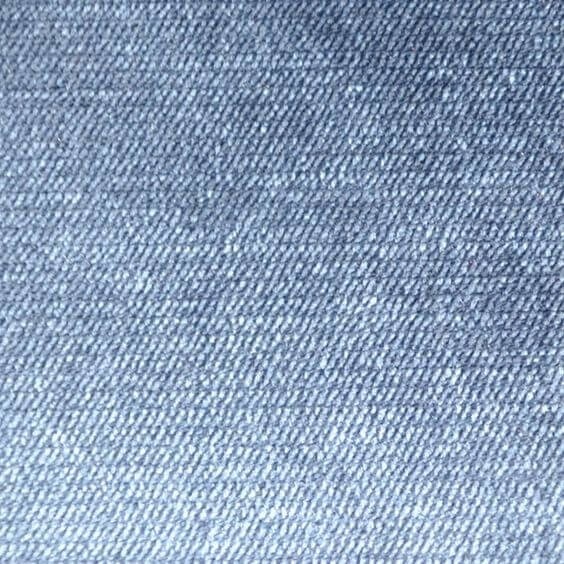
Start with the woven cloth
Denim is closely associated with jeans, but a garment category and a fabric construction are different things. Sewport's guide describes a warp-faced woven textile commonly made with cotton yarn. Its familiar diagonal appearance connects it with the twill family. Blue is an important part of denim's cultural identity, yet color alone does not establish the structure or composition. A blue fabric can be knitted, plain woven, or made from several fibers without becoming the same material as a traditional denim. Looking at the weave and the complete composition gives a clearer starting point than relying on color.
Fiber preparation and yarn coloring
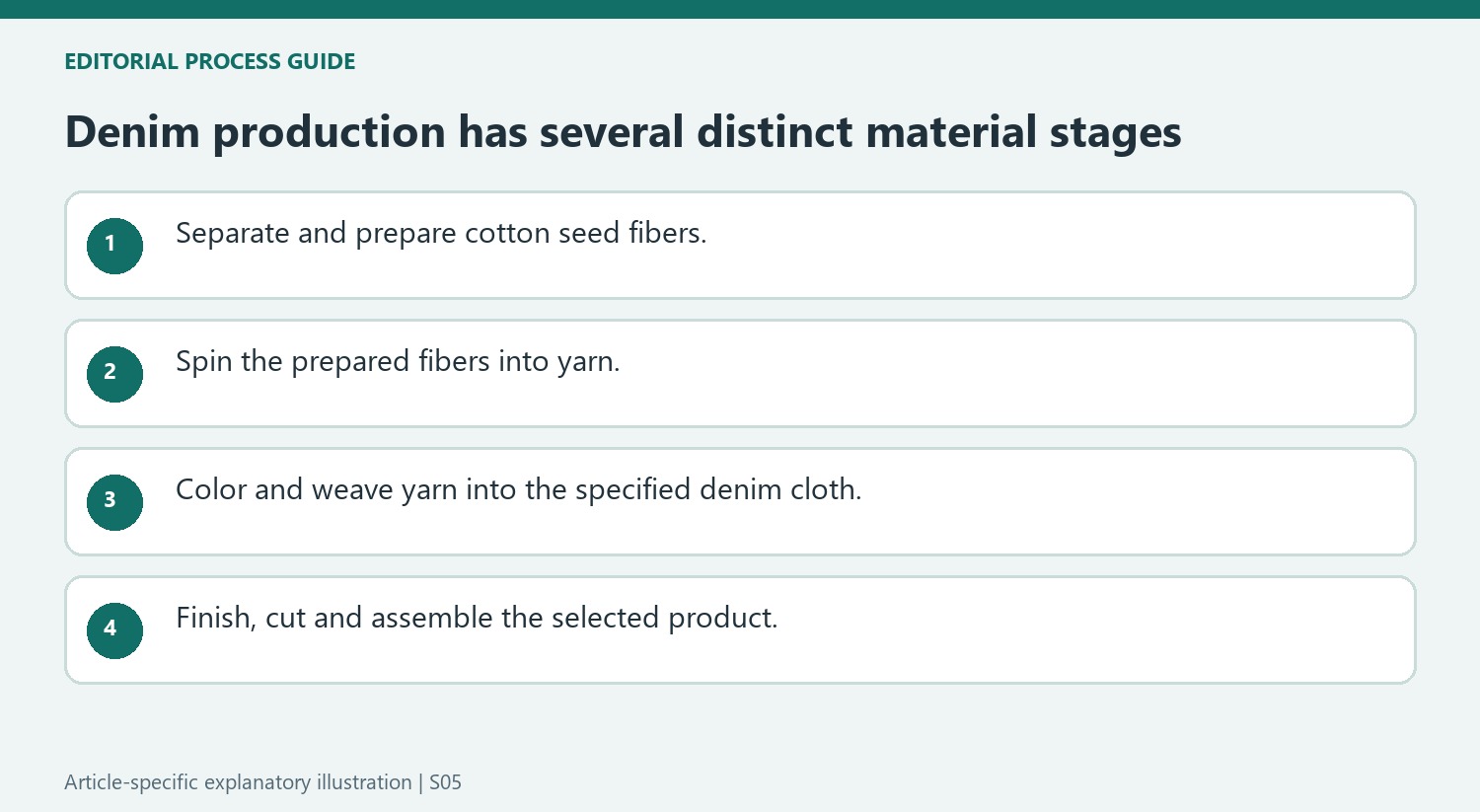
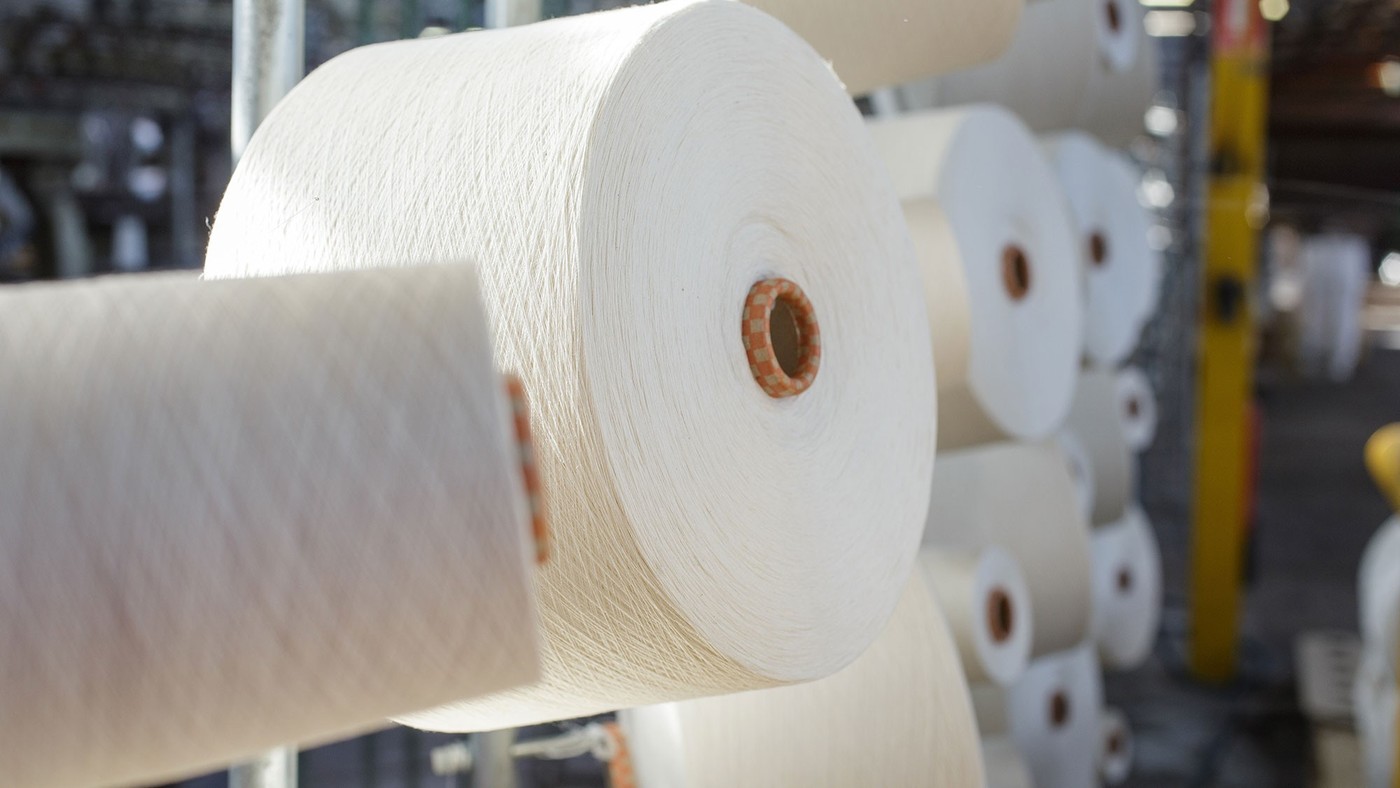
The manufacturing account begins with cotton fibers being separated from seeds, cleaned, aligned, and spun into yarn. Dyeing and other treatments can take place before the yarn is woven into cloth. The guide then describes producing the warp-faced fabric in lengths that can be cut into finished goods. These stages distinguish the raw fiber, the dyed yarn, the woven fabric, and the garment. Each stage offers choices that influence the result, so two products described as denim may differ in yarn, weight, finish, and any additional fibers included for a particular purpose.
One fabric family supports many products
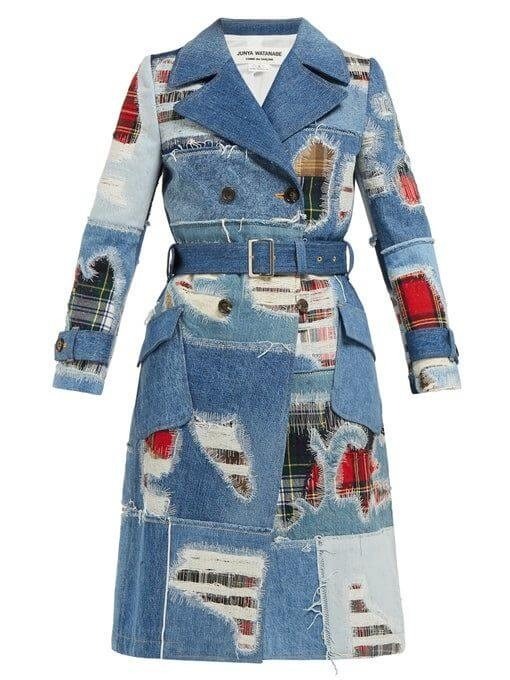
Jeans are the best-known application, but the source lists jackets, skirts, shirts, hats, bags, and household items as well. Those uses involve different requirements for thickness, flexibility, and construction. The guide also discusses the appeal of raw denim and the many variations created through blending and finishing. Such variety means that the denim name cannot prescribe a universal washing method or guarantee a particular fit. A useful product description should identify the full composition and intended use, while the garment's own care information should guide treatment of its particular dyes, finishes, and construction.
Keep cotton, yarn, cloth, and clothing in order
The source's manufacturing outline begins with the cotton plant's seed fibers and proceeds through cleaning and spinning before weaving. These are different material forms, not interchangeable names for the same production stage. A cotton origin does not specify which yarn was made, and a dyed yarn does not yet establish a finished denim fabric. After weaving, the cloth can be supplied in lengths for cutting and assembly into several kinds of products. Keeping that order visible is useful when discussing a manufacturing claim: fiber sourcing, yarn coloration, fabric construction, and garment finishing each concern a different point in the chain. A statement about one should not silently be extended to every subsequent operation.
Stretch and surface effects describe separate choices
Sewport identifies stretch denim with the use of an elastic fiber alongside cotton. That composition choice should be distinguished from a distressed or washed appearance, which concerns surface treatment and finishing. A product can combine several choices at once, so its visual effect alone does not establish whether it contains elastane or how much. The guide's wide range of denim descriptions illustrates a design family rather than one fixed recipe. For a useful comparison, retain the full blend, fabric weight, and finish beside the style name. A close-fitting jean and a structured jacket may both use denim but call for different material behavior, even when their colors appear similar in photographs.
Familiarity does not create one universal care schedule
Denim's everyday status can make it tempting to apply the same washing advice to every garment. The source's examples include trousers, shirts, accessories, and household products, however, with different compositions and finishes. A raw-looking cloth, a washed garment, and a blended stretch textile should be identified by their actual labels rather than treated as identical because all look like denim. Care should follow the finished item's instructions, including any requirements attached to added materials or decorative components. The guide offers a broad introduction to the fabric family; it is not a substitute for the manufacturer’s treatment directions. That distinction helps preserve a practical boundary between a material overview and advice for a particular garment.




Comments
0