 FabricKnowledge Lab
Nine looks reconsider a familiar fabric
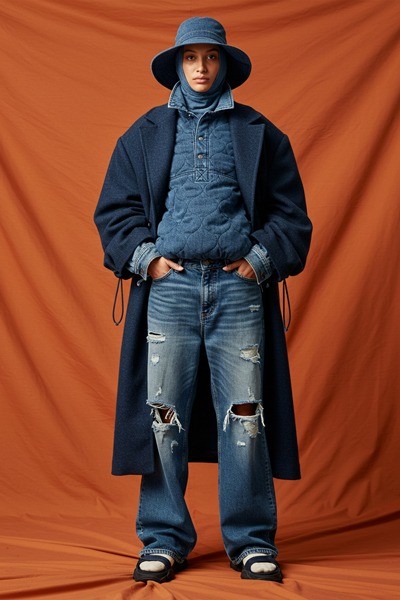
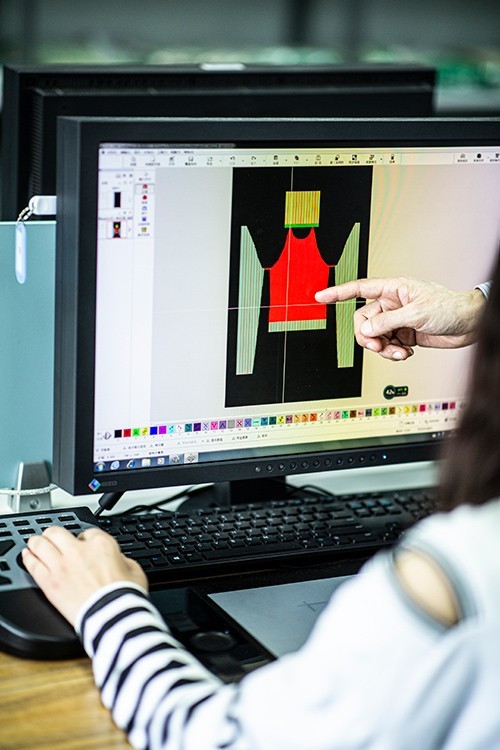
Woolmark's Wool Futures project presents a nine-look collection by designer Edward Crutchley that explores Merino wool in denim-inspired clothing. The account describes AI-assisted design alongside textile development, with references ranging from historic indigo clothing to the functional layering used by Australian wool growers. Rather than treating denim only as a familiar pair of cotton jeans, the project asks how wool-rich versions can work in outerwear and streetwear. Crutchley identifies coats and padded jackets as an area where the material offered more potential than he had initially expected.
Specific blends support different garments
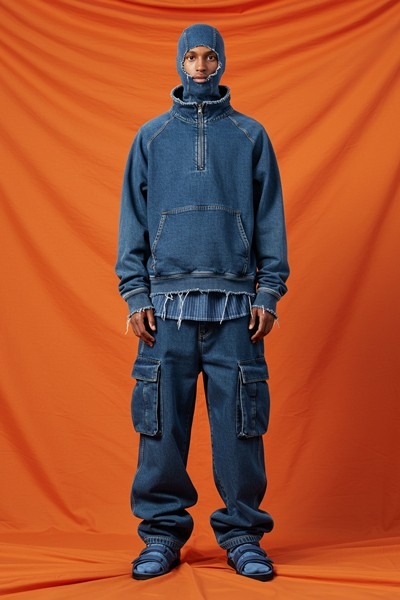
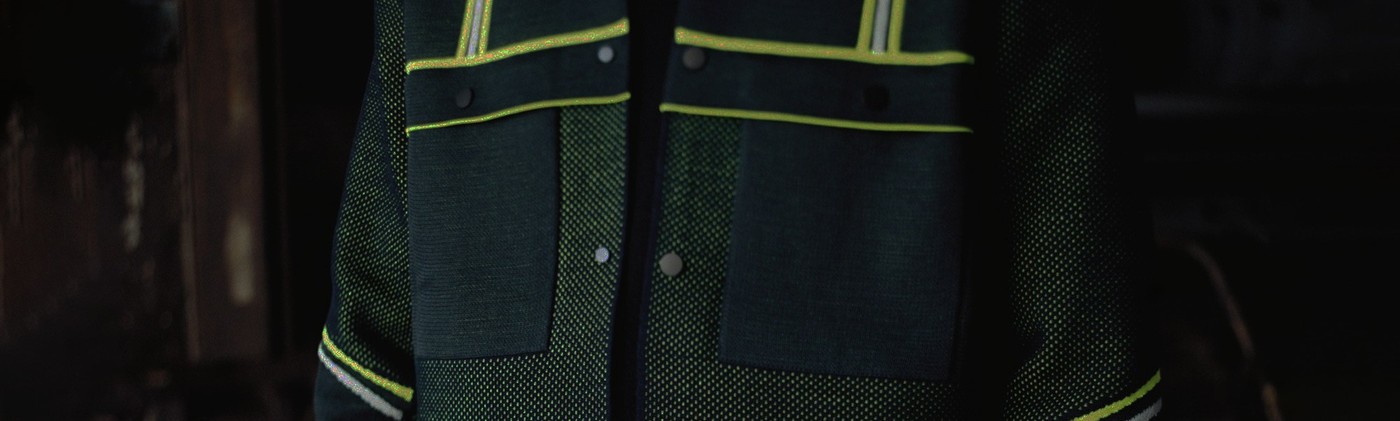
The collection description gives concrete examples of material and construction choices. A quilted overshirt uses wool-and-cotton denim, while a drawstring snood uses a lighter wool-and-cotton chambray. Cargo trousers combine articulated knees with laser-washed aging, and a six-panel fisherman's hat uses recycled wool-and-polyester twill. Other looks include a wool-denim trench and a padded wool-and-hemp pullover. These details show that the collection is not based on one interchangeable fabric. The designer selected different blends, weights, and finishing effects to suit the silhouette and role of each garment.
A toolkit links ideas with textile development
Woolmark connects the project with The Wool Lab Denim Edition and a Wool Denim Toolkit developed with textile specialists. The resources address subjects including fiber selection and dye techniques, giving manufacturers and designers a route to explore the material beyond a concept image. The collection demonstrates possibilities rather than establishing universal performance for every wool-denim blend. Its useful contribution is the combination of identifiable garment features and particular textile choices. A coat, a hat, and a lightweight layer each make a different case for how wool can participate in a denim-related design vocabulary.
Outerwear provides the project's design question
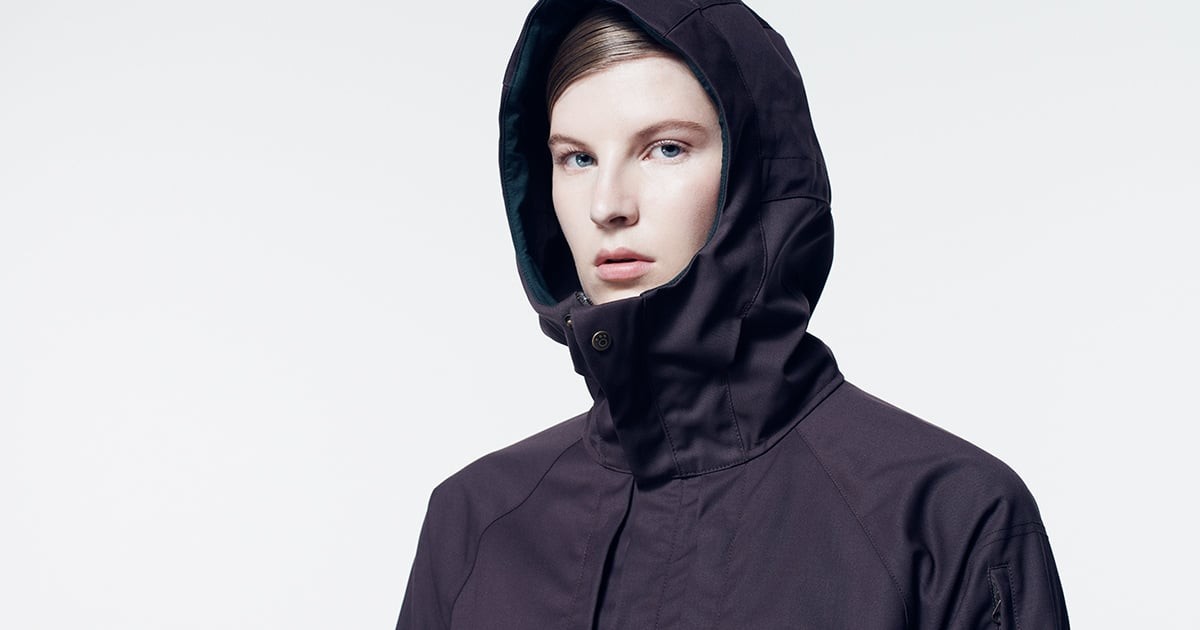
Crutchley's account frames coats and padded jackets as a challenge for wool denim within a streetwear vocabulary. That focus gives the nine looks a purpose beyond replacing cotton with another fiber in a familiar pair of jeans. A dropped-shoulder trench, a padded duffle coat, and a cinched blouson explore volume, layering, and construction in different ways. The source connects these proposals with denim's workwear and youth-culture associations while drawing on wool's drape and structure. The result is best read as a collection of design experiments. It demonstrates what the designer and textile collaborators chose to explore, rather than establishing that every wool-denim fabric will suit every outerwear silhouette.
The details show why one blend cannot describe the collection
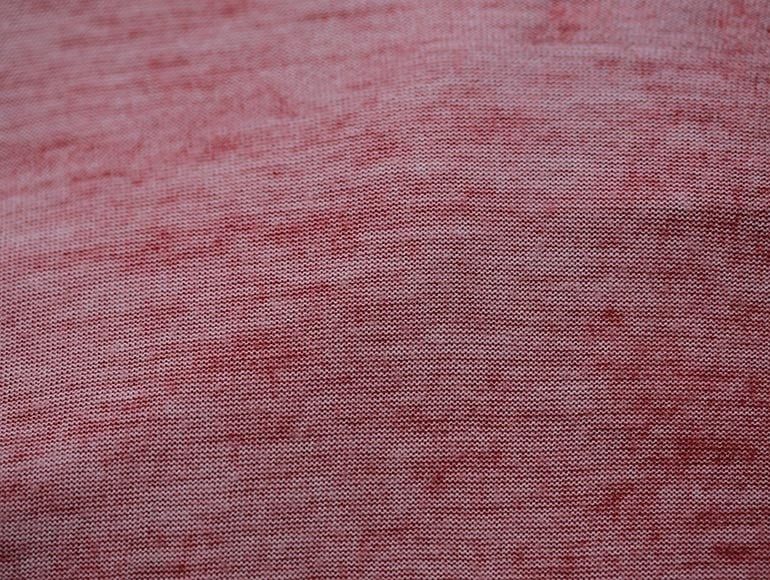
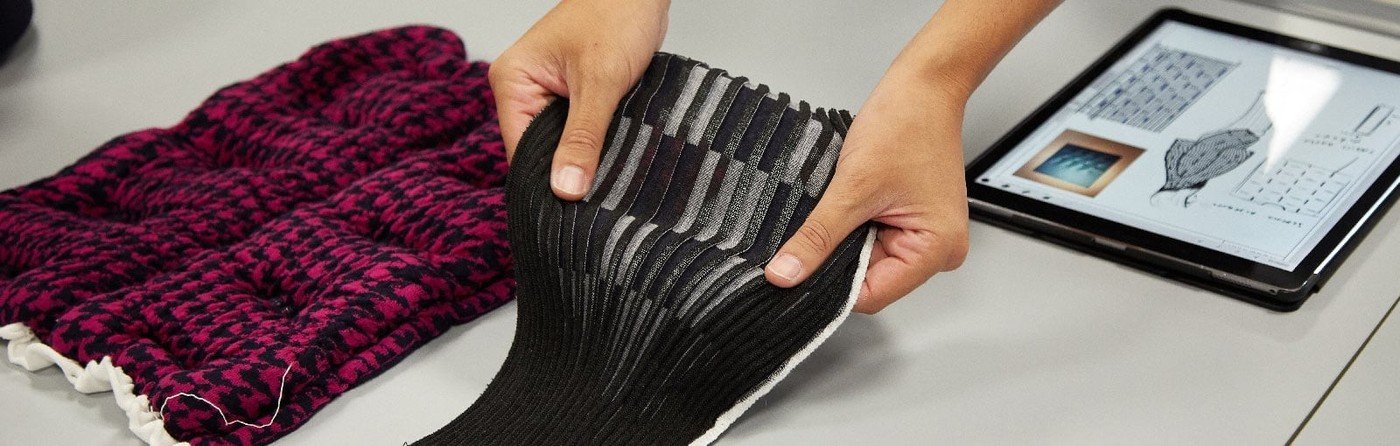
The source identifies wool-and-cotton chambray in a quilted pullover, wool-and-linen denim in cropped cargo trousers, and a wool, cotton, and nylon blend in an oversized hooded smock. It also includes a denim-effect Milano jersey for cycling shorts. These descriptions are valuable because they preserve the distinction between a woven denim proposal and a knitted fabric that borrows denim's appearance. Similarly, the cargo trousers' articulated knees are garment features, while laser-washed aging is a finishing effect. Reading each layer of the description separately reveals how composition, textile structure, surface treatment, and pattern cutting contribute to the look instead of attributing the entire result to wool alone.
Technical resources connect inspiration with a development path
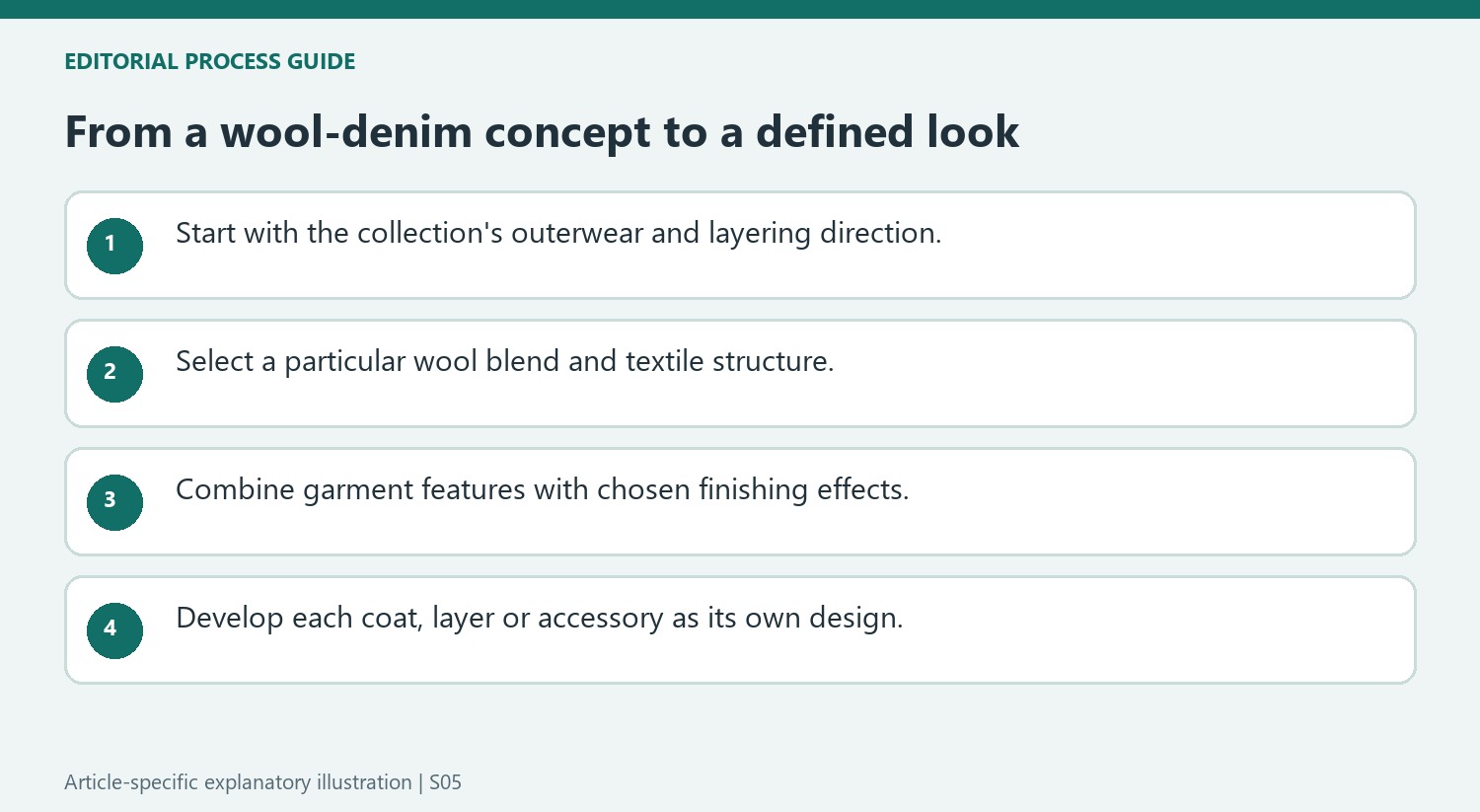
The Wool Lab Denim Edition and its accompanying toolkit are presented as resources for designers and manufacturers. The source mentions fiber selection, dye techniques, and circular design practices among their topics. Those areas explain why a visual concept still needs textile knowledge before becoming a reproducible product. AI-assisted design appears in the project's creative account, but it does not replace the identified material and construction choices in the collection descriptions. A designer exploring a similar direction can begin with a desired silhouette, investigate a suitable wool blend and structure, and then develop the relevant finishing and assembly. The collection supplies examples and a vocabulary for that work, while its actual fabrics remain specific development choices. The listed garment details provide concrete starting points for discussion, rather than a single standard formula for all wool-rich denim collections.
References
- Wool Futures: The Future of Denim. The Woolmark Company; Edward Crutchley.



Comments
0