 FabricKnowledge Lab
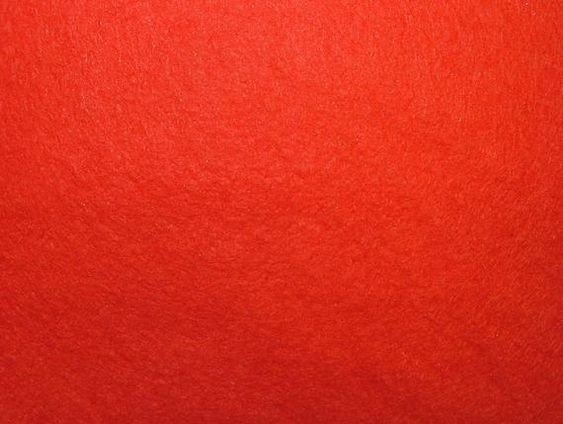
A mat of fibers rather than interlaced yarn
Felt is formed by bringing fibers together into a consolidated textile rather than arranging spun yarns in a woven or knitted structure. Sewport's guide discusses traditional wool and animal-fiber versions alongside manufactured-fiber examples. The distinction between structure and composition is useful here: felt names a way of building material, while wool or acrylic identifies what the material contains. Two felt sheets can therefore look similar yet differ in their raw fibers, density, thickness, and intended application. A craft supply and a hat-making material should not be treated as equivalent solely because both are sold as felt.
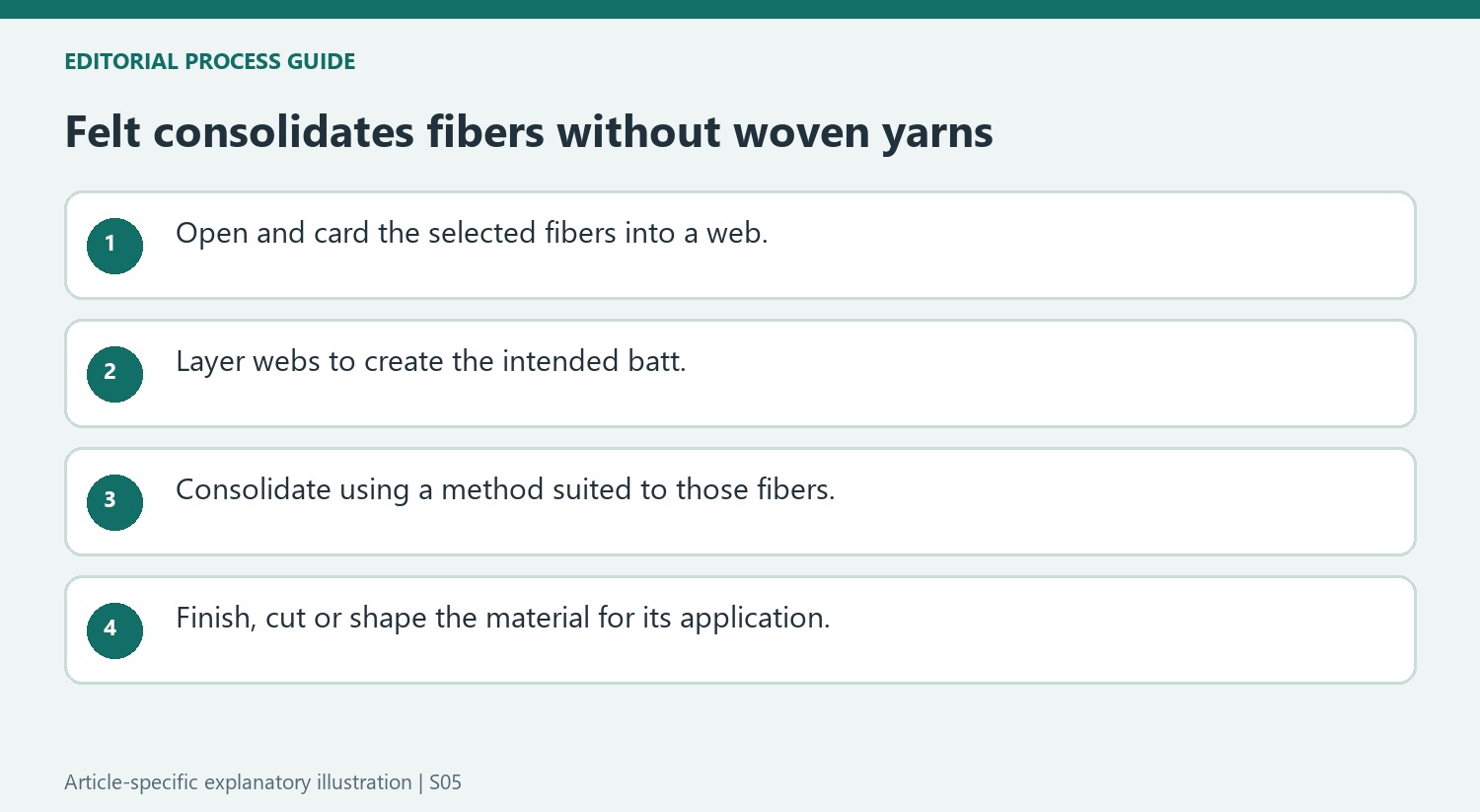
Web preparation and consolidation
The production account describes opening and carding fibers into a loose web, then layering webs to make a thicker batt. It discusses heat, moisture, and pressure as part of consolidating wool-based material into a more compact sheet. These stages explain how a loose mass becomes something that can be cut, shaped, or supplied in rolls. They should not be read as a universal recipe for every synthetic felt, because different fiber types and bonding methods require different processing. The important shared idea is the direct assembly of fibers into a textile body without first creating the yarn interlacings of ordinary cloth.
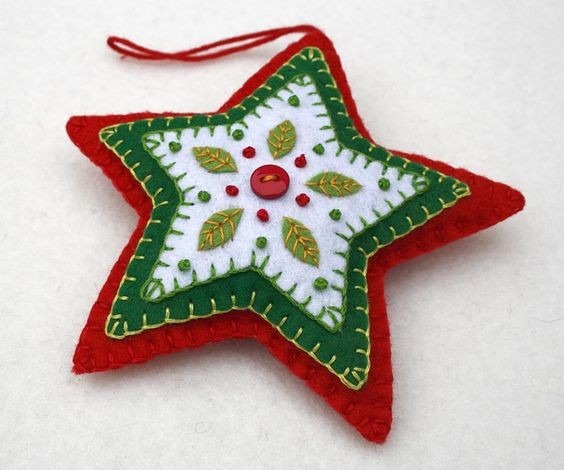
Products range from hats to craft sheets
Sewport lists hats, boot liners, bags, decorative cushions, and craft materials among felt's uses. The source also discusses historical applications in coverings and household articles. These examples show the value of a material that can be cut or shaped for different purposes. However, the word felt alone does not guarantee insulation, fire behavior, skin comfort, or a particular environmental profile. Those claims depend on composition and construction. For a clear purchase specification, identify the actual fibers, sheet thickness, density, and intended use, then follow the care or handling guidance attached to that product.
A loose fiber web becomes a useful sheet
The source's opening and carding stages create a web in which individual fibers are distributed before consolidation. Layering several webs builds a batt with more material than a single thin layer. The subsequent operation turns that relatively loose assembly into a compact body that can be handled, cut, or shaped. In the wool route described, heat, moisture, and pressure are important to that transformation. This explains why felt should not be introduced as simply a very tightly woven wool cloth. Its structural starting point is a mass of fibers rather than an arrangement of warp and weft yarns, even when a finished sheet is sold in a familiar fabric-like roll.
Material and method are separate classification questions
Sewport discusses wool, fur, acrylic, and rayon among materials associated with felt. These labels identify different inputs, while descriptions such as pressed or needle felt concern manufacturing. Not every fiber responds to heat and moisture like wool, so the process must be identified alongside composition. A supplier's specification should explain the actual construction instead of borrowing one traditional route for every modern felt sheet. This distinction is useful when comparing a craft panel with an industrial material or a hat body. Similar color and thickness do not prove identical bonding, density, or behavior. The appropriate comparison begins with the ingredients and method, then moves to the requirements of the intended product.
Cutting and forming lead to different applications
The guide's examples include flat craft sheets as well as shaped hats, boot liners, and bags. These applications use different aspects of the consolidated material. A flat decoration may only need to hold its cut outline, while a shaped article has to maintain a form in use and may include seams, linings, or other components. The felt name alone does not describe those requirements. Thickness and density are therefore useful purchasing details, together with the precise fiber content and any finishing. Claims about fire behavior, warmth, or specialist suitability should come from evidence for the supplied material. They should not be inferred from a familiar wool example and extended automatically to an unrelated manufactured-fiber sheet.
References
- Felt fabric guide. Sewport.






Comments
0