 FabricKnowledge Lab
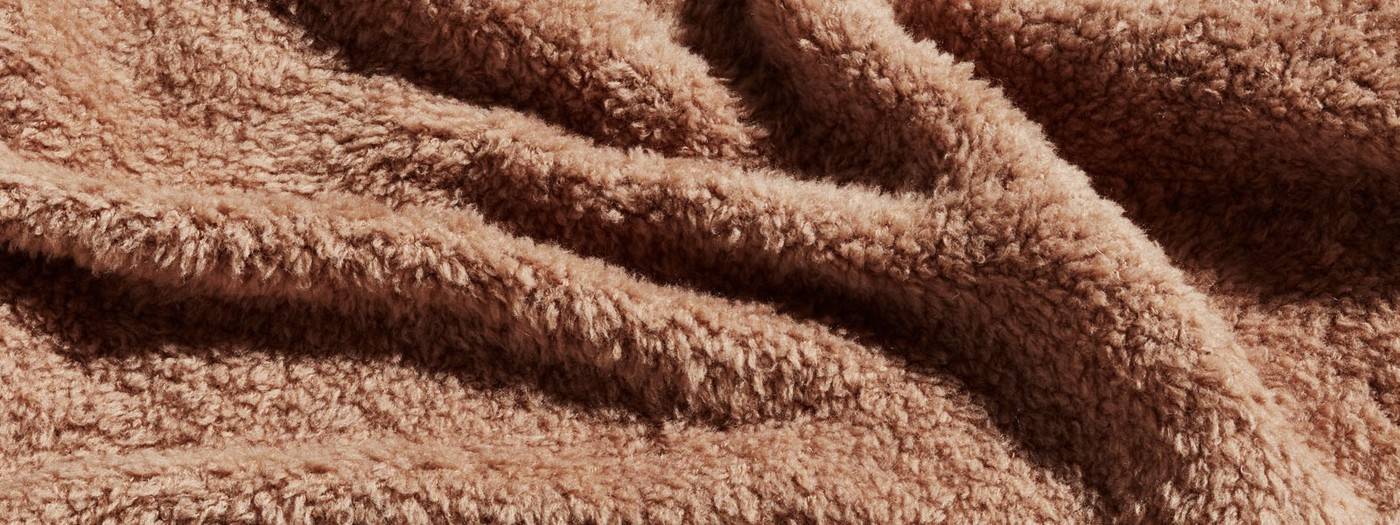
A pile effect built from yarn
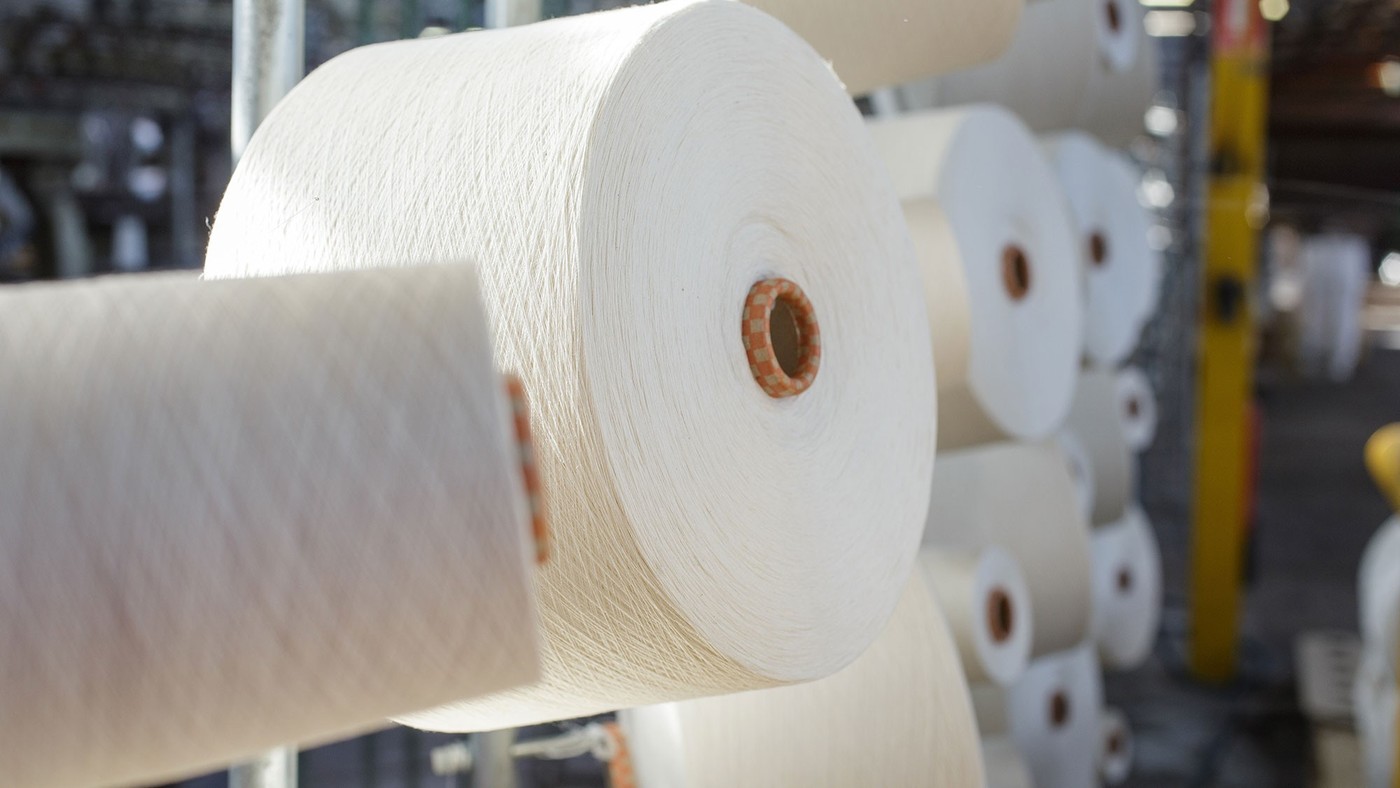
Woolmark describes wool faux fur as a textile made from Merino yarn that is engineered to resemble fur or shearling. Its construction differs from a pelt, where wool or hair remains attached to animal skin. In the knitted version, yarn supplies the raised surface and a textile structure supports it. This distinction is particularly useful when comparing labels that use fleece, sherpa, shearling, or faux fur. Similar visual effects can be produced through different routes, and the complete composition and construction tell the reader more than the appearance of a fluffy surface alone.
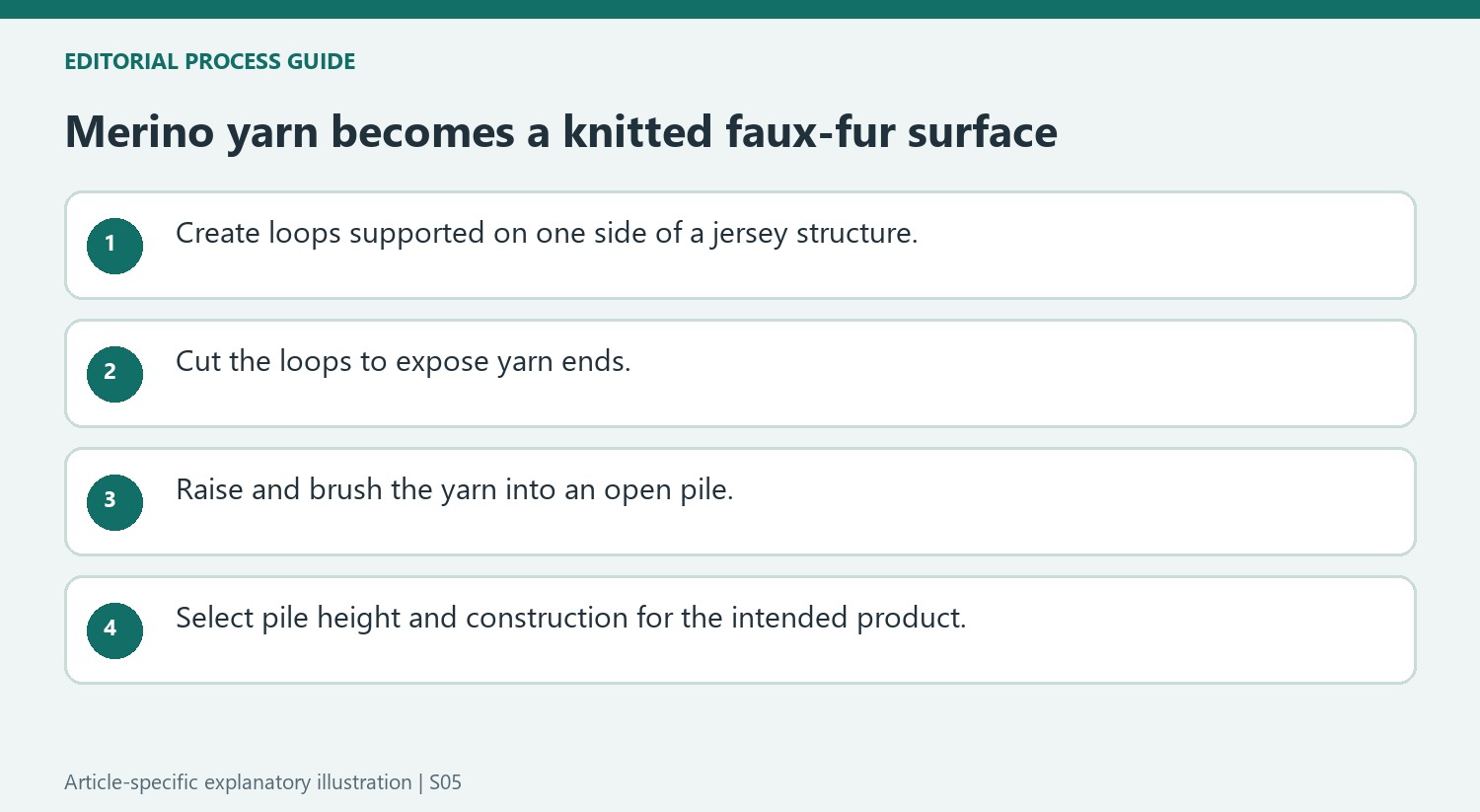
Loops are cut and brushed open
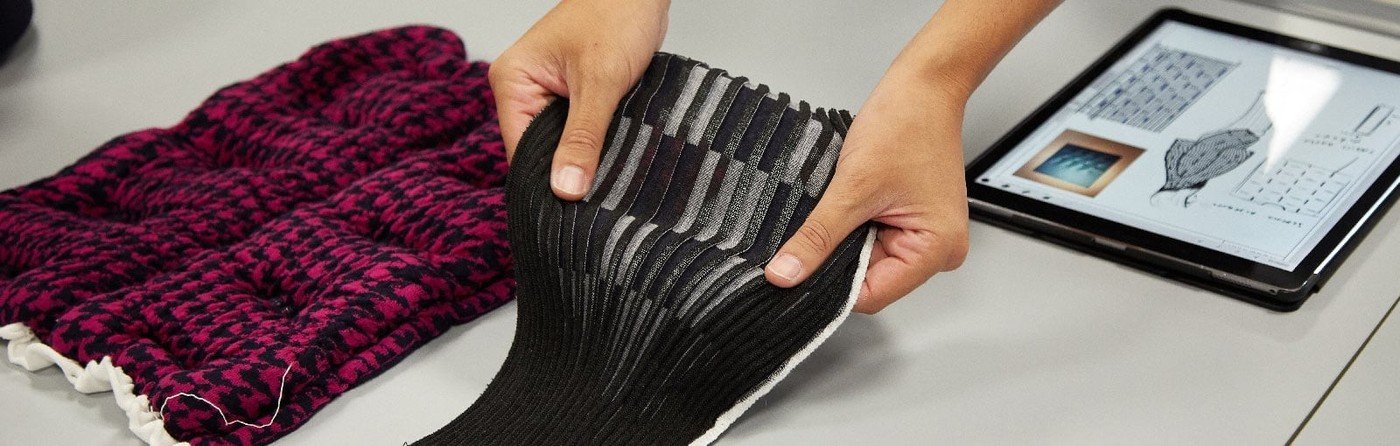
The process account starts with a jersey-knitted loop structure on one side of the fabric. The loops are cut, then the exposed yarn is raised and brushed to open it into a pile. Woolmark also lists other routes to pile fabrics, including weaving, tufting, warp knitting, and several weft-knitting methods. A short fleece pile and a heavier sherpa-style surface are examples of the range available. Pile height and the way yarn is introduced affect the resulting look, so the process should be understood as a group of related textile techniques rather than one fixed fabric recipe.
Applications extend from clothing to interiors
Woolmark lists outerwear, midlayers, linings, hats, mittens, bags, slippers, bedding, and soft furnishings as potential uses. The page connects wool's crimp with trapped air and describes moisture absorption and release as relevant material characteristics. Those properties help explain design interest, but they do not establish that every finished pile textile has identical warmth or care requirements. A backing, blend, finish, and garment construction can change the complete product. Even where a supplier promotes machine washability, the finished article's own care label should define the appropriate treatment for its specific combination of materials.
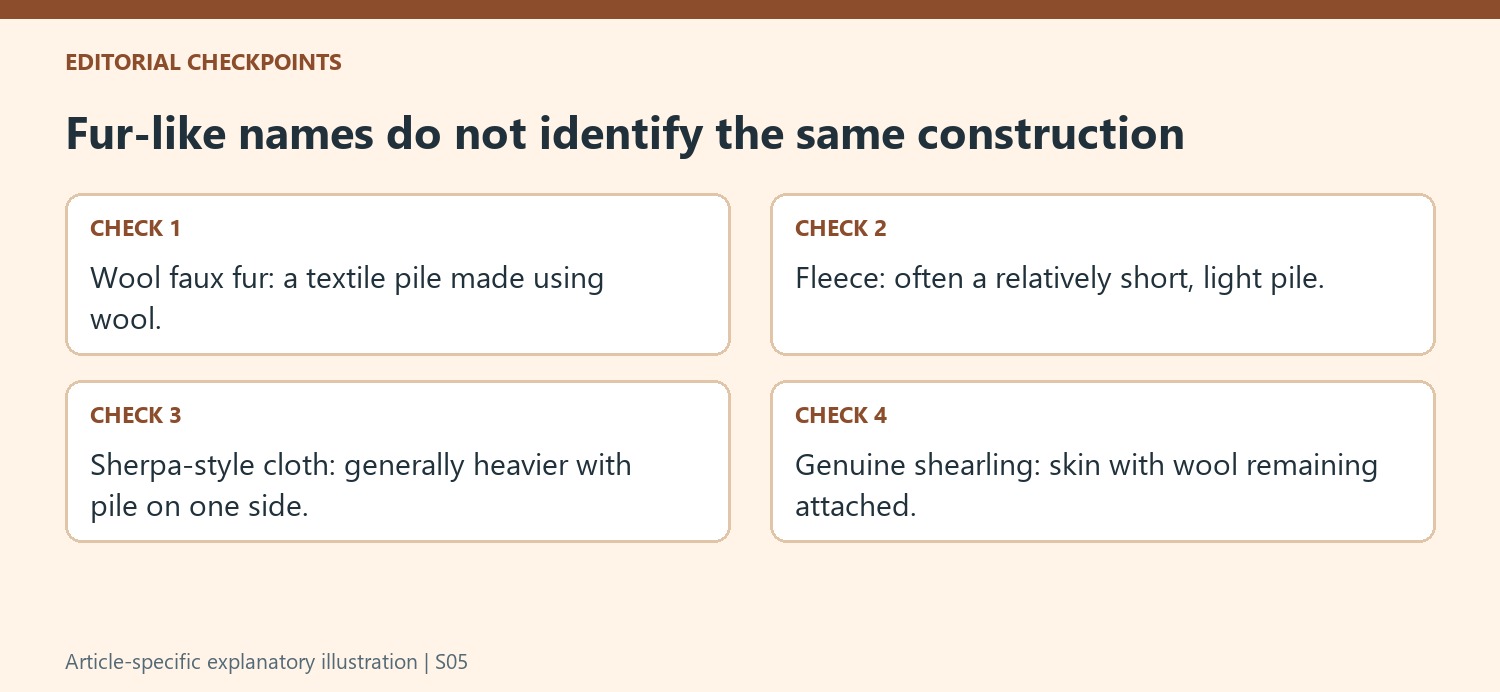
Fleece, sherpa, and shearling describe different things
Woolmark distinguishes a relatively short, lightweight fleece pile from a generally heavier sherpa-style fabric with pile concentrated on one side. It also separates genuine shearling, made from a skin with wool remaining attached, from a knitted shearling-look fleece. That distinction matters when interpreting a product name or photograph. A wool textile can imitate the visual effect of a pelt while being constructed from yarn and a supporting fabric. It is still an animal-fiber product even though it is not an animal hide. Anyone selecting the material for a particular sourcing preference should therefore read the complete composition and construction rather than inferring the manufacturing route from a fur-like surface.
There is more than one way to introduce pile
The jersey-loop example is a clear route to understanding the effect: make loops, cut them, and brush open the exposed yarn. The source also names inlay, terry or plush, and sliver-knitting techniques among common weft-knitted approaches. It lists weaving, warp knitting, and tufting as other ways to create wool pile fabrics. These alternatives explain why two plush surfaces need not share an identical base structure or manufacturing sequence. Pile height and the way the surface is supported are useful details to request from a supplier. A cropped sample illustrates the look, but a specification is needed to establish which technique and combination of materials produced the fabric.
Match the pile to the object being designed
The page's footwear example refers to related sliver-knit pile structures, often with shorter pile than a dramatic faux-fur garment. Its interiors discussion includes bedding and soft furnishings, while its apparel examples include both linings and outer layers. These are different design roles rather than evidence that one cloth is suitable for all purposes. A slipper lining, a decorative cushion, and an outerwear panel can be engineered differently even if Merino wool supplies the surface fiber. Woolmark links wool's crimp to trapped air and its moisture behavior to comfort, but complete-item performance also depends on construction. Care and suitability should therefore be established for the finished object, including its backing, seams, and any other components.
References
- Wool Faux Fur. The Woolmark Company.











Comments
0