 FabricKnowledge Lab
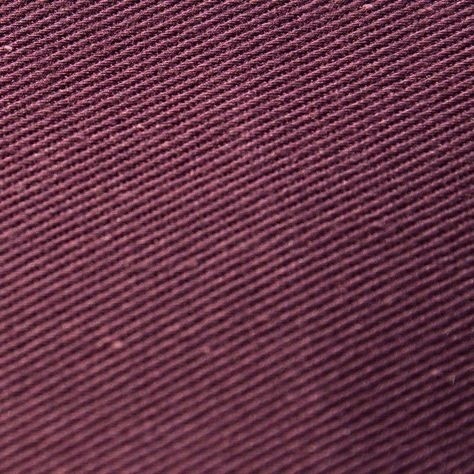
Recognize the diagonal structure
Twill is identified by diagonal lines produced through the arrangement of warp and weft yarns. Sewport places it alongside plain and satin weaves as a major structural family. The word therefore answers a construction question, rather than naming a plant, animal, or polymer. Cotton and polyester are among the fibers the guide lists for twill fabrics, but the weave is not restricted to those examples. A cotton trouser fabric and a wool tailoring fabric can both show diagonal ribs while differing in weight, handle, warmth, and intended use because their materials and specifications are different.
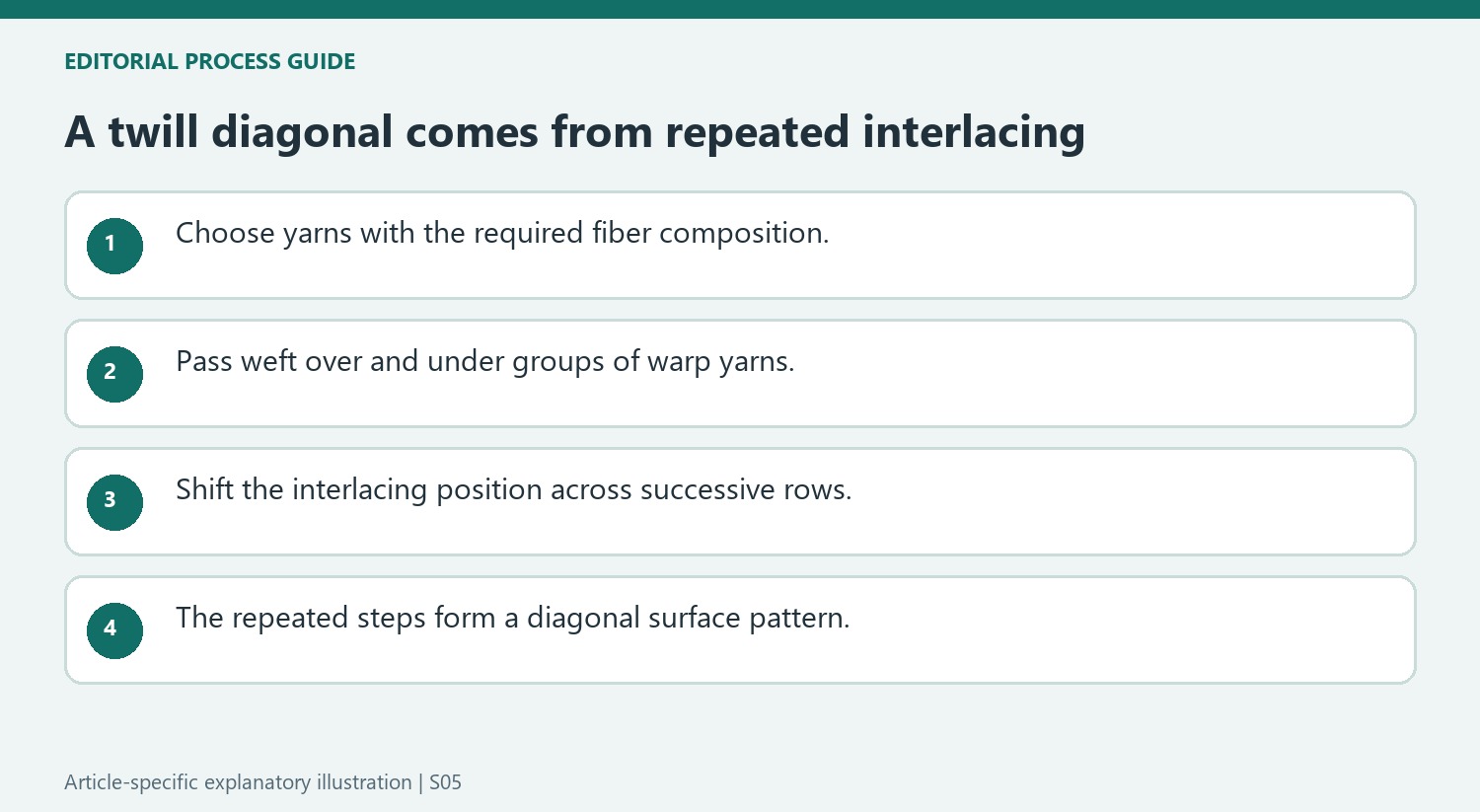
Interlacing creates a stepped pattern
The source explains that the weft passes over and under groups of warp threads in a sequence that shifts across the cloth. That offset creates the diagonal progression visible on the surface. Variations in the sequence and direction produce different patterns within the wider twill family. The guide discusses herringbone, broken twill, and diamond effects, illustrating how a basic structural idea can be developed in several directions. The pattern should be assessed alongside yarn thickness, density, and finishing: the presence of a diagonal line alone does not provide a complete measure of the fabric's durability or drape.
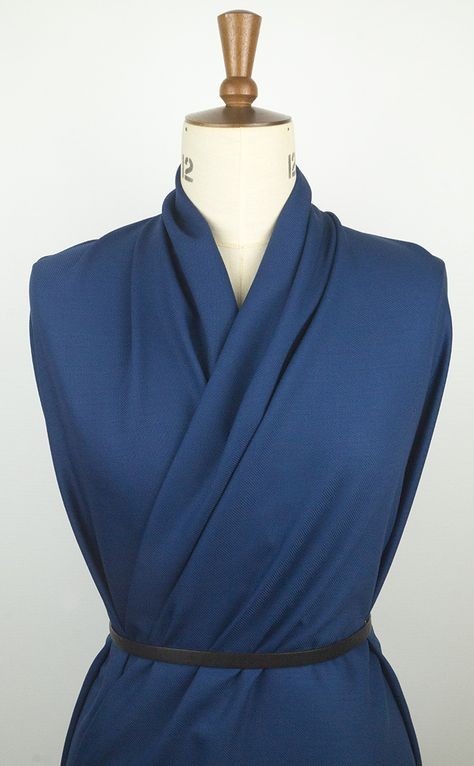
Denim is one application among many
Denim jeans are a familiar example, but Sewport also lists trousers, shirts, bedding, curtains, and other household textiles. These uses show why the word twill cannot prescribe one care method or one level of comfort. A dense furnishing cloth and a lighter shirt fabric need different specifications even when their interlacing belongs to the same family. For a useful product description, combine the weave name with the fiber composition, weight, and intended application. That combination explains more than assuming that every twill behaves like a familiar pair of jeans.
Warp and weft determine the visible progression
The diagonal appearance comes from a repeated offset in the interlacing, rather than a printed stripe laid onto an otherwise unrelated construction. Imagine following the sequence from one weft yarn to the next: the crossing position advances, so the repeated steps align as an oblique line across the cloth. That structural explanation distinguishes a twill from a plain weave even if the two use similar cotton yarns or colors. The source contrasts twill with cotton duck for this reason. A visual inspection is useful for recognizing the family, but the full weave plan and yarn specification are more precise than a photograph when a producer needs to reproduce a particular fabric.
Changing the pattern does not change the fiber category
Sewport includes herringbone, broken twill, and diamond twill within its discussion of variants. These names concern how the structural progression is arranged, including changes of direction or repeated effects across the cloth. They are not additional raw materials. A supplier can therefore describe both a wool herringbone and a cotton twill without contradiction: one part of each description identifies the fiber and another describes the construction. The source also includes a blue wool tailoring example and printed cotton-viscose fabric, showing the range beyond conventional blue denim. This is why a fabric comparison should retain both composition and weave instead of using the best-known application as the definition of the entire family.
Fiber preparation happens before the weave is chosen
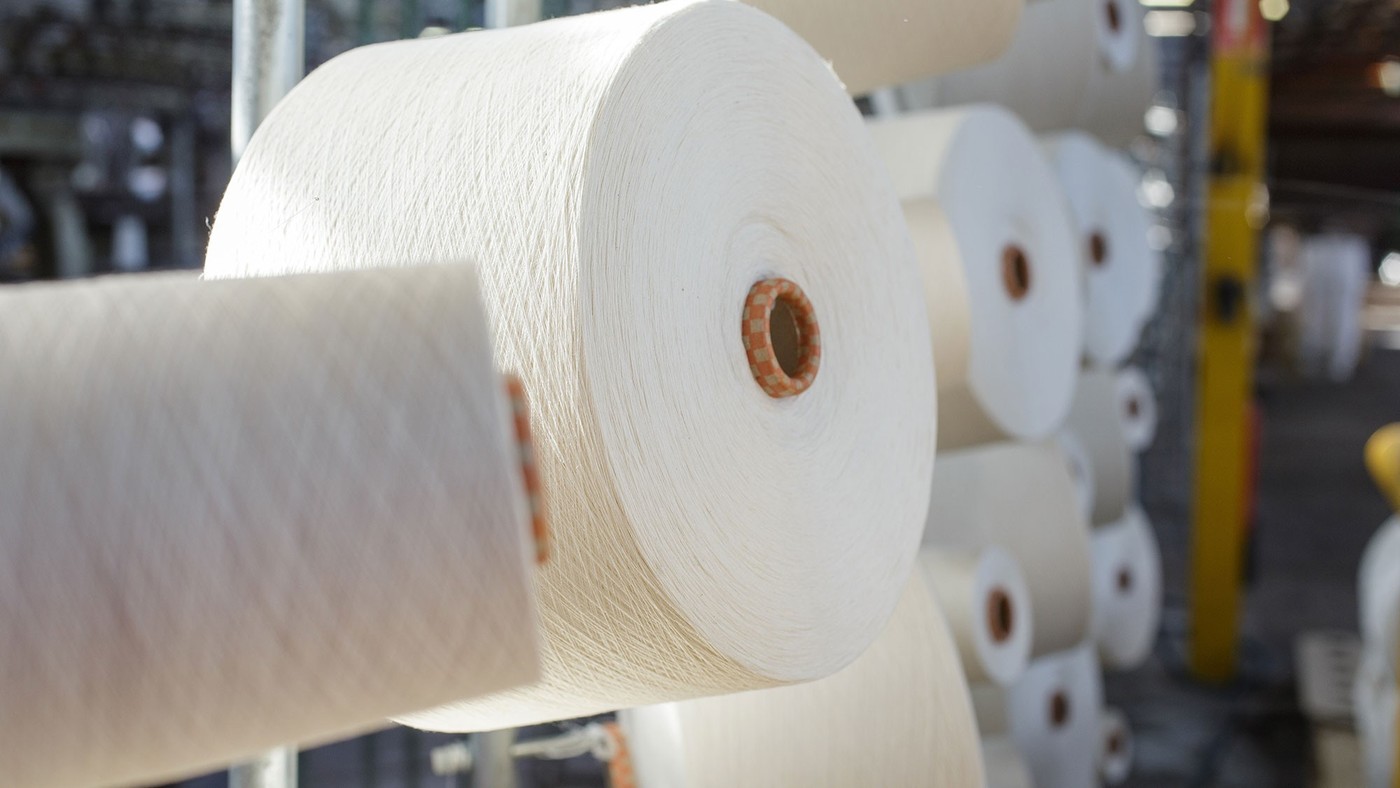
The guide's cotton account begins with harvested fibers being prepared and spun into yarn, whereas its polyester account involves manufactured polymer fibers. Those upstream routes are different even when the resulting yarns are eventually interlaced in a twill pattern. The weave itself does not establish a crop origin, a polymer feedstock, or a recycling history. Nor does a certification about a particular input automatically document the rest of the fabric. For a purchasing specification, identifying composition, weave, weight, finish, and intended application is more useful than relying on the diagonal alone. Care instructions likewise belong to the actual textile or garment, rather than to a universal rule attached to the word twill.





Comments
0