 FabricKnowledge Lab
Stretch without simply adding elastane
Lenzing's announcement describes a processing technique for woven fabrics made with TENCEL Lyocell. Instead of presenting stretch as the result of adding a conventional elastic fiber, it focuses on re-engineering the fabric and applying a pretreatment. This distinction is useful because several different mechanisms can make a textile extend. The fiber composition, yarn arrangement, and finishing process can each contribute. The company positions the development for lightweight clothing, including athleisure and loungewear, but the claim concerns fabrics developed with this particular technique rather than all products that happen to contain lyocell.
Swelling changes the yarn geometry
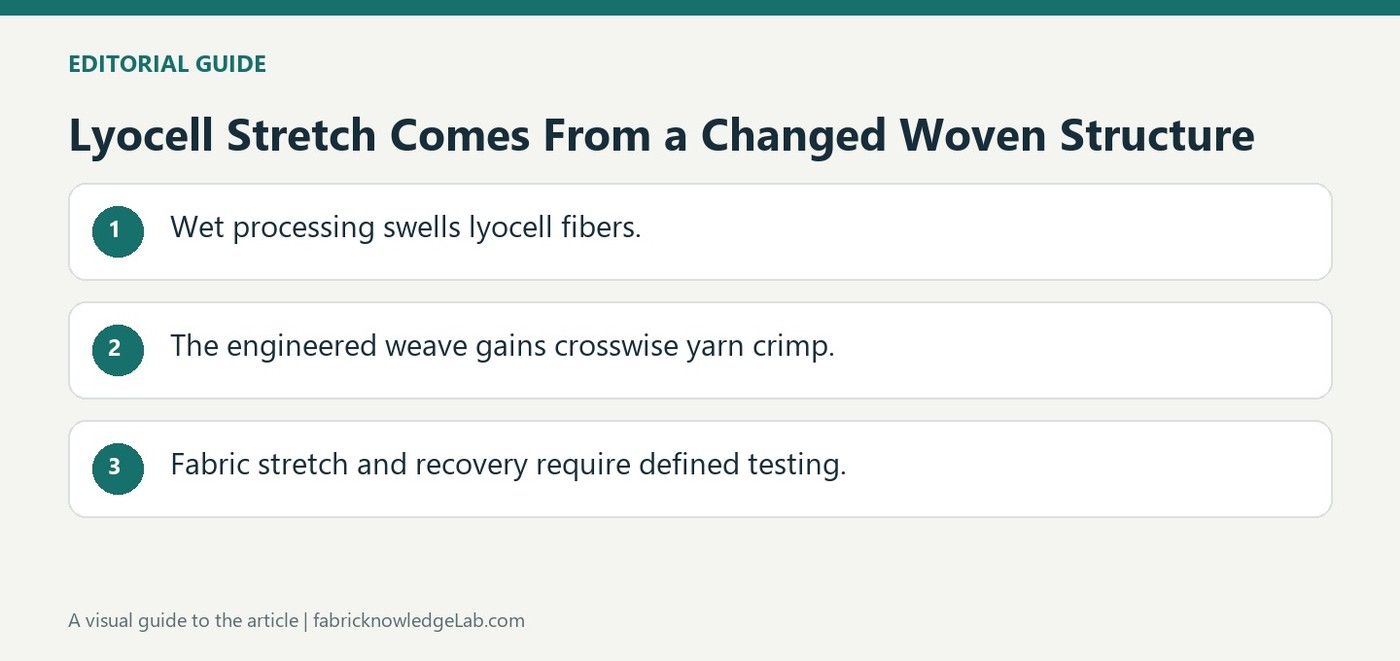
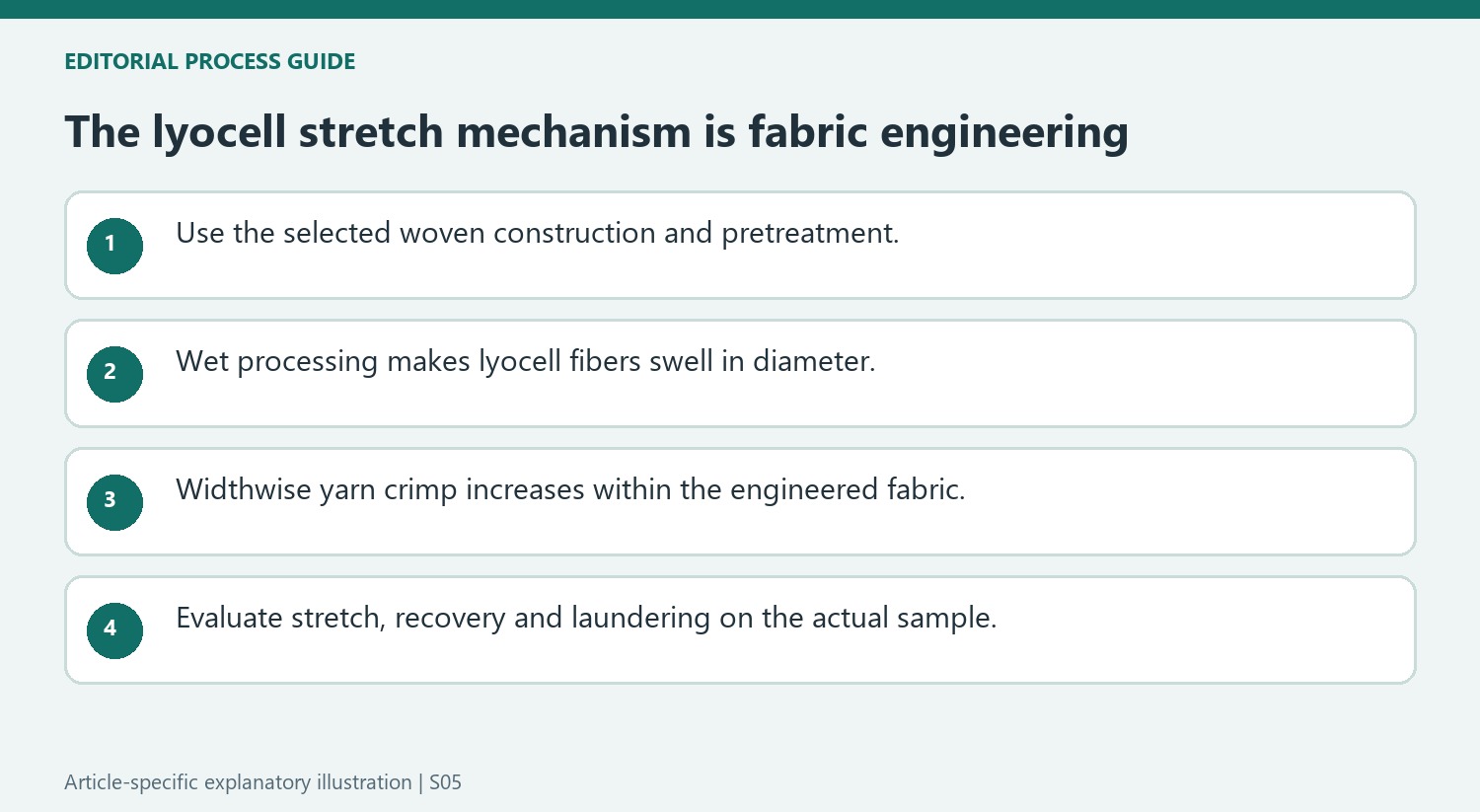
The described mechanism begins during wet processing, when lyocell fibers swell in diameter. In the engineered woven structure, that change increases yarn crimp in the widthwise direction. The additional waviness provides a route to extension and recovery at the fabric level. Lenzing reports testing associated with specified woven constructions and discusses appearance after home laundering. The test references matter because they connect the performance statements to actual materials. They do not establish an identical amount of stretch, recovery, or wrinkle resistance for every weave, yarn count, and finishing schedule available to a mill.
Development support and testing remain important
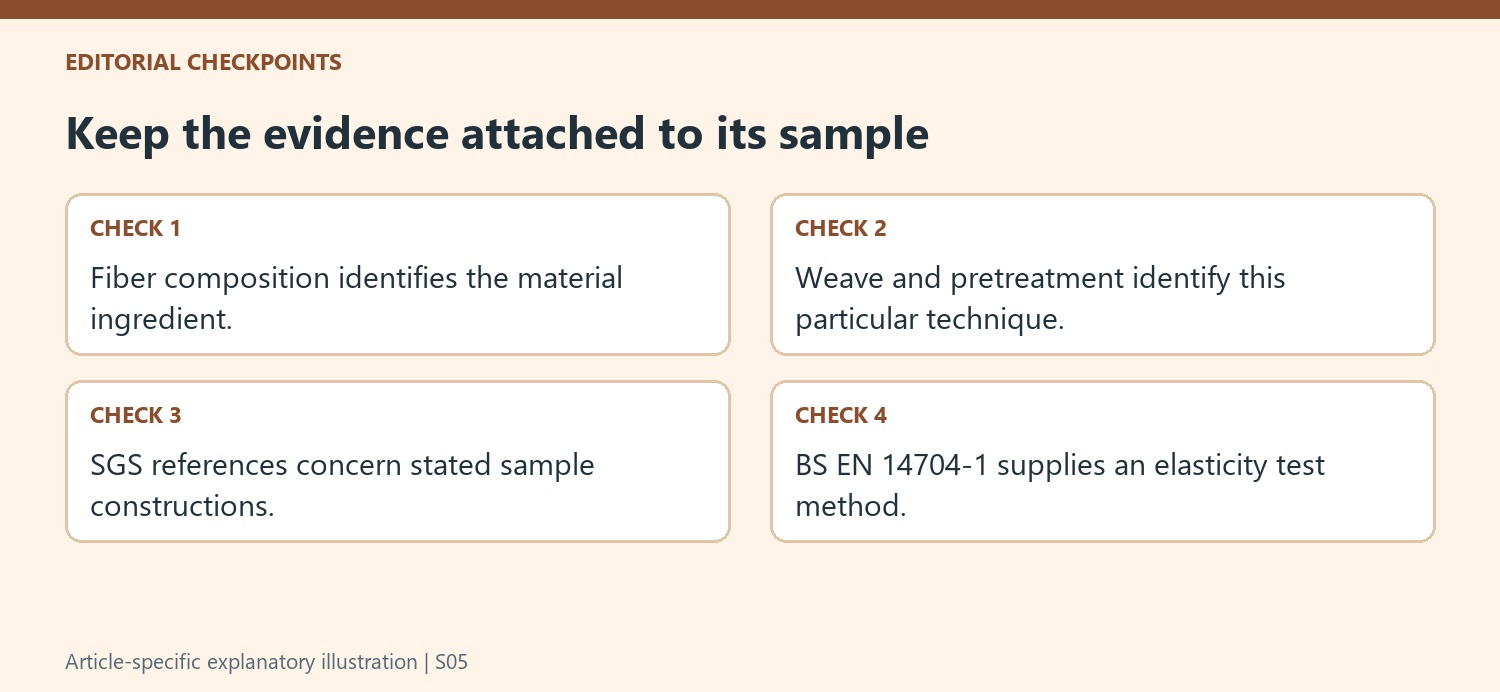
The announcement offers fabric-development support to mill partners and refers to BS EN 14704-1, a method for determining fabric elasticity. Naming a test method is more useful than treating stretch as a purely subjective impression, but the tested result and sample specification still need to accompany it. Lenzing also describes controlled or certified wood sourcing and solvent recovery for the fiber. Those production features are separate from the textile's mechanical performance. A clear specification should identify both the fiber supply and the woven construction, then document how the finished fabric performs under the relevant test conditions.
The change occurs inside a woven structure
The account is about engineering a fabric rather than changing lyocell into a rubber-like fiber. As fibers swell during wet processing, the yarns in the selected weave develop more crimp across the width. That extra waviness is the geometric feature the development uses to provide extension. It helps explain why composition alone cannot identify the result: a different woven arrangement or pretreatment may not create the same structure. A fabric described simply as 100 percent lyocell therefore needs additional information before being associated with this technique. The announcement connects the mechanism to lightweight apparel development, giving mills a route to explore rather than a universal instruction that applies to any existing lyocell cloth.
Two reports concern different sample specifications
The release cites one SGS report for stretch and recovery using a fabric identified as 100 percent TENCEL Lyocell, Ne30 by Ne30, with a 98 by 74 construction. Its laundering-related statement cites another report for a 100 percent LENZING Lyocell fabric identified as Ne50 by Ne50 and 116 by 75. These are distinct sample descriptions. They should not be compressed into a claim that one unspecified fabric produced all reported results under every condition. For technical evaluation, the full report and sample identity matter alongside the headline. A mill developing a new construction would need evidence for that construction, rather than assuming that a shared fiber category transfers the earlier sample's behavior automatically.
Performance development and sourcing remain parallel tasks
The offered mill support concerns fabric development and the testing of elasticity through BS EN 14704-1. Sourcing and manufacturing statements concern a different part of the account, including wood inputs, solvent recovery, and identification of the branded fiber. A development team can use those two streams together: establish which fiber has been supplied, then evaluate how the engineered textile extends, recovers, and behaves after care. Neither task replaces the other. A traceable fiber does not specify a finished weave's elasticity, while a favorable stretch test does not document the entire supply chain. Keeping the material identity, process route, sample construction, and measured result together provides a clearer basis for a product specification.








Comments
0