 FabricKnowledge Lab
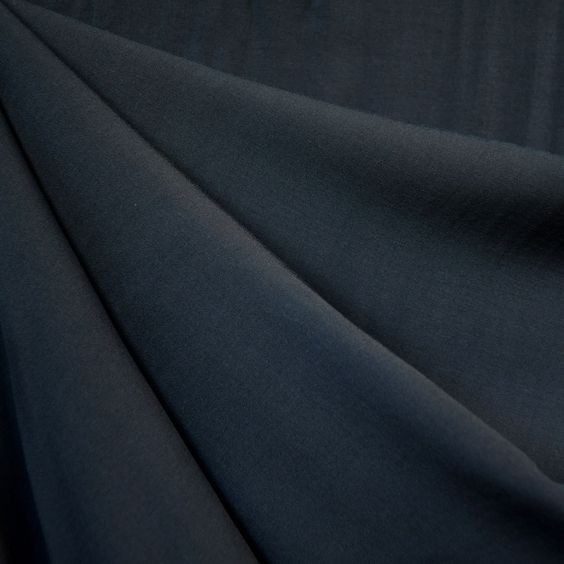
A fabric name with several compositions
Batiste is usually associated with a fine, semi-sheer cloth used for lightweight clothing and household textiles. Sewport explains that cotton is common, while polyester, lyocell, or blends can also appear. The name therefore does not guarantee a single fiber composition. This matters when comparing products: a cotton batiste and a version containing a different fiber may share a light appearance without behaving identically. Read the fiber label alongside the fabric name rather than assuming that every cloth sold as batiste is made from linen or from cotton alone.
Fine yarn and finishing shape the hand
The source describes batiste as commonly plain woven, with warp and weft crossing in a regular grid. Combed yarn is often selected because the desired cloth is fine and smooth. Cotton may also be mercerized, a treatment associated with a shinier surface and altered hand. Sewport notes that some versions use a satin weave for additional luster, so the plain-weave description is typical rather than a rule covering every product. White and off-white cloth are common, though color and finishing choices vary between manufacturers and intended uses.
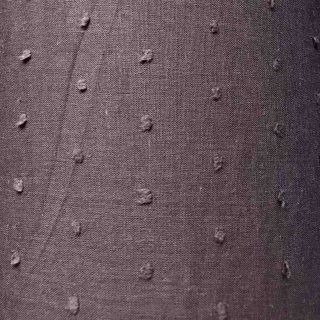
Where the light structure is useful
Batiste appears in blouses, summer dresses, lingerie, sleepwear, linings, handkerchiefs, and bedding. Its relative transparency and low weight are useful design features, but they also distinguish it from a dense, heavy-duty cotton. The source compares it with lawn, organdy, and other fine cloths without treating those names as exact equivalents. Inspect opacity, smoothness, and crispness in a sample before selecting a substitute for a sewing project. For a finished item, follow its specific care label because the batiste name alone does not identify the fiber blend, any applied finish, or the safe treatment of attached trim.
Fine yarn preparation helps explain the surface
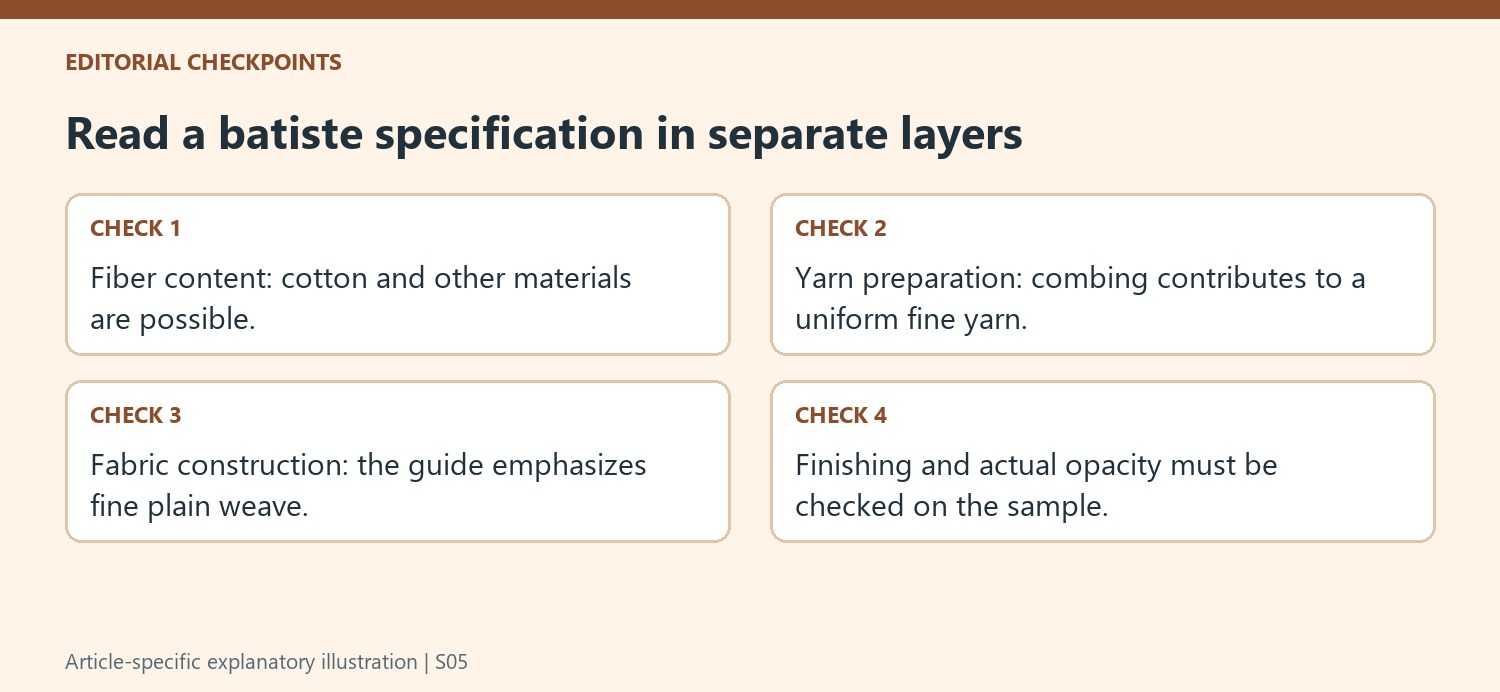
Batiste is valued as a fine cloth, so the source places importance on yarn preparation before weaving. It describes combed yarn as more uniform than a less extensively prepared alternative and discusses mercerization for some cotton versions. Mercerization is a treatment of the cotton, while plain weave describes the way yarns cross in the cloth. Keeping those stages separate helps explain why two batistes can have different luster without having unrelated fabric names. A maker can choose a fiber, prepare a yarn, weave it and then finish the textile. Each decision contributes something different. The fine appearance is consequently the result of a production route rather than proof of one fiber content or one universal finishing recipe.
Match the semi-sheer character to the design
The guide lists lightweight clothing, lingerie, linings, handkerchiefs and household textiles among batiste's uses. These applications draw on its delicate appearance and relatively light handling, but they use transparency differently. A lining sits beneath another textile, while a curtain or blouse presents the fabric more directly to light. When evaluating a sample, consider where it will be seen and whether another layer forms part of the proposed design. A soft surface does not answer the coverage question by itself. Compare the sample against a contrasting background and observe its fall, then judge whether the particular color and construction achieve the intended effect. This makes the fabric's visual lightness an intentional design feature rather than a surprise after assembly.
Treat similar fabric names as starting points for comparison
Sewport discusses the historical connection between batiste and cambric and compares batiste with other lightweight cloths. That naming history helps explain why suppliers may use overlapping terminology. It does not establish that every modern fabric sold under a related name has the same weight, finish or fiber. The guide explicitly includes cotton and other materials, including polyester and lyocell, so the composition label remains essential. If substituting batiste for lawn or another fine textile in a sewing project, compare crispness and drape as well as lightness. A softer cloth can alter the way a sleeve or gathered area hangs even when both choices feel thin. The useful question is how the actual sample serves the design, rather than whether two catalog headings sound closely related.




Comments
0