 FabricKnowledge Lab
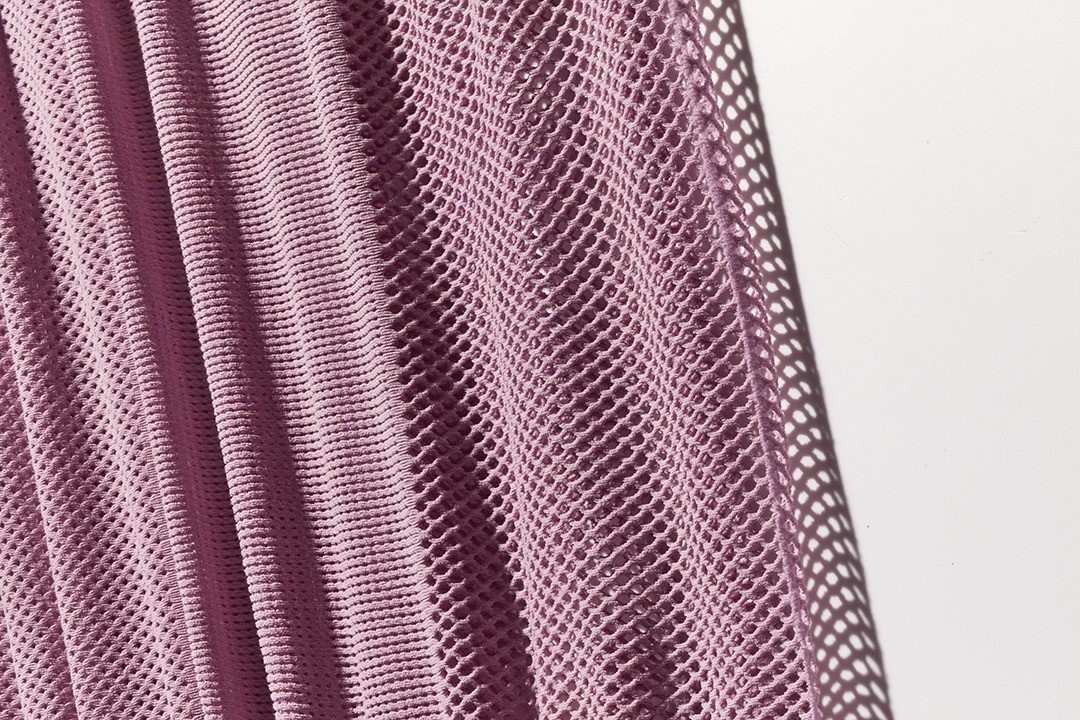
Parallel yarn systems form the loops
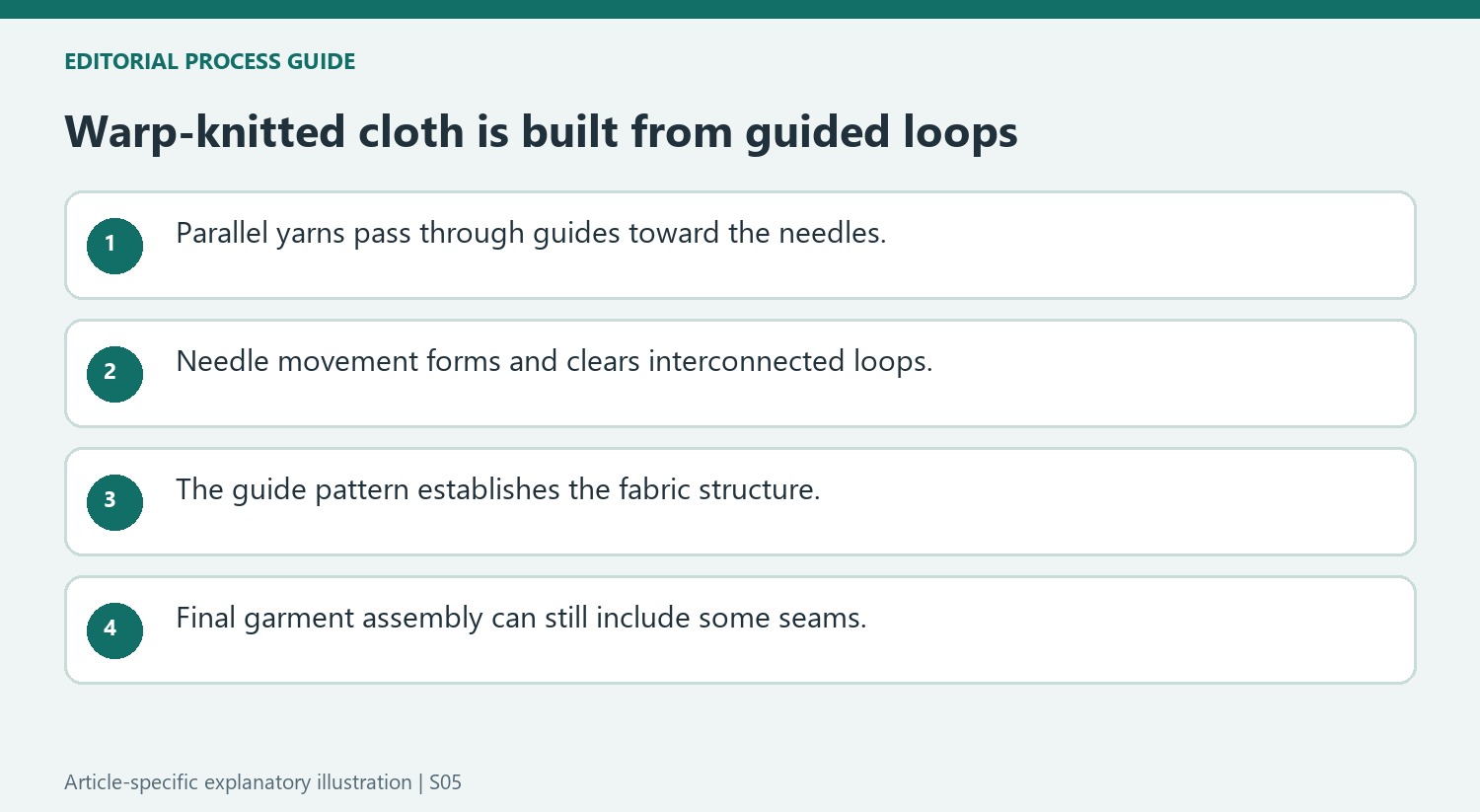
In warp knitting, multiple yarn threads pass through guides that direct them around needles. Woolmark describes parallel loop rows interlocking in a zigzag arrangement as the guides move between needles. The needle action clears the previous loop and draws the new one through to build the fabric. This is a different production description from weaving warp and weft over and under one another. Although both methods may use wool yarn, their structures and machine operations should not be treated as interchangeable simply because the finished products can both appear as a sheet of fabric.
Stability and stretch have direction
Woolmark highlights stable structures that are difficult to unravel and describes greater elasticity along the length than across the width in the discussed fabrics. Warp knitting can create open or closed structures, including lace-like and stitch-bonded effects. It is also associated with fast production and broad fabric widths, with the page mentioning options up to six meters. These are capabilities of the technology family rather than dimensions or stretch promises for every individual fabric. A particular machine, yarn, and structure still define the actual material supplied for a product.
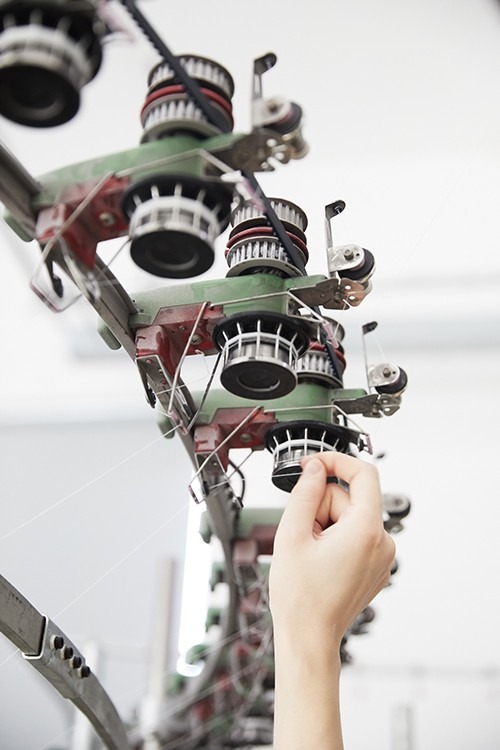
Tubular production does not eliminate every seam
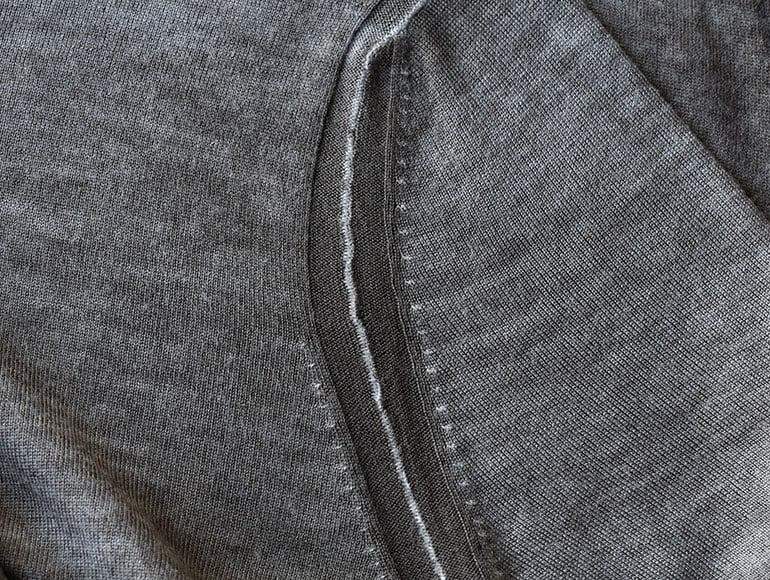
The source discusses tubular and three-dimensional garment possibilities and identifies Karl Mayer as a partner in this area of wool development. A tube can improve next-to-skin comfort and reduce some assembly requirements, making the technique relevant to activewear. Woolmark also makes an important qualification: knitwear called seamless may still require seams during final garment assembly. Evaluate the completed design rather than reading the technology name as a guarantee that no stitching exists anywhere. Production method, fabric shape, and final assembly are related stages with separate roles in making a wearable garment.
The machine makes loops through a guided sequence
Woolmark's mechanism description follows yarn guides directing the warp yarns around needles, with the old loop cleared and the new one drawn through as the machine cycles. The guides then move to continue the interlocking pattern. This sequence makes clear why warp knitting is a knitting process despite its use of a parallel yarn system. It is not the over-and-under crossing of two woven yarn directions. The particular needle and presser-bar example in the source describes a mechanism within that explanation; machine designs can vary. The useful general point is that controlled yarn guidance and needle movement build an interconnected loop structure, with the machine and pattern determining the actual fabric supplied.
Direction should be part of a stretch assessment
The guide describes a difference between lengthwise and widthwise elasticity in its discussed fabrics. That is a reason to evaluate direction explicitly when developing a garment, rather than assuming equal stretch in every orientation. A sample can be checked in the direction that the pattern intends to place around or along the body. Stability is another aspect: a structure that resists unraveling may still offer flexibility where the design needs it. These are related characteristics, not contradictory claims. The source's open and closed structure examples further show that warp knitting covers more than one visual surface. A broad technology description needs the specific fabric and its orientation beside it before it becomes a usable garment specification.
A production capability is not a universal garment feature
Woolmark mentions wide production, tubular forms and three-dimensional possibilities as part of the technology's range. Those capabilities depend on the equipment and design; they should not all be assumed to appear in every warp-knitted product. The seamless qualification is especially useful. A knitted tube may reduce selected seams while final assembly still joins other parts. Assess where seams exist in the completed item and whether their position suits the intended comfort requirement. Similarly, a fast manufacturing method does not determine the entire retail price or eliminate the need for yarn and finishing choices. Keeping machine capability, fabric structure and garment assembly separate makes it easier to compare a real product with the broader opportunities described by the source.
References
- Warp Knitting Technology. The Woolmark Company; The Woolmark Company.


Comments
0