 FabricKnowledge Lab
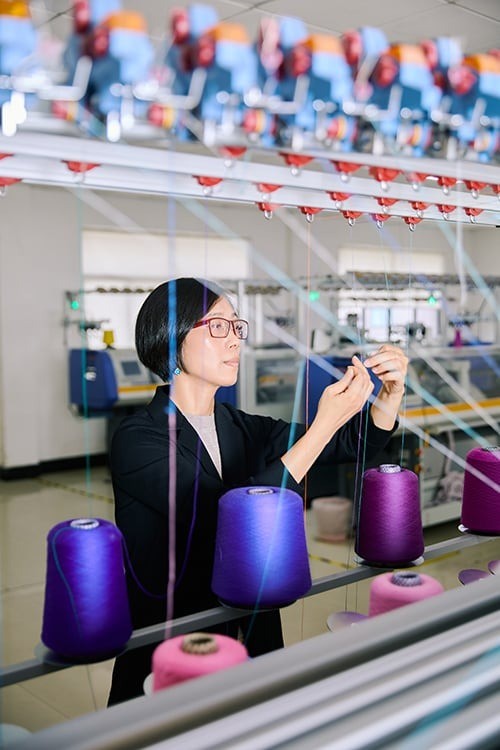
Machine layout enables different knit structures
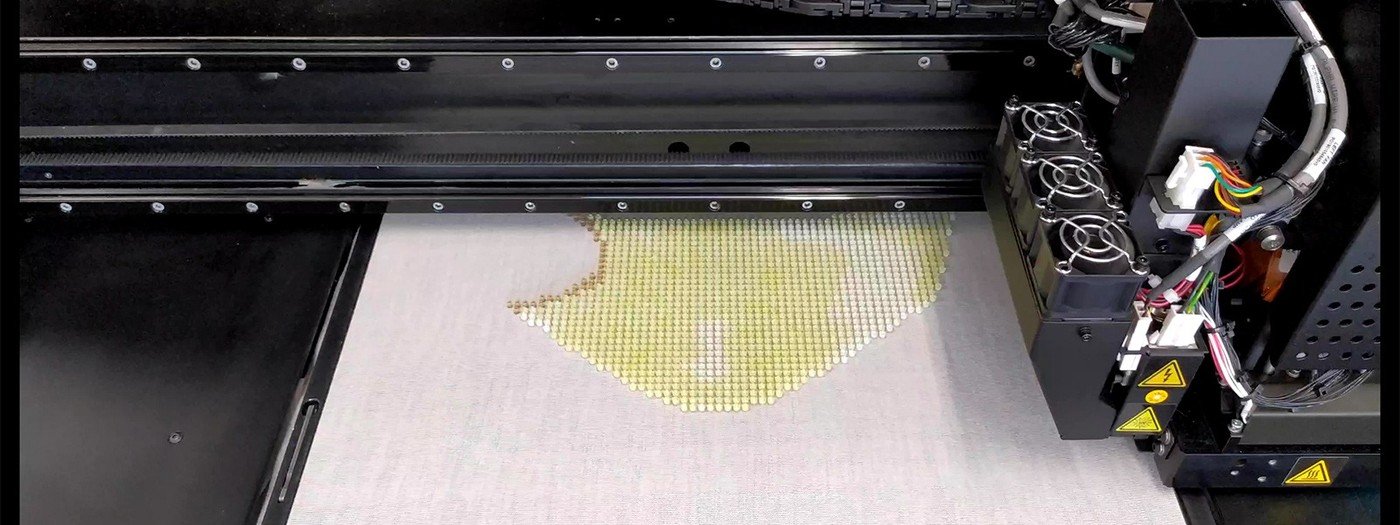
Woolmark identifies single-bed and V-bed machines as important forms of flat-bed knitting technology for wool. Machines vary in size and complexity, and they can produce fabric pieces or more complete garment forms. The presence of more than one needle bed gives designers additional ways to arrange loops and build structure. This is a production capability rather than a single finished stitch pattern. Two garments made on flat-bed equipment can therefore differ greatly in shape, texture, and the amount of assembly still needed after knitting.
Transferring stitches broadens the design options
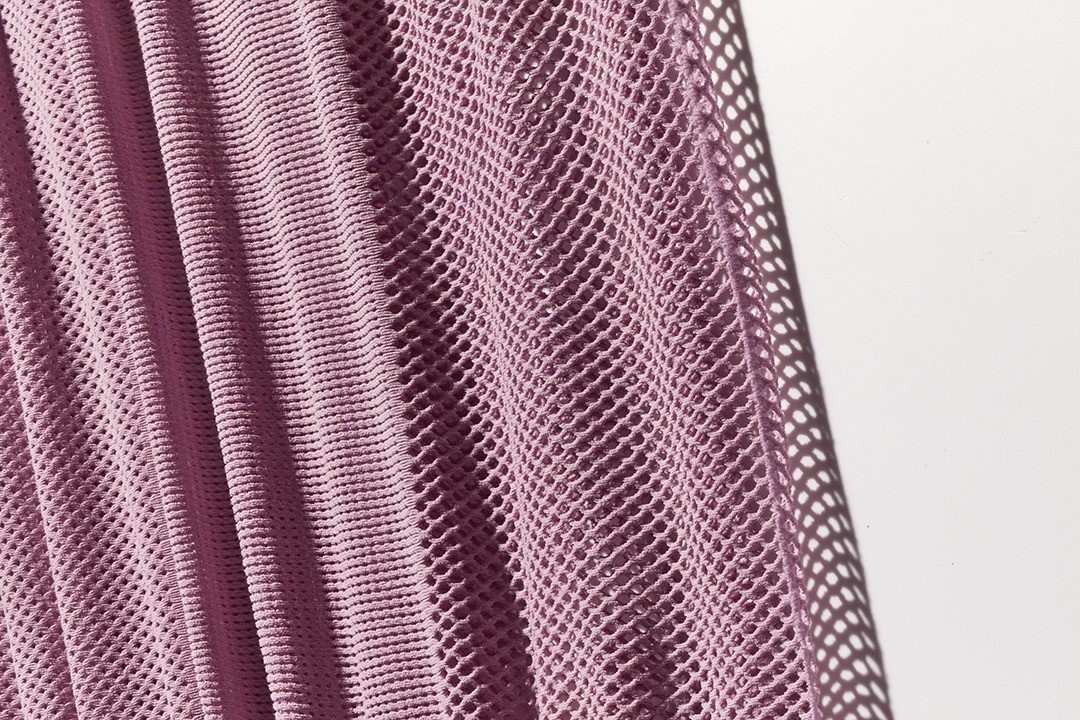
The source explains that transferring stitches between beds supports extensive patterning and structural variation. Different yarns and textures can be incorporated, and designers can create shapes rather than relying solely on cutting flat cloth into garment panels. Woolmark associates these choices with comfort, including in next-to-skin products. That potential depends on the actual yarn and design, not merely the machine category. Evaluating a sample requires looking at where structure, thickness, and surface changes occur instead of assuming that all flat-bed knitwear has one standard hand or appearance.
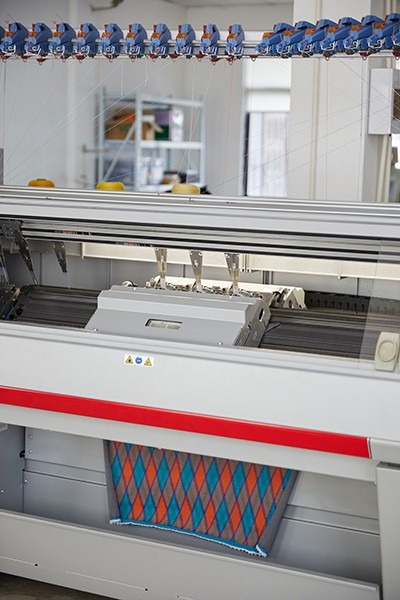
Some details can be integrated earlier
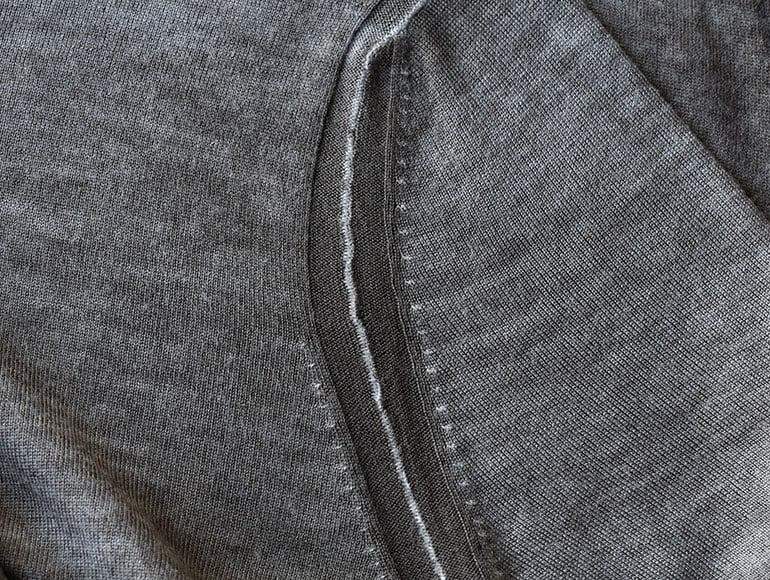
Pockets and trims can be included during flat-bed knitting rather than always being added afterward as separate components. Woolmark describes garments emerging from the machine closer to ready-to-wear form and identifies STOLL and SHIMA SEIKI as technology partners. This can change the production sequence, but it does not prove that every design leaves the machine fully finished without seams or other work. Distinguish fabric creation, integrated features, and final assembly when interpreting the claim. The useful innovation is the ability to move selected garment details into the knitting process where the design and equipment support it.
Needle beds provide a platform for structural choices
The flat-bed knitting account identifies single-bed and V-bed equipment as important forms used in wool knitwear. Their arrangement matters because needles and the handling of loops establish what structures can be produced. Where supported, transferring stitches between beds gives designers ways to change patterns and forms during knitting. This is not simply a decorative image applied to finished cloth. The design is being built through the yarn structure itself. To understand a sample, look for where the thickness, surface or shape changes and consider how those changes serve the garment. Two products from related machines can still have very different structures because the yarn and knitting instructions are different.
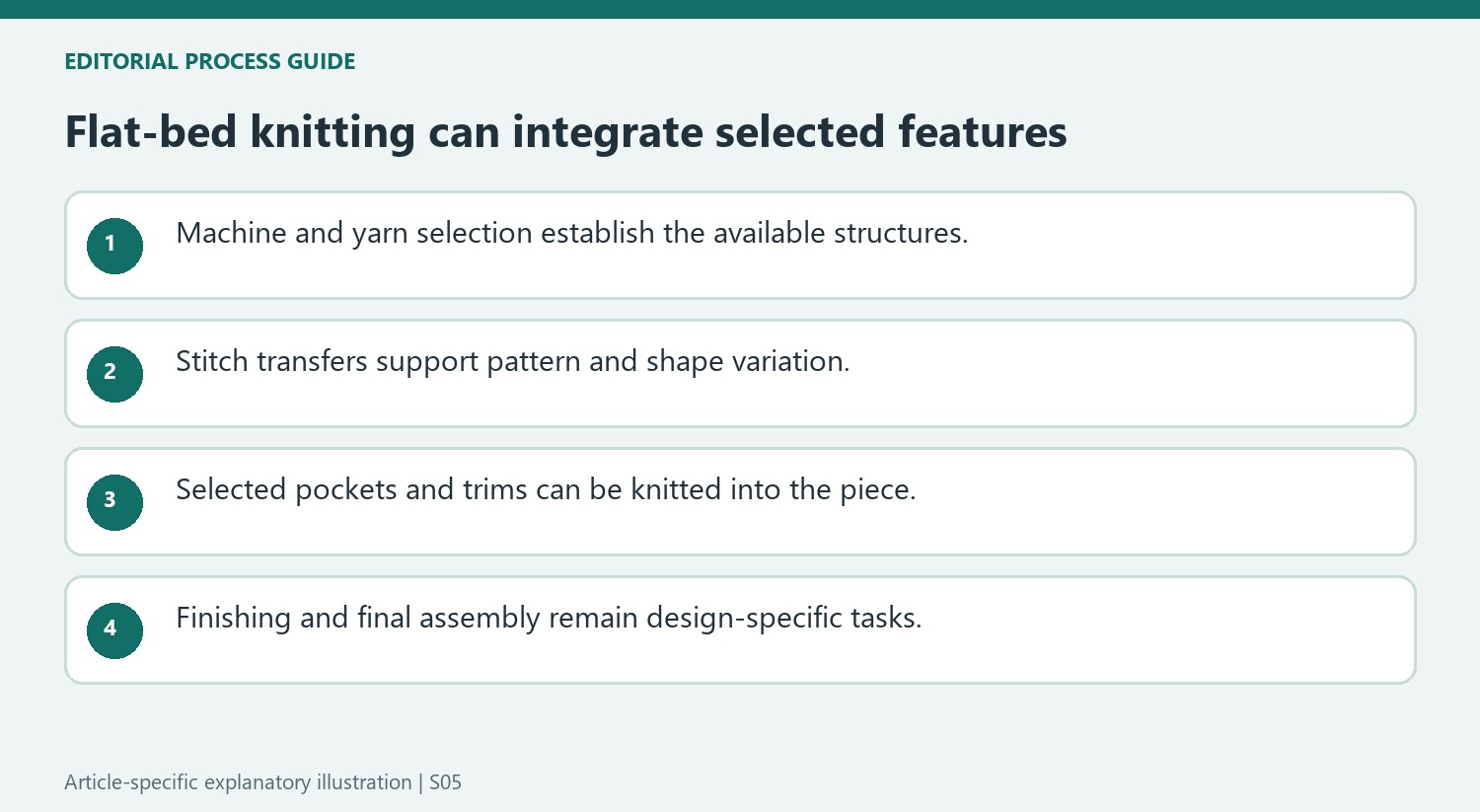
Integrated details change the assembly sequence
Pockets and trims are useful examples in the source because they are familiar garment features that can sometimes be incorporated during knitting. If a feature is created in that stage, it need not follow the same route as a separately cut or knitted piece added later. The opportunity concerns selected design details, not a guarantee that no finishing work remains. The guide describes garments as nearly ready to wear, which leaves an important distinction between knitting completion and final product completion. Ask which features are integrated, which components remain separate and what assembly is still required. That gives a clearer production picture than treating every flat-bed garment as either entirely seamless or entirely assembled from independent panels.
Match design freedom to a particular fabric and use
Woolmark highlights texture, shapes and comfort as opportunities and names STOLL and SHIMA SEIKI as partners in this area. Those technology examples show the range of development rather than one compulsory machine setup for every supplier. A next-to-skin product still needs a suitable yarn and surface, while a more structured garment asks different questions about shape and support. Compare the actual knit sample in the role it will occupy, including the placement of thicker areas, trims and any seams. A broad statement about patterning capacity cannot establish the comfort of every design. Keeping machine capability, yarn selection and garment construction in the same discussion makes the technology useful to a real product decision instead of leaving it as an abstract promise of unlimited possibilities.
References
- Flat Bed Knitting Technology. The Woolmark Company; The Woolmark Company.






Comments
0