 FabricKnowledge Lab

A surface effect created by construction
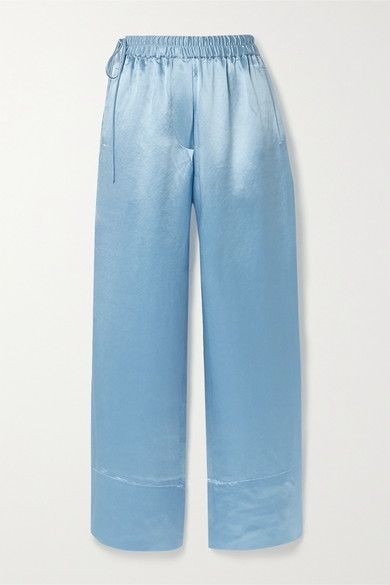
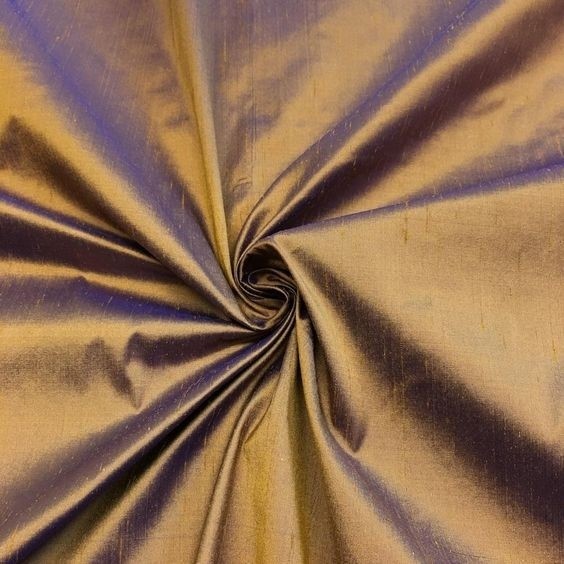
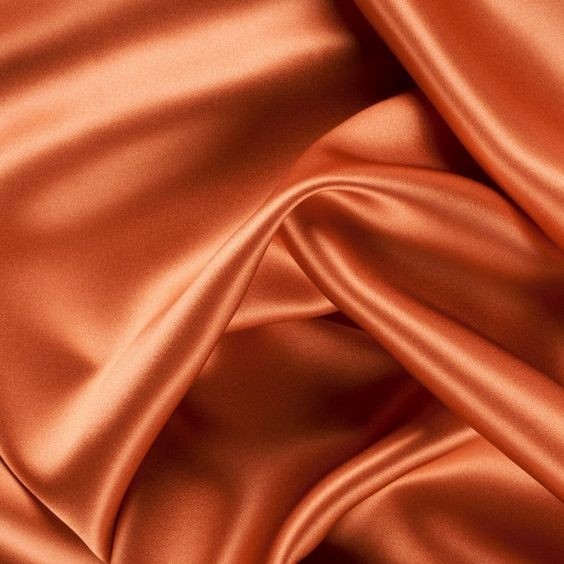
Charmeuse is recognizable by a lustrous face and a comparatively dull reverse. Sewport explains that it belongs to the satin-weave family, in which longer yarn floats create a smoother reflective surface than a regular plain-weave grid. The shine therefore reflects how yarn is organized as well as which fiber is used. This is why calling a fabric shiny does not establish that it must be silk. Charmeuse identifies a particular kind of textile surface and drape, while the separate composition label tells the reader what material forms the yarn.
Silk and alternative fibers need separate evaluation
The source discusses silk charmeuse as well as versions made with polyester or rayon. These can share a broadly similar glossy appearance without being interchangeable in hand, moisture behavior, or care. Sewport also describes stretch charmeuse containing elastane, adding another construction-related distinction. For silk products, descriptions may include a momme figure, a measure associated with fabric weight rather than an ordinary cotton thread-count comparison. Read these details together instead of choosing by one attractive photograph or assuming every fabric sold under the same name has an identical weight.
Where the smooth drape is useful
Charmeuse appears in evening dresses, slips, lingerie, robes, ties, linings, pillowcases, and sheets. Its glossy face and fluid appearance suit garments and bedding where surface feel and reflected light are part of the design. The difference between face and reverse also matters when examining a sample or planning visible folds. Compare the actual textile, its full fiber percentages, and any stretch component before substituting it for another satin-like fabric. Follow the specific finished-product care label; the charmeuse name does not establish one washing method for silk, synthetic, and blended versions alike.
Long floats explain the difference between the two faces
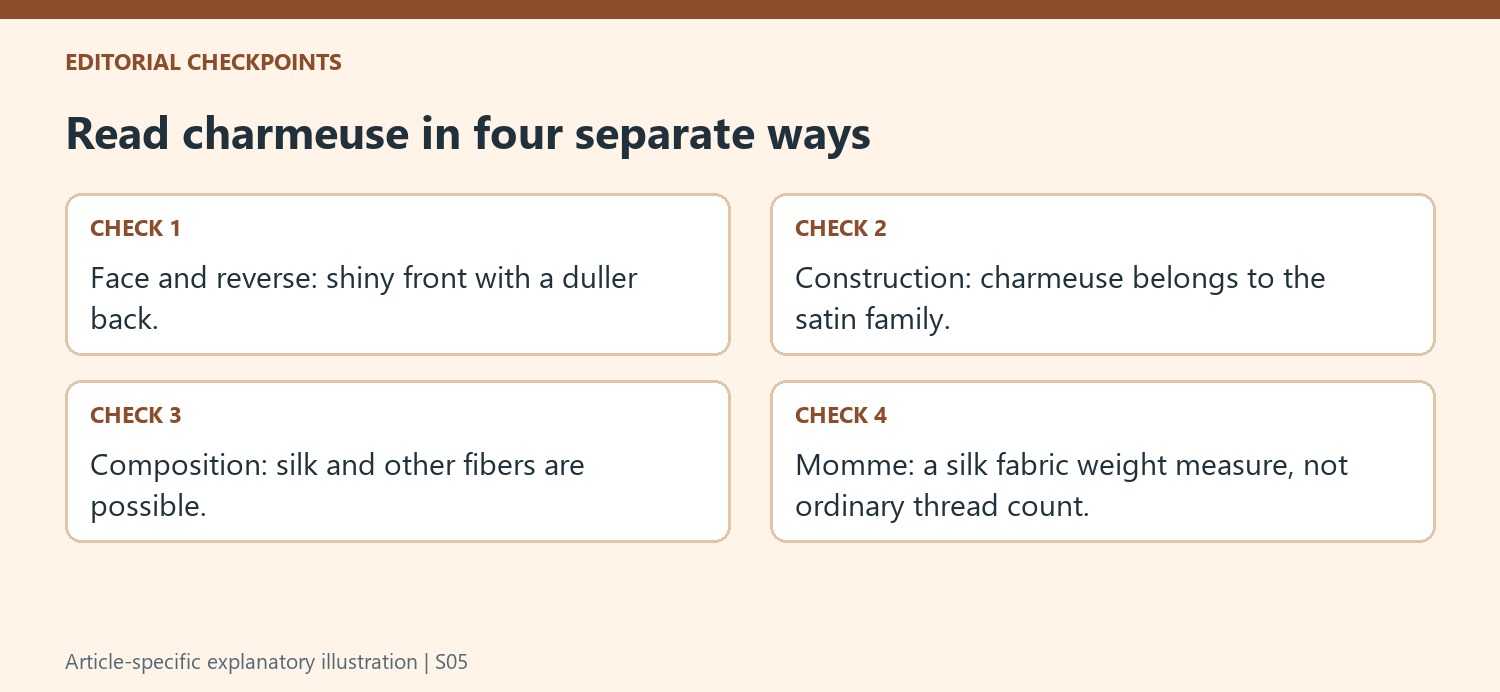
Charmeuse belongs to the satin family, whose yarn arrangement creates a smoother, more reflective face than a plain woven grid. The contrast with its duller reverse is part of the fabric's identity. This is a structural explanation of shine, rather than proof that the cloth contains silk. Sewport discusses silk, polyester and rayon versions, so the composition still has to be read separately. Looking at both sides of a sample is useful when identifying which surface a garment design intends to show. It can also make a color appear different, because a shiny face and a less reflective back do not present light in the same way even when they belong to one piece of fabric.
The cloth's fall matters as much as its luster
The source includes draped skirts, dresses, eveningwear, lingerie and bedding among charmeuse uses. These applications exploit different aspects of a smooth flowing textile. A skirt depends on the way the material hangs around the body, while a pillowcase presents a much flatter surface. A material that photographs beautifully in a fold should therefore still be assessed in the form it will take in the finished project. Let a sample hang, observe how it folds, and compare the face and reverse before selecting it. The charmeuse name gives useful guidance about the surface, but it does not establish that every version has the same weight, opacity or handling.
Read silk weight terminology accurately
The guide refers to momme when describing silk charmeuse. Momme is a silk fabric weight measure, so it should not be treated as an ordinary count of threads in a woven grid. Weight information can help compare similar silk fabrics, but it does not replace the construction or composition. A numerical description is most useful when the products are actually comparable and the unit is identified correctly. For the same reason, keep the care instructions attached to the specific finished product. Silk charmeuse and a synthetic version share a fabric category without necessarily sharing one cleaning method. Dye, finish and garment details can introduce further differences. A complete comparison uses the fiber percentage, stated weight, visible surface and intended use together, allowing the smooth sheen to remain one important feature among several.




Comments
0