 FabricKnowledge Lab
Two parts of the coat have different roles
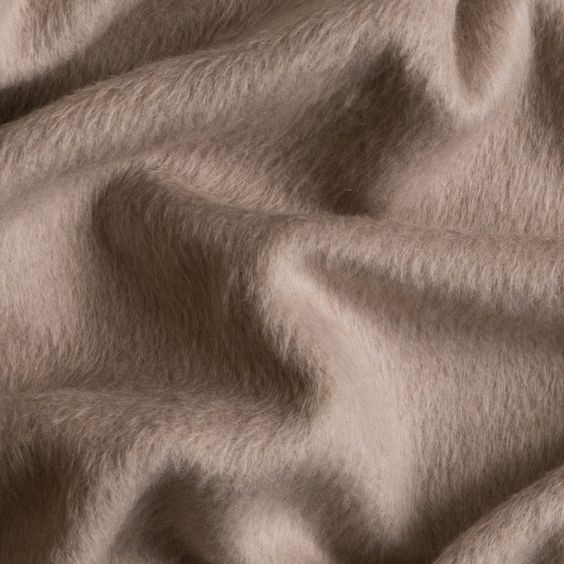
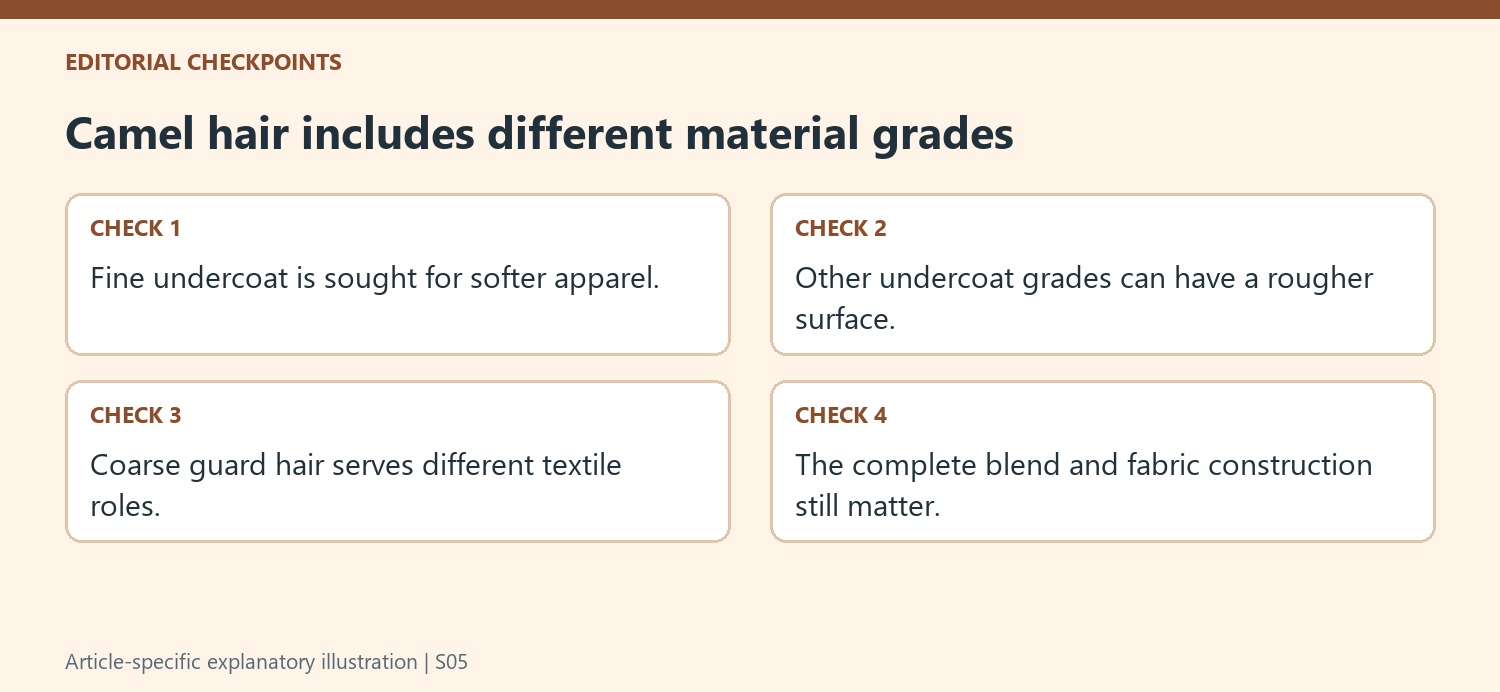
Sewport's camel wool guide focuses on hair associated with the Bactrian camel. It distinguishes the coarse guard hair from the softer undercoat rather than treating the whole coat as one uniform textile material. That distinction is central to understanding camel hair garments. The undercoat provides the finer fiber commonly sought for apparel, while rougher material is better suited to other applications or blends. A broad camel hair label therefore leaves useful questions unanswered about the grade and portion of the coat used in a particular product.
Collection and preparation affect the usable material
The source describes the animal growing a winter coat and shedding it as conditions warm in spring. Collected hair is cleaned, carded into prepared strands, and spun into yarn before further textile production. It also discusses different grades: finer undercoat material, lower-grade undercoat, and coarser guard hair. These categories help explain why two camel fiber products can feel very different. The raw fiber must still pass through sorting and preparation; collection alone does not supply a finished yarn ready to become every kind of garment.

Match the grade to the intended textile
Coats, sweaters, scarves, and selected lighter clothing appear among the uses described in the guide. Rougher fibers can instead be used in carpets and other more rigid textiles. The source also mentions blends with materials such as cashmere, demonstrating that camel hair does not always appear in a pure-fiber product. Compare the full composition, finished surface, and intended use rather than assuming that every item has the softness of the best undercoat. For laundering and storage, follow the actual garment label; the animal source and a general warmth claim do not establish one safe care method for every construction.
Sorting separates apparel fiber from coarser material
The camel-hair account distinguishes the soft undercoat from the protective guard hair, then divides usable material into grades. This sorting stage helps explain the difference between a fine apparel textile and a rougher household or industrial use. It also shows why a simple animal name is not a complete quality measurement. A product may identify camel hair without specifying which grade was selected or whether it is blended with another fiber. When comparing items, ask for those additional details and inspect the surface. The relevant question is not whether every part of the coat is useful in some way, but whether the selected material suits the feel and function required by the particular garment.
Collection is only the beginning of the textile route
The guide describes the seasonal growth and shedding of the camel's coat, followed by cleaning, carding and spinning of recovered material. The visible seasonal shedding can make collection seem straightforward, but a finished yarn still needs preparation. Dirt and unwanted matter must be removed, and the useful fiber has to be organized before it can be spun. Dyeing, blending and fabric construction then introduce further choices. A camel-hair coat therefore cannot be understood simply as a direct transfer of the animal's outer coat to human clothing. The textile is a deliberately processed material whose grade and structure determine how the original fiber is presented in use.
Use the product category to interpret the material
Sewport's examples include coats and knitwear as well as carpets and other more rigid textiles. That range reflects the differences between finer and coarser material described earlier in the guide. Compare products within their intended category rather than assuming that all camel fiber has the softness of the finest undercoat. Blends introduce another distinction: a label naming camel hair may describe one part of a textile whose other fibers also influence its surface and handling. Check the complete composition and actual garment details. General insulation claims do not establish one thickness, one degree of softness or one laundering method. The product's own specification and care instructions connect the fiber story to the practical expectations for that particular item.






Comments
0