 FabricKnowledge Lab
Separate new material from fabric quality
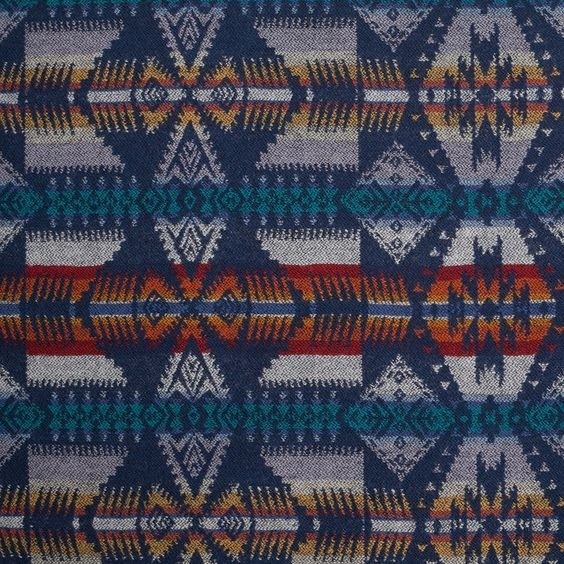
Virgin wool is commonly used to distinguish wool that has not previously been used in another finished textile from recycled wool. Sewport also discusses historical usage associated with a lamb's early fleece, which shows why context matters. The label should not be treated as a complete description of softness or fabric construction. A new wool yarn can become several kinds of textile, and the word virgin does not by itself identify a breed, a fiber diameter, a weave, or the weight of the garment made from it.
Why recycled wool entered the comparison
The source connects the increased use of recovered wool with wartime shortages, when material from existing clothing and home textiles was reused to make new products. That background helps explain the contrast between new and previously used fiber. It does not establish that every virgin wool item must be better for every purpose. The relevant distinction is the material's processing history, while the actual fiber quality and manufacturing decisions still need separate evaluation. Read a fuller product specification rather than inferring performance from that single term.
Wool still needs a suitable construction
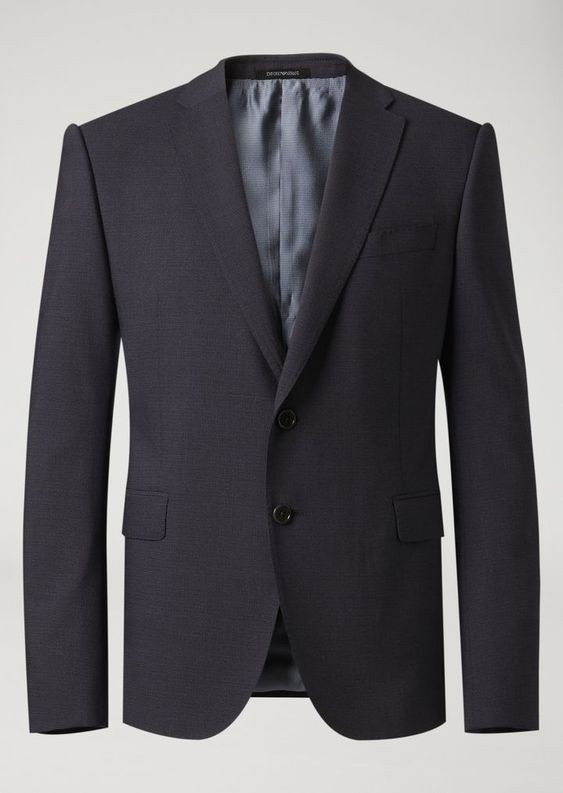
Sewport describes uses in sweaters, socks, jackets, trousers, blankets, and other household textiles. Wool can also be processed into felt, whose interlocked fiber structure differs from woven or knitted cloth. These applications demonstrate how broadly the material can be used after the raw fiber is prepared. For a practical clothing choice, compare the actual fabric's surface and weight and check the complete composition. Use the finished item's care label for laundering. A virgin wool designation does not automatically mean the garment is machine washable, suitable for tumble drying, or identical to another new-wool product already owned.
Understand what recovery changes in the production route
The virgin-wool guide contrasts newly collected fiber with wool recovered from existing textiles. In the recovery route it describes, garments or household materials are sorted, cleaned and broken down before the recovered fiber can be prepared again. That added history is the relevant difference in the word virgin. It does not, by itself, specify whether a new yarn is fine or coarse or whether its finished textile is dense or open. The source makes broad quality comparisons, but a practical purchase needs the actual product specification. Material history and product suitability are separate pieces of information, and both can be useful without turning one into a universal judgment about every new or recycled wool item.
New wool also passes through several manufacturing choices
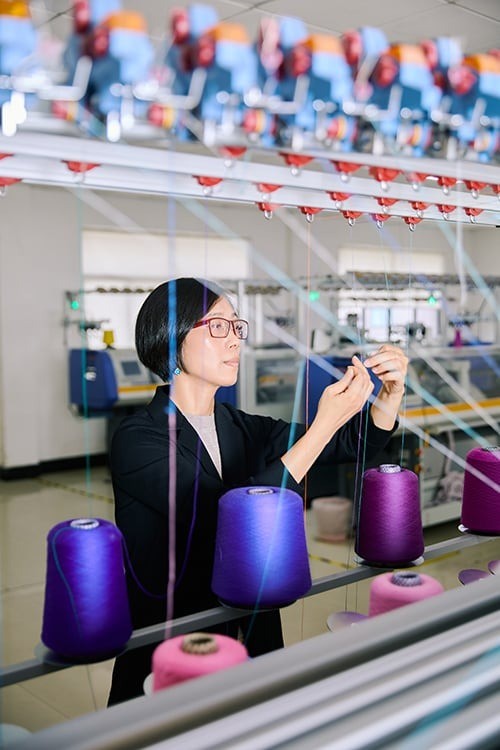
Freshly collected wool needs cleaning and fiber preparation before spinning. The resulting yarn can then be used in different textile structures, with dyeing and other treatments introduced at suitable stages. None of those choices disappears because the fiber has not been used before. A virgin-wool garment therefore still represents a particular yarn and construction selected for a purpose. This helps explain why the same broad designation can appear on trousers, knitwear and blankets. Compare comparable items and inspect their surface and weight. A soft sweater and a structured coat cannot be ranked meaningfully from the material-history term alone, because their designs ask the textile to do different jobs.
Keep first-shearing language distinct from the broader label
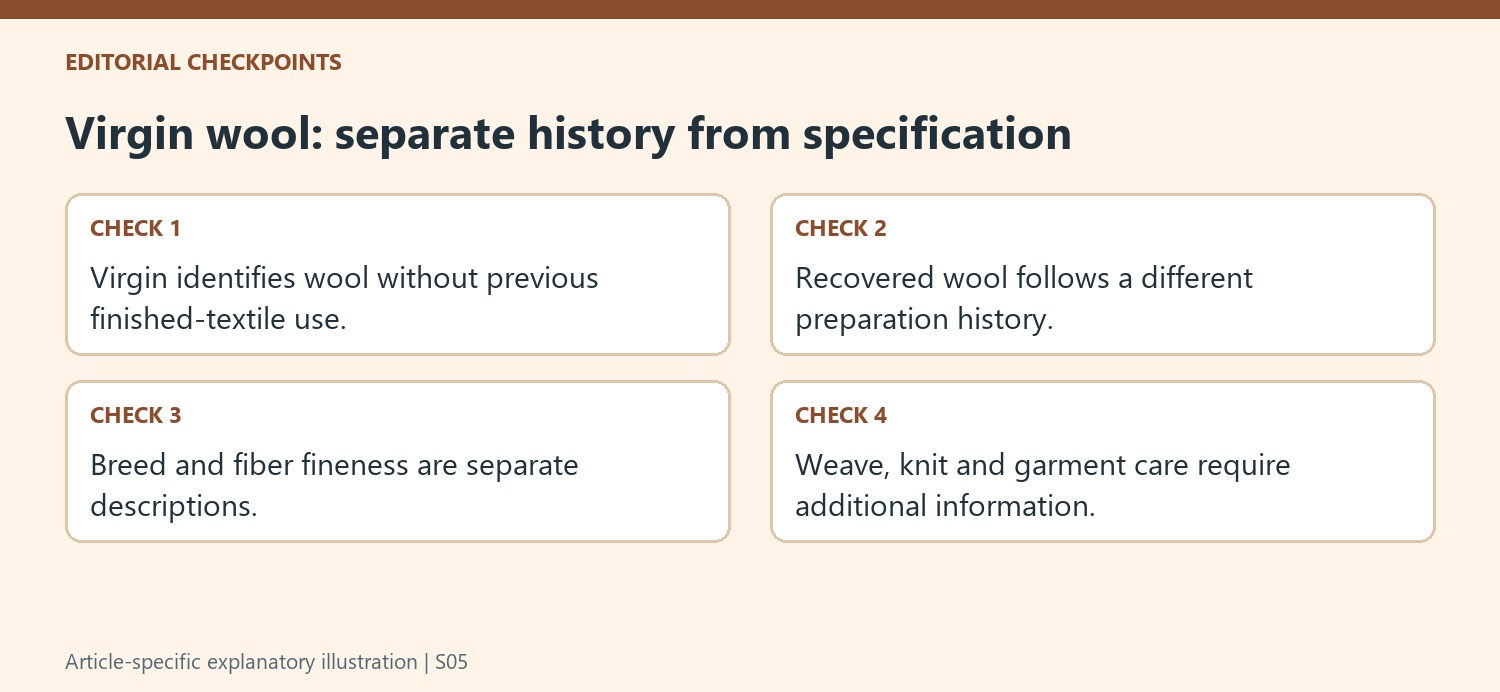
The source discusses an association with a lamb's early fleece as well as the common distinction from recovered wool. That overlap makes precise wording important. If a seller intends to identify lambswool, look for that explicit description rather than assuming that every virgin-wool label identifies the animal's age at collection. Breed, fineness and material history answer different questions. Likewise, a blend percentage is a composition statement, while virgin concerns the history of the wool portion. Record those details separately when comparing garments. This avoids asking one familiar phrase to establish softness, origin, weave and care all at once, and leaves room to evaluate the actual finished product on the evidence supplied with it.



Comments
0