 FabricKnowledge Lab
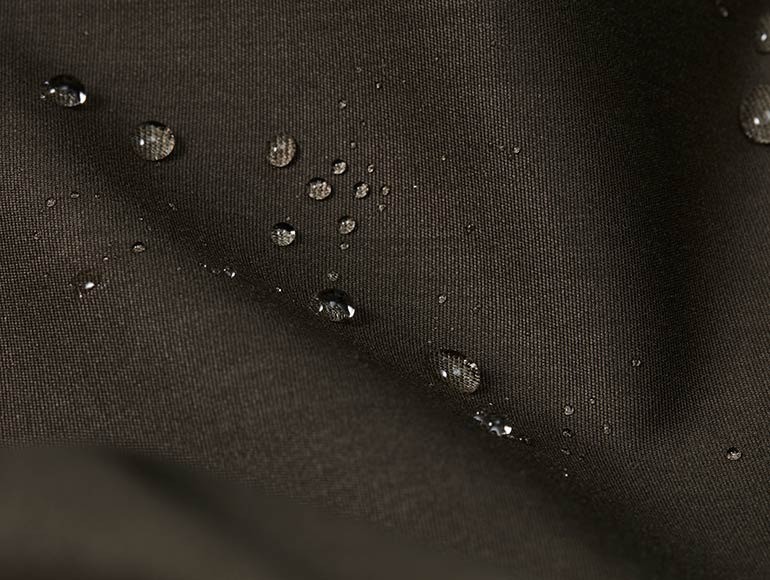
The structure begins before weaving
Neulana Protect is described by Woolmark as an outerwear fabric made from Australian Merino wool. Its construction uses OPTIM fiber-stretching technology: fibers are pre-stretched, spun into yarn, and woven before later processing changes the fabric density. This sequence makes the manufacturing method central to the result. It is not simply an ordinary wool cloth renamed because wool naturally provides insulation. The way the yarn enters the weave and then contracts is what creates the especially compact structure discussed in the source.
Finishing makes the weave more compact
During dyeing and finishing, the fabric contracts strongly, producing a denser arrangement than the starting woven cloth. Woolmark links the resulting compact structure with reduced air permeability and a higher hydrostatic head. These are different performance ideas: reduced air passage supports wind resistance, while hydrostatic head relates to resistance to water penetration. The source describes shower resistance rather than an unlimited guarantee of waterproof protection. Those terms should remain separate when comparing the material with a conventional rain garment or assessing a finished jacket's complete construction.
The intended handle differs from soft knitwear
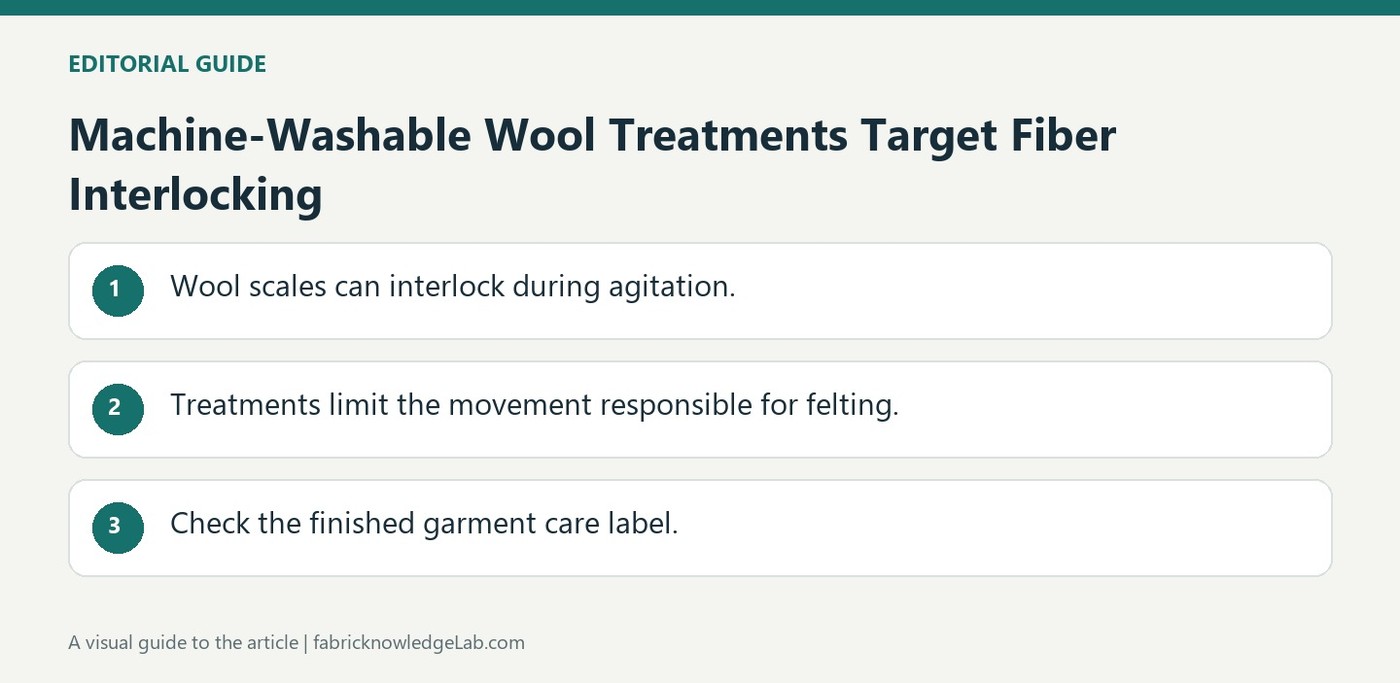
Woolmark emphasizes a crisp, resilient hand, enhanced wrinkle resistance, and suitability as an alternative to polyamide jacket fabric. It also associates the tightly jammed structure with machine washability and easy care in this particular textile. That does not make every Merino garment behave like Neulana Protect. A loose knit and this compact woven innovation have very different structures despite sharing a wool origin. For an actual product, check that it uses the specified fabric and follow its finished-garment instructions. The performance description concerns a developed textile rather than a universal promise attached to all wool outerwear.
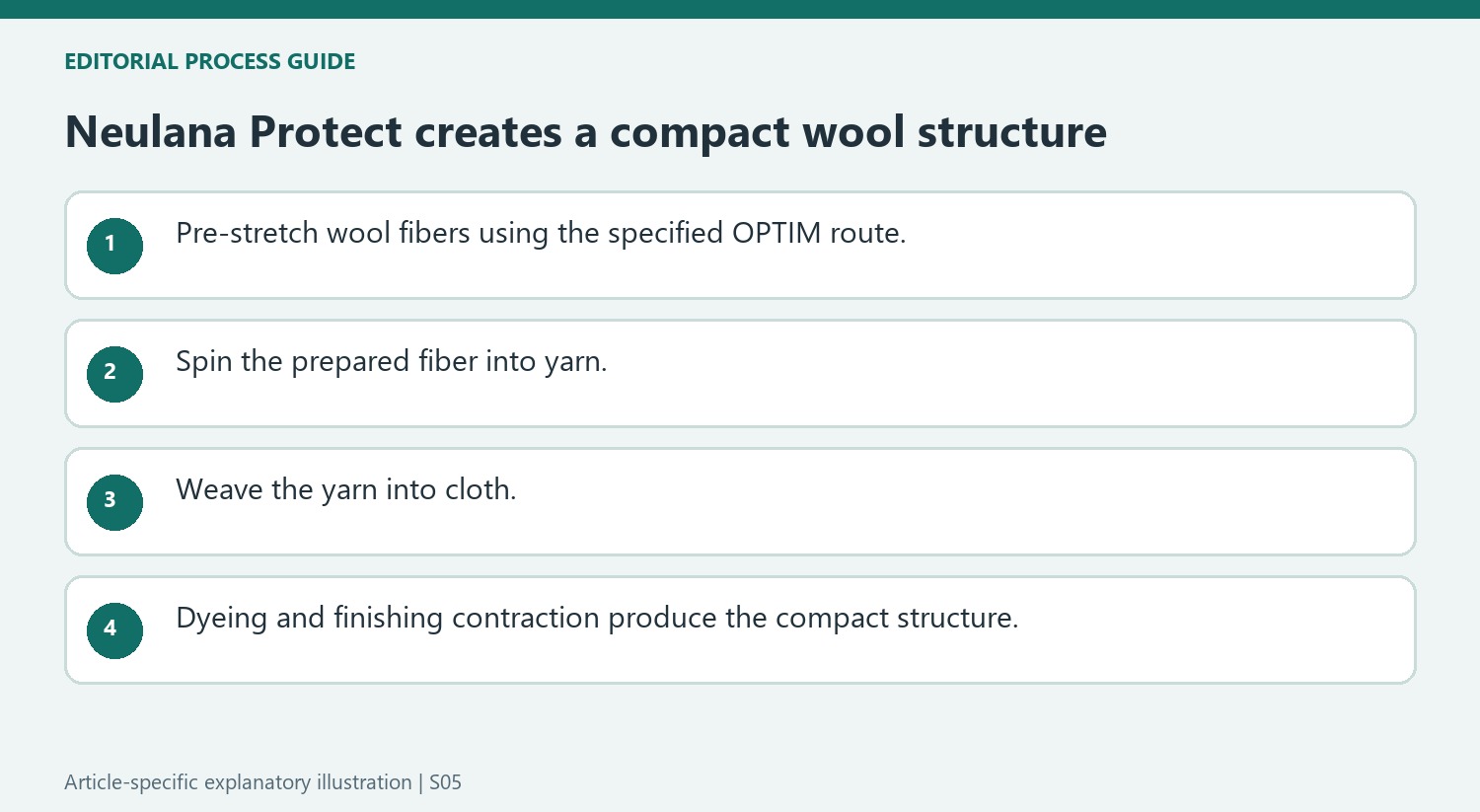
Fiber preparation leads to a denser finished structure
The Neulana Protect account begins with OPTIM stretching technology applied before the wool is spun into yarn. The prepared yarn is then woven, and the cloth contracts during dyeing and finishing. That contraction is central to the described result because it creates a compact structure. This is not a coating applied after a conventional jacket is complete. The source connects a particular preparation route with the arrangement of the finished fabric, so each stage belongs to the explanation. A generic Merino label alone does not establish that another textile has undergone the same process or will reach the same compactness after finishing.
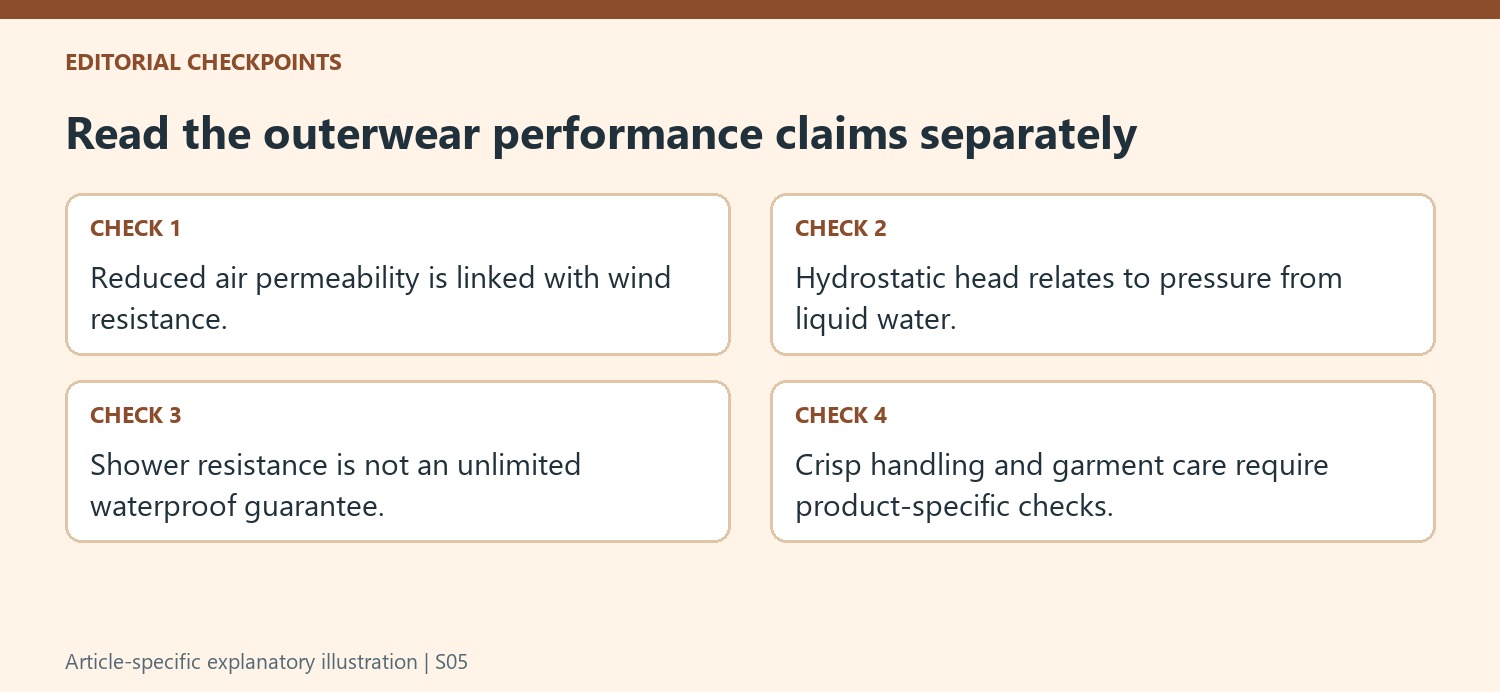
Different resistance claims describe different measurements
Woolmark associates reduced air permeability with wind resistance and increased hydrostatic head with shower resistance. These terms concern different interactions: one relates to air passing through the cloth, while the other relates to water pressure against it. Neither should be replaced with an unlimited promise that any garment made from the textile is waterproof under every condition. The guide does not supply a full finished-jacket test specification, and garment features remain separate from the fabric description. When comparing products, look for the actual stated performance and the conditions attached to it. This keeps a useful fabric innovation from becoming a stronger claim than the available source supports.
The crisp handle is part of its intended role
The source describes a crisp, resilient feel and presents the textile as an option for outerwear. That handling is an additional design feature alongside its compact structure. It does not imply that the fabric should feel like a soft lightweight base layer simply because both use Merino wool. The guide also associates the jammed weave with easier care and mentions improved wrinkle resistance. Those statements belong to the specific construction described, not to all wool clothing. A finished garment's own care information should determine its washing routine. To assess the textile, consider the intended jacket shape, the actual surface and the documented resistance claims together. This offers a more precise comparison than choosing on fiber percentage alone or assuming one specialized wool treatment has been used on every outwardly similar product.
References
- Neulana Protect. The Woolmark Company; The Woolmark Company.


Comments
0