 FabricKnowledge Lab
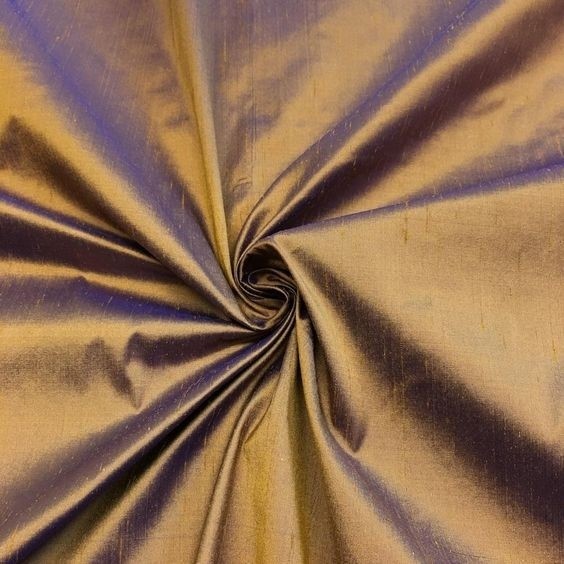
The uneven surface is intentional
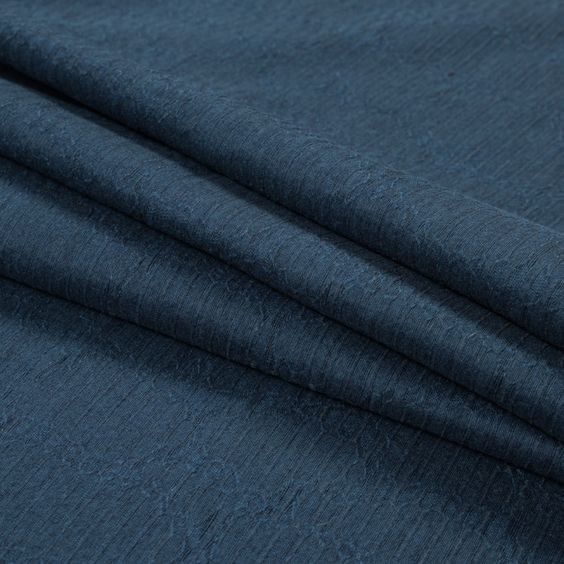
Shantung is known for small irregularities or ridges called slubs. Sewport presents these as a defining design feature rather than a sign that the cloth failed to become completely smooth. Its crisp, light character makes it useful where a textile needs both visible texture and an elegant outline. A photograph of a formal garment may show shine first, but close inspection reveals a different surface from a smooth silk satin. That texture should be considered when comparing fabric samples rather than judged against an expectation that all premium silk must look uniform.
Yarn preparation preserves the slubs
The source describes combining a more uniform silk yarn with a slub yarn whose irregularities remain visible. After cocoon filaments are reeled and prepared into yarn, selected preparation and weaving choices create the characteristic cloth. This explains why shantung is more specific than the broad word silk: the same general fiber can be organized to emphasize quite different surfaces. Sewport also distinguishes synthetic versions that imitate the appearance. Check composition separately from the visible effect, since a similar texture does not establish the same fiber content or care behavior.
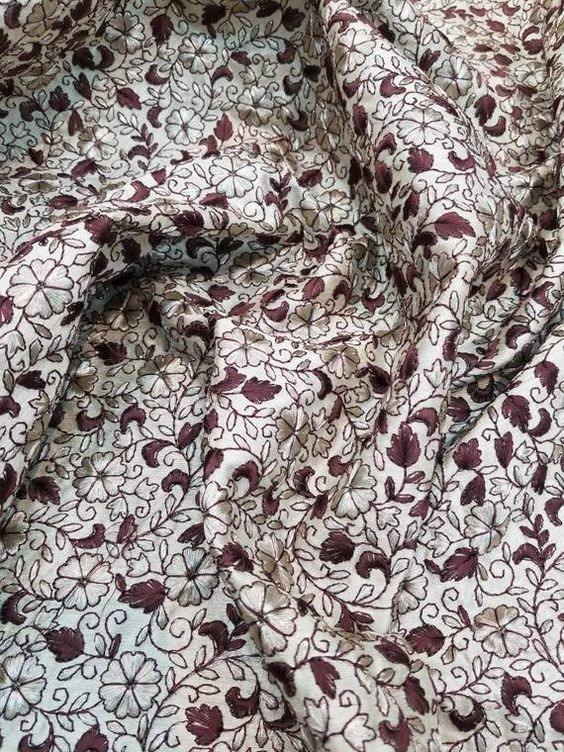
Compare the intended garment and nearby alternatives
Shantung appears in wedding gowns, eveningwear, shirts, vests, tailored trousers, and jackets in the guide. Sewport compares it with dupioni, describing dupioni as generally having more noticeable slubs and a heavier character. That makes the two related rather than exact substitutes. Examine the actual cloth's weight, crispness, and irregular surface before choosing it for a design. The source associates shantung with draped and flowing garments, but the finished pattern and construction still matter. Follow the individual care label instead of assuming that the fabric name guarantees one universal cleaning method for pure silk and imitation versions.
A slub is part of the intended surface
The shantung guide describes visible irregular ridges produced by slubbed yarn. These thicker places create a textured appearance rather than the entirely smooth surface associated with some other silk fabrics. A shopper unfamiliar with the construction might otherwise interpret every variation as accidental damage. Compare the sample with the supplier's description and inspect the pattern of texture across the cloth. The aim is not to accept every fault because a fabric is textured, but to recognize that intended yarn variation is one of its defining features. Color and lighting can emphasize those ridges differently, so a close view and a broader view are both useful when judging the final appearance.
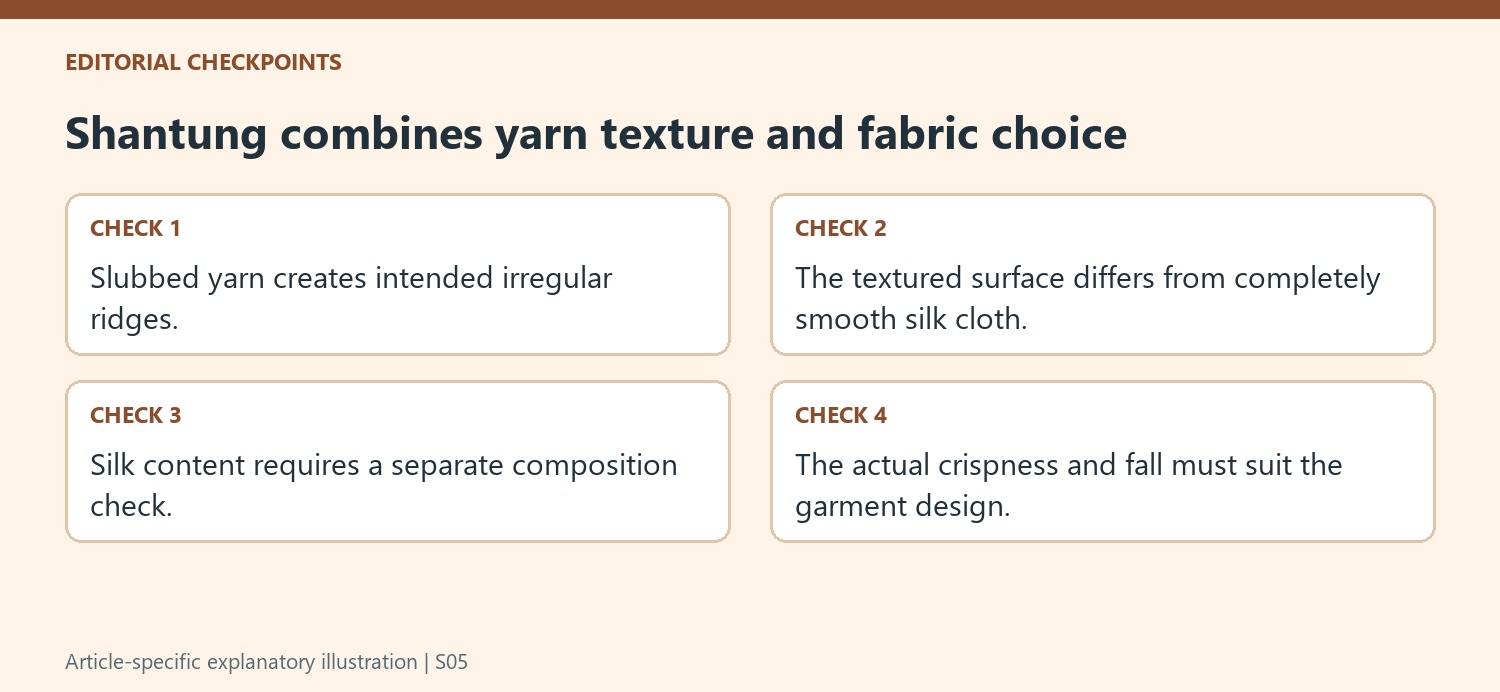
Crisp texture changes the role of a silk fabric
Sewport connects shantung with wedding gowns and other dressy clothing, emphasizing its particular drape and textured surface. That does not make it interchangeable with a very soft silk or a sheer overlay fabric. A design that depends on a smooth flowing effect may respond differently when made in a crisper textile. Hold a sample in folds or gathers similar to those proposed for the garment and observe the result. The fabric's texture may be a deliberate contrast to a smoother material elsewhere in the design. Thinking about that relationship gives the slubs a design purpose rather than treating shantung as simply another way to obtain a shiny silk surface.
Material identity and construction remain separate checks
The source discusses silk shantung alongside synthetic versions designed to reproduce some of its visual character. The fabric name therefore needs the composition label beside it. A similar textured appearance is not evidence that two products share the same fiber or care requirements. Likewise, the presence of silk does not establish one particular grade or finished weight. Read the actual product specification and compare the sample for the intended use. The source also describes the preparation of uniform and slubbed yarns before weaving, which makes the surface variation easier to understand. That manufacturing explanation is more informative than a general luxury claim, because it connects a visible feature to a deliberate yarn choice. For cleaning and storage, the finished garment's own instructions remain the most specific guidance.





Comments
0