 FabricKnowledge Lab
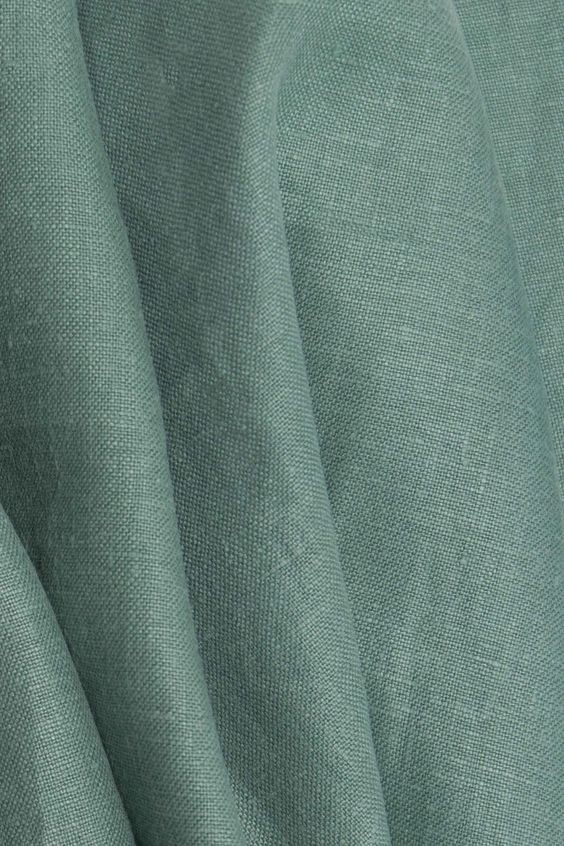
A different part of a different plant
Linen and cotton are both plant-based textiles, but their fibers come from different places. Cotton grows around seeds, while linen uses fibers associated with flax stems. Sewport describes the stem as containing a woody interior and fibrous material that must be separated for textile use. Calling both fabrics natural does not make their raw materials or processing identical. This distinction is a useful starting point when comparing a linen shirt with a cotton one: similar garment shapes can be made from fibers with different origins, preparation requirements, and handling characteristics.
Separating and preparing the flax
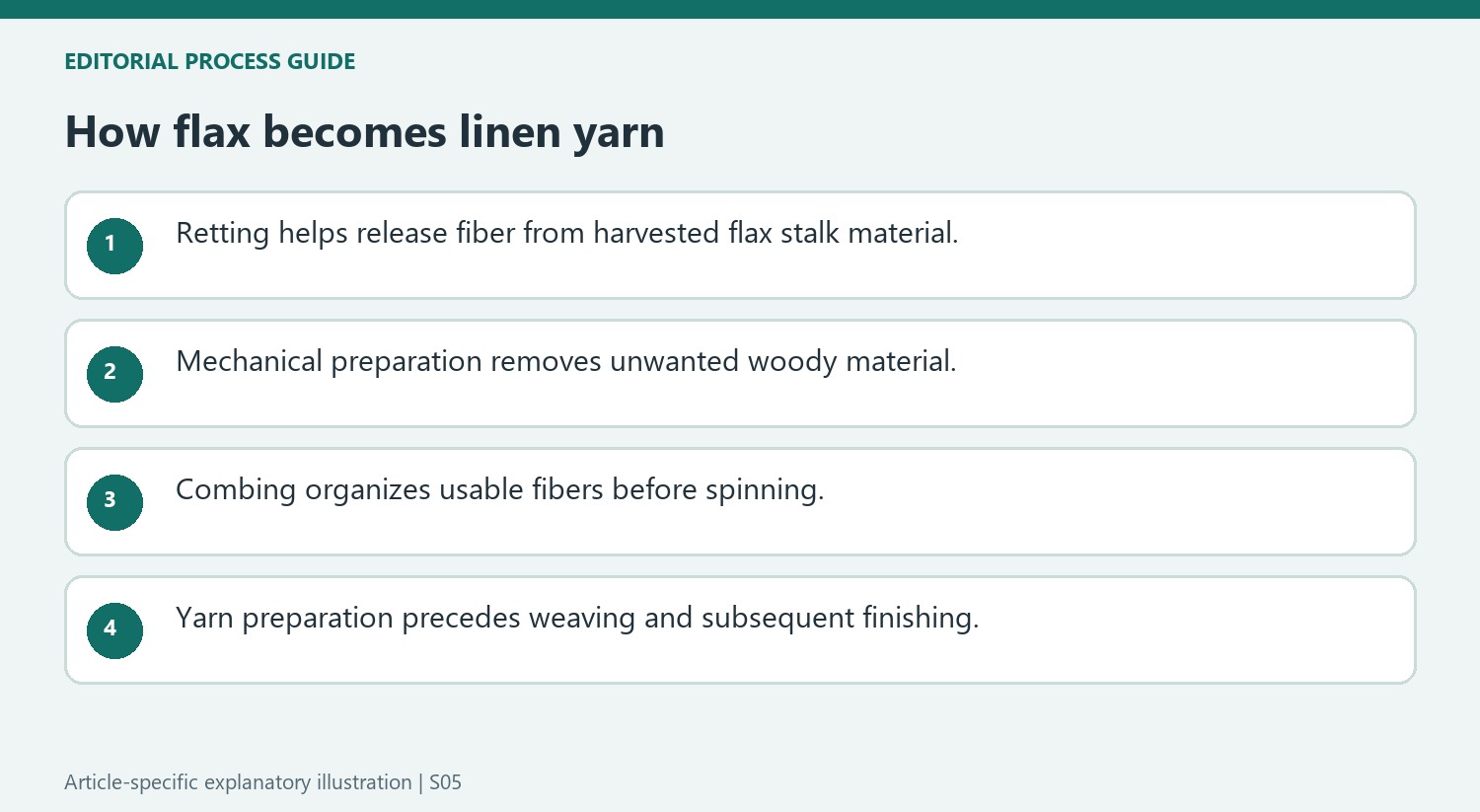
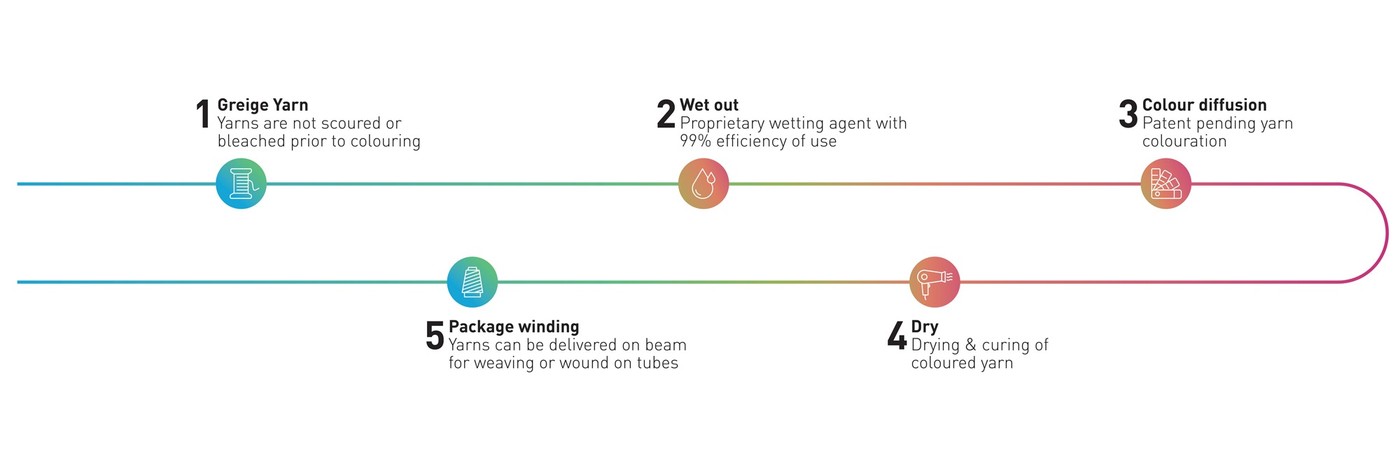
The source describes harvesting flax, removing unwanted plant material, and retting the stalks to release fibers. Further mechanical preparation breaks and removes woody material before combing organizes the usable fiber for spinning. These stages demand control because poor handling can damage the textile material. Prepared strands are spun into yarn, wound, dried, and made ready for subsequent fabric production and finishing. Linen therefore involves more than weaving an unprocessed plant strand. The labor and preparation behind the yarn are part of the production differences that distinguish it from cotton.
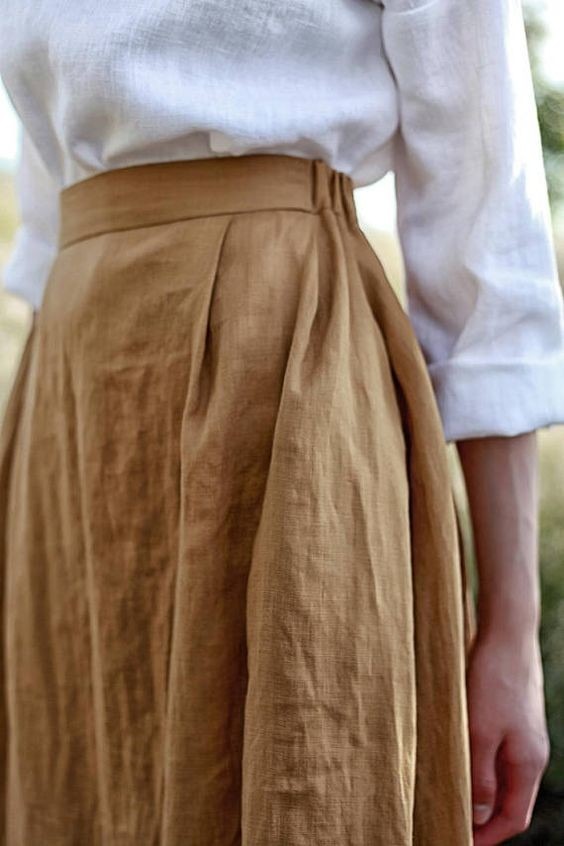
Why linen appears in clothing and homewares
Sewport connects linen with breathable warm-weather clothing and with household products including sheets, tablecloths, napkins, and towels. It emphasizes relatively low heat retention and a quick-drying character compared with cotton in the discussion. Those characteristics help explain the fiber's long use in hot climates, but they do not describe every finished linen fabric equally. Yarn size, fabric construction, and finishing still affect weight and feel. Read the actual item's composition and care instructions when selecting a garment or home textile, rather than assuming that its linen content guarantees one texture, one degree of transparency, or one universal washing setting.
Follow the separation of textile fiber from the stem
Flax reaches the yarn stage through a different route from seed cotton. The source describes removing unwanted plant material, loosening the relationship between useful fiber and woody stalk, and then carrying out mechanical preparation. Retting is part of that separation process; it is not itself a weaving technique. Breaking and further cleaning address stalk material, while combing prepares the fiber for spinning. Keeping the stages distinct makes the manufacturing story easier to understand. It also explains why a description of linen can spend considerable time on preparation before mentioning a loom: the useful textile component has to be recovered and organized before it can form a workable yarn.
Recognize that linen can take several constructions
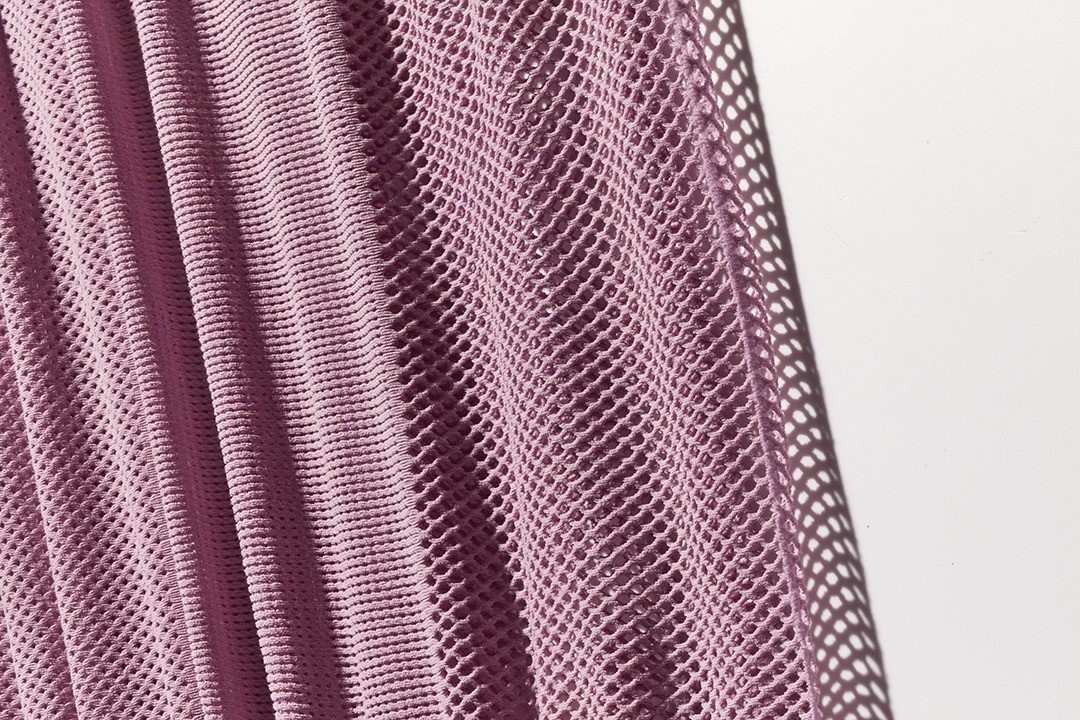
The guide lists decorative damask, plain-woven forms, loosely woven textiles and cloth intended for sheeting or apparel. These examples share flax as a starting material but differ in how their yarns are arranged. A decorative table textile and a lightweight shirt therefore need not have the same surface, openness or weight. When comparing linen products, the word linen answers the fiber question while a closer description of the cloth answers more about its intended behavior. Handle the actual sample where possible and look at how it hangs, how much light passes through it and whether the surface suits the proposed garment or household use.
Connect the production story to specific claims
Sewport discusses environmental questions around cultivation and retting, including the consequences of different processing choices. That makes a simple natural-fiber label an incomplete account of production. A statement about agricultural certification concerns a particular set of requirements, while another certification may address a different aspect of the finished textile. Read the wording of each claim rather than combining them into a general promise. The same care applies to performance language: linen's association with hot-weather use does not specify the result of every weave, finish or blend. Evaluate those details and the product's care information alongside the flax content when deciding how a particular item will fit its intended role. Table napkins and a loose warm-weather shirt illustrate the range well. Their shared flax content does not mean that the chosen yarn, woven density or finishing must be the same, because each product has a different practical role.



Comments
0