 FabricKnowledge Lab
A close weave can still be lightweight
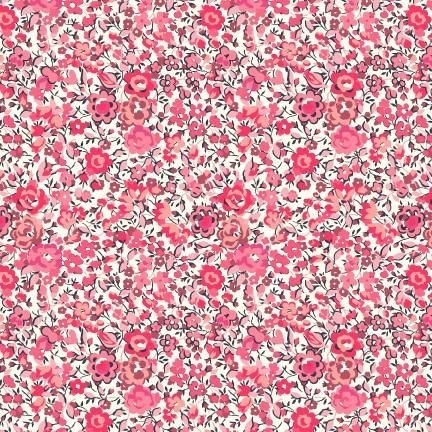
Cotton lawn is a fine plain-weave cloth rather than a separate cotton plant variety. Its warp and weft alternate in a regular over-and-under arrangement, creating a simple woven grid. Sewport describes lawn as lightweight, often semi-transparent, and relatively crisp. Those features can coexist with a close weave because the yarns themselves are fine. A high thread count should therefore not be confused with a heavy fabric. When comparing a lawn sample with another cotton, look at its transparency, surface, and handling rather than assuming that all closely woven cottons feel equally substantial.
Yarn preparation affects the surface
The source explains that lawn can be made from carded or combed cotton yarn. Combing gives a finer, smoother preparation and generally costs more than carding. Once spun, the yarn is woven into the characteristic fabric and may be bleached, dyed, or printed. Lawn's crispness is also part of its identity: it is not simply another name for the softest possible cotton. Sewport compares it with related fabrics such as voile, batiste, and organdy, which differ in fineness, softness, or stiffness even when their lightweight appearance initially seems similar.
Use the fabric's specific qualities
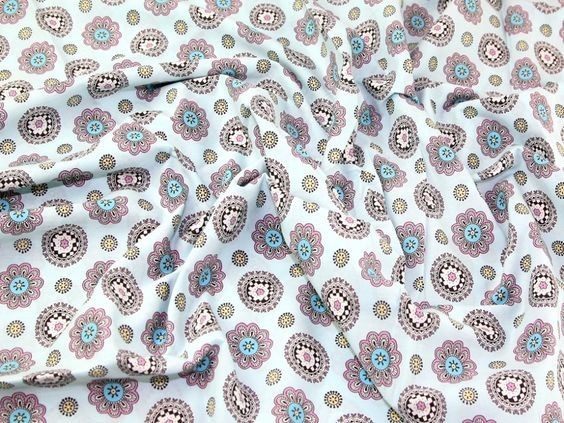
Lawn appears in blouses, shirts, dresses, lingerie, handkerchiefs, and the printed lawn suits associated with Pakistan and India. Its light structure makes it especially relevant to warm-weather clothing, while its semi-transparent character affects the appearance of a finished garment. The source recommends a fine sewing needle because of the fabric's fine, closely spaced yarns. Before choosing it for a project, assess the actual sample and print rather than relying only on the cotton label. Lawn identifies a construction and hand; it does not guarantee that every supplier's cloth has identical opacity, weight, or finish.
Distinguish transparency from thread density
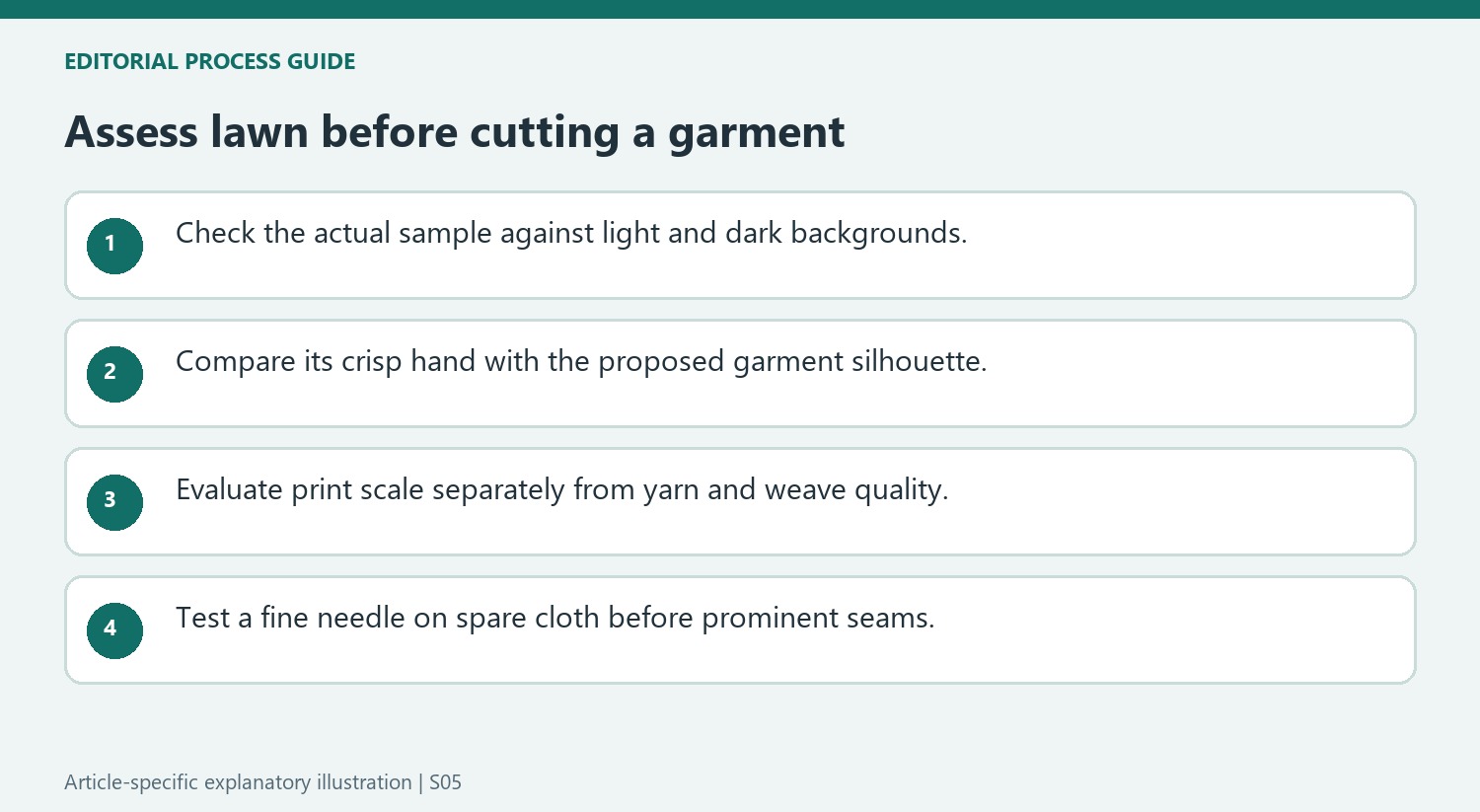
Lawn demonstrates why several fabric measurements need to be considered together. Fine yarns can be closely arranged and still produce a light cloth, so a dense-looking weave is not automatically opaque or heavy. The source describes semi-transparency alongside a relatively crisp surface, rather than presenting lawn as a thick cotton. When checking a sample for a blouse or dress, view the cloth against contrasting backgrounds and let it hang as it would in the garment. This makes its visual coverage easier to assess. The fabric name provides a useful starting point, but an actual sample reveals whether the particular print, color and weight suit the intended appearance.
Place printed lawn in its design context
Sewport traces lawn from its French naming history to its important place in South Asian clothing, including salwar kameez. In that discussion, printed patterns are central to the seasonal identity of lawn suits. Other applications include white or dyed textiles, light blouses, skirts and handkerchiefs. These examples show that the fabric is not defined by one floral print or one regional garment. A print changes its visual expression while the fine plain-weave construction remains the technical point of comparison. When choosing between several lawns, assess pattern scale and color together with the cloth's handling rather than treating the most elaborate print as evidence of the finest yarn preparation.
Plan sewing around the fine woven surface
The guide recommends a fine needle for lawn because of its fine yarns and close construction. A small trial seam on spare cloth lets a maker observe how the actual material responds before sewing a prominent area. Check the line of stitching and the way the layers sit, especially when the chosen design depends on a clean lightweight finish. The source also compares lawn with voile, batiste and organdy, which can differ in softness, fineness and stiffness. Those distinctions matter when substituting a fabric in a pattern. Choosing another light cotton by weight alone may preserve lightness while changing the structure or silhouette that the original design relied upon. A fine white lawn and a patterned lawn may show coverage differently even when both are lightweight. Comparing them in the same light helps separate the visual effect of the print from the physical openness of the woven cloth.



Comments
0