 FabricKnowledge Lab
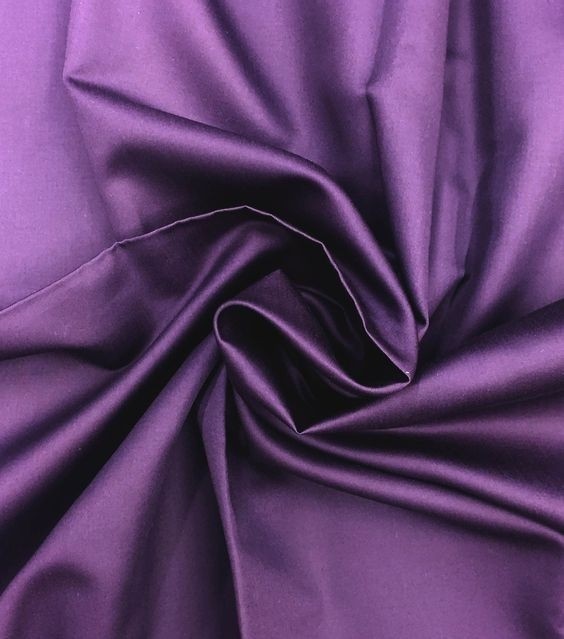
A designation tied to American cotton
Supima is associated with American-grown extra-long staple Pima cotton, rather than being a separate synthetic material or a particular cloth structure. Sewport links it to Gossypium barbadense, the cotton species also associated with Pima. Its unusually long fibers are the starting point for the softness and strength emphasized in the guide. The distinction is useful when reading labels: a cotton origin or designation and a fabric construction answer different questions. A Supima shirt and a Supima sheet can use related raw material without sharing the same weave or weight.
From cleaned fiber to usable fabric
The guide describes fibers being separated, baled, opened, and mixed before carding and combing. These preparation steps organize the cotton and remove unwanted material before the strands are spun into yarn. Fabric production follows the yarn stage. This manufacturing sequence helps explain why fiber quality is only one part of the final result. A fine raw material still passes through decisions about yarn, textile structure, dyeing, and finishing. The Supima name should not be read as a detailed description of all those later decisions.
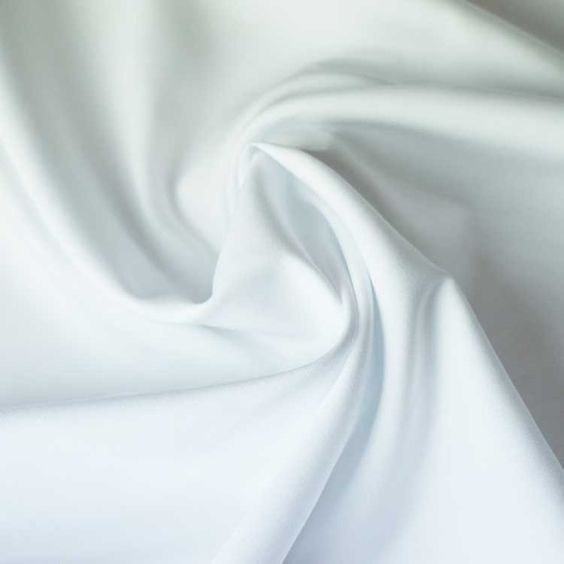
Where the longer fibers are useful
The source highlights consumer products worn close to the skin or used for sleep, including T-shirts, dress shirts, underwear, pajamas, and bedding. Smoothness and resistance to pilling are important reasons for choosing longer-fiber cotton in those applications. Sewport also distinguishes the Supima designation from the broader Pima category and identifies American production regions. For a practical purchase, check the full composition and the specific product description alongside the name. Follow the finished item's care label, and avoid assuming that a designation on its own establishes organic certification, a universal thread count, or one washing temperature for every garment.
Distinguish the cotton designation from the textile recipe
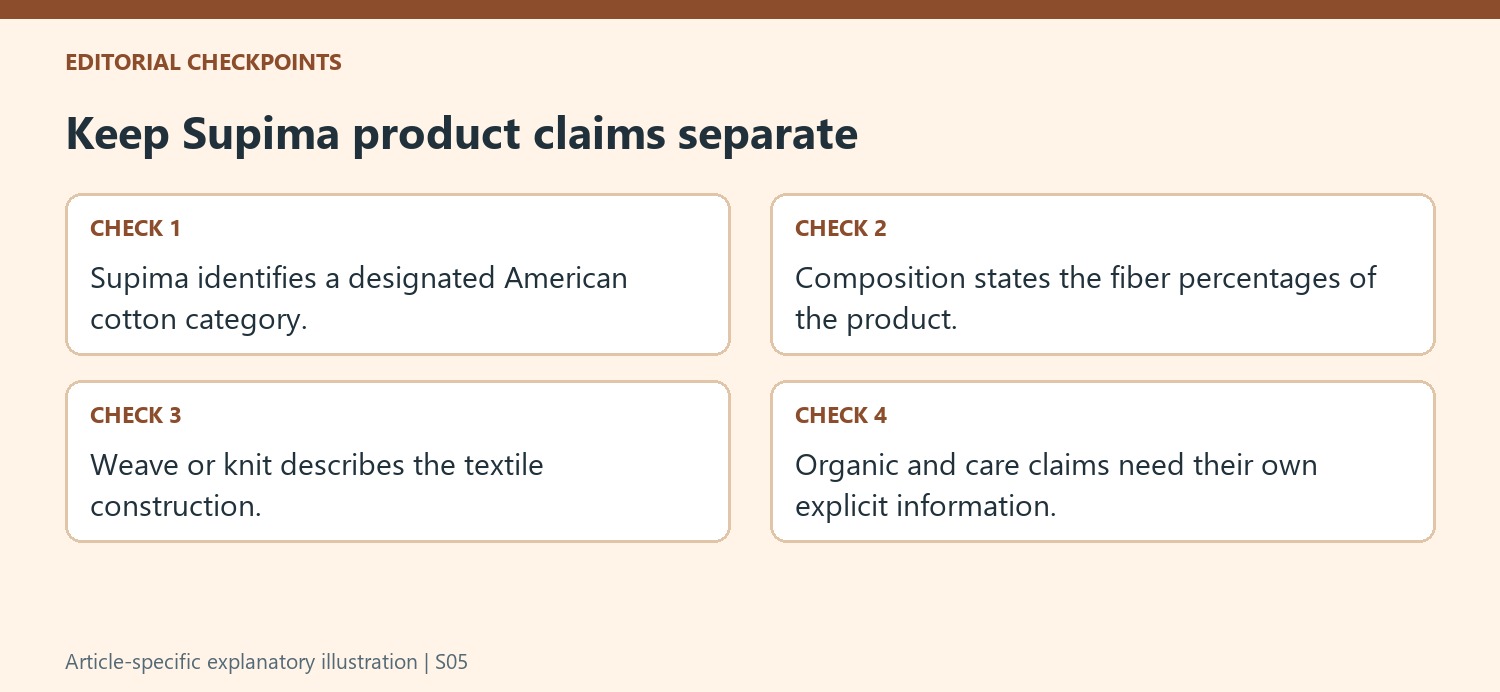
The Supima discussion places a named cotton supply category before the manufacturing decisions that turn it into consumer cloth. That order is useful because a garment label can combine several different types of information. A reference to Supima concerns the cotton designation, a percentage concerns composition, and a term such as knit or woven concerns construction. None replaces the others. Two products can carry the same designation yet use yarns and structures intended for different purposes. Reading a complete description therefore gives a more meaningful comparison than looking for one premium word. It also explains why the source lists several applications rather than presenting Supima as one fixed fabric with one appearance.
Look at preparation as a quality stage
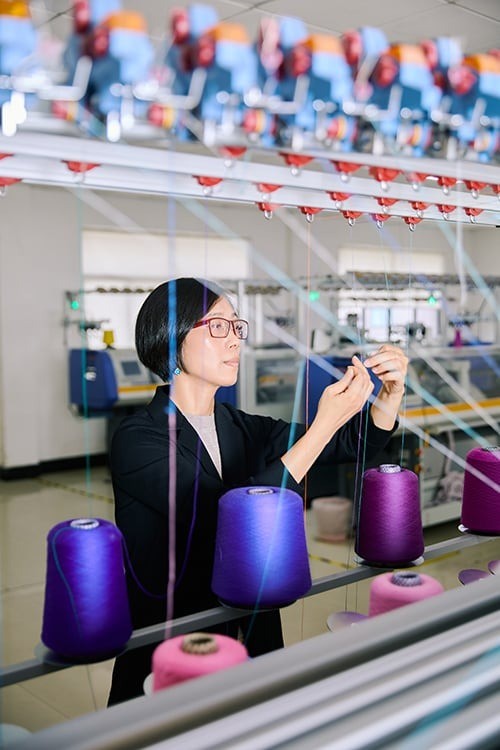
Opening and mixing prepare baled fiber for the next operations, while carding and combing organize the material before spinning. These stages help connect the raw cotton to the smoother yarn emphasized in the source. They are not visible as separate layers in the finished cloth, but their role explains why fiber selection and processing are discussed together. Spinning still determines a yarn, and fabric production turns that yarn into a structure. When a retailer supplies details about both raw material and construction, those details can clarify how the item was designed. They are more informative than assuming that long fibers force every shirt, sheet or undergarment to have identical thickness or handling.
Check claims beyond the Supima label
The source highlights American growing regions and distinguishes the designation from the broader Pima name. That origin information should be kept separate from claims about organic agriculture, chemicals or the conditions of final garment assembly. A named cotton designation is not a blanket certification of every later process. For practical use, inspect the product's full composition and stated construction, then follow its own laundering information. This is especially useful when comparing bedding with clothing: both may emphasize a smooth cotton surface, but their finishes, dyes and assembled details can differ. Evaluating those details preserves the value of the fiber designation without asking it to answer questions it was not designed to settle. The distinction can be recorded simply when shopping: note the cotton designation first, then the composition, then the textile construction. This preserves three useful facts instead of allowing one prominent label to stand in for the whole product description.





Comments
0