 FabricKnowledge Lab
A regenerated fiber designed for soft fabrics
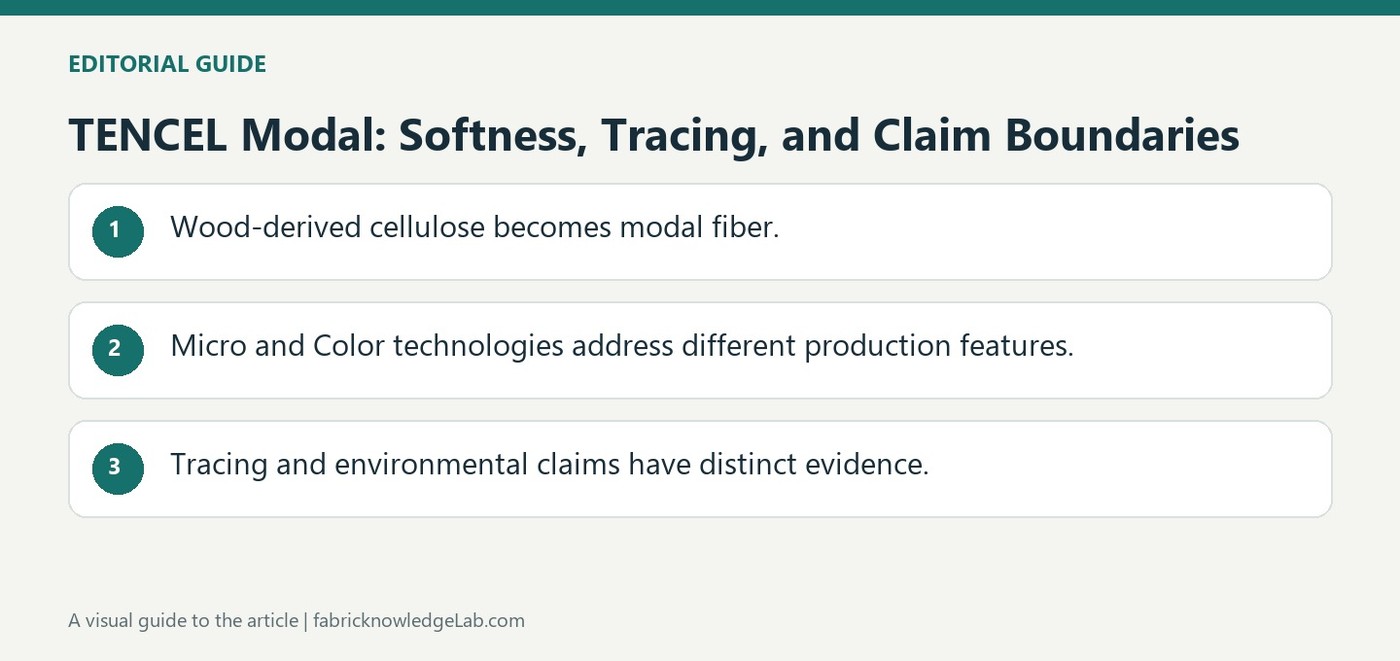
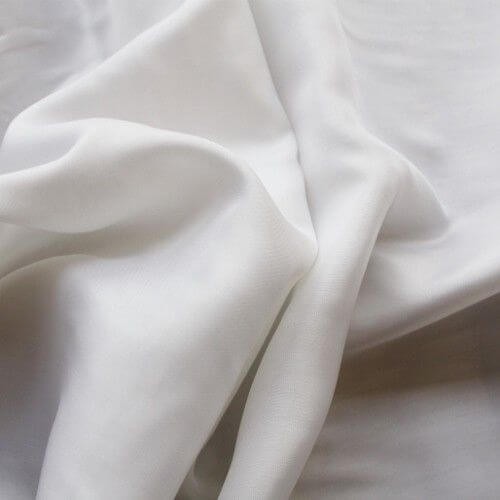
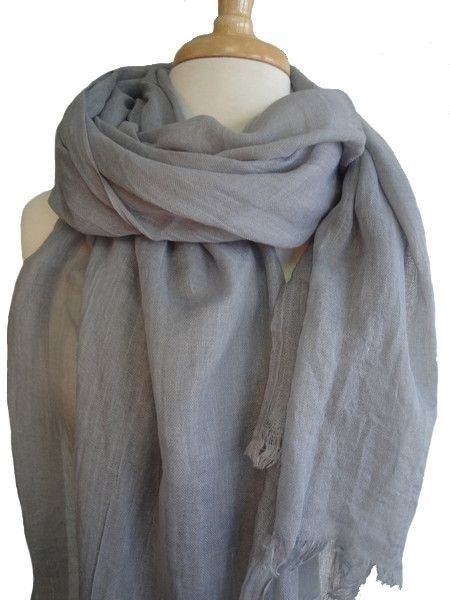
Lenzing describes TENCEL Modal as regenerated cellulose derived from wood. Its overview connects the fiber's cross-section and tenacity with softness in fabrics and the ability to withstand repeated washing and drying. The page also discusses moisture absorption and release as a contribution to comfort in a finished textile. These are fiber characteristics and proposed contributions, rather than a complete description of every garment. Yarn choice, construction, blend partners, and finishing remain part of the final product. A material overview helps explain the ingredient, while product-specific information is needed to assess the article a customer actually buys.
Micro and Color technologies address different stages
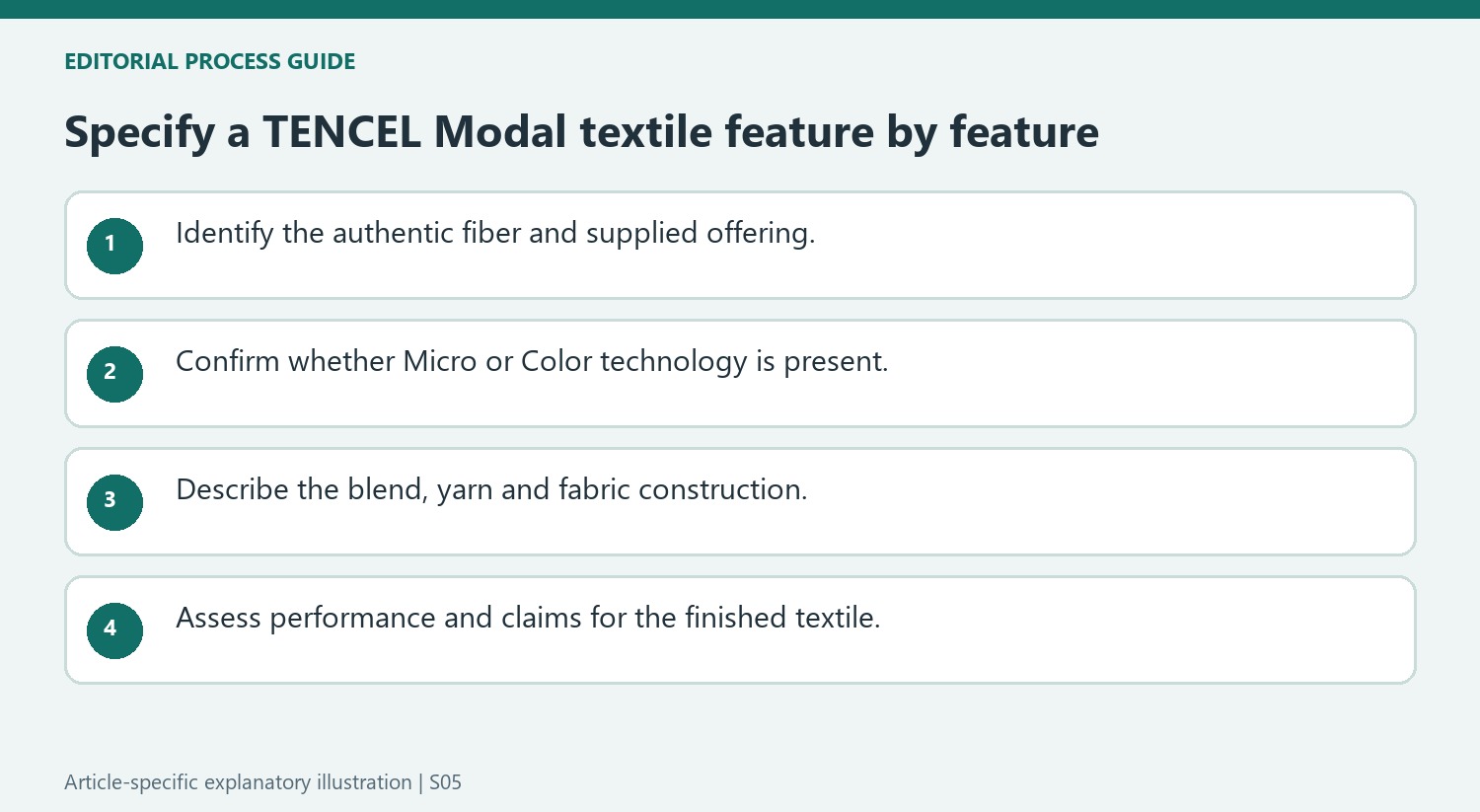
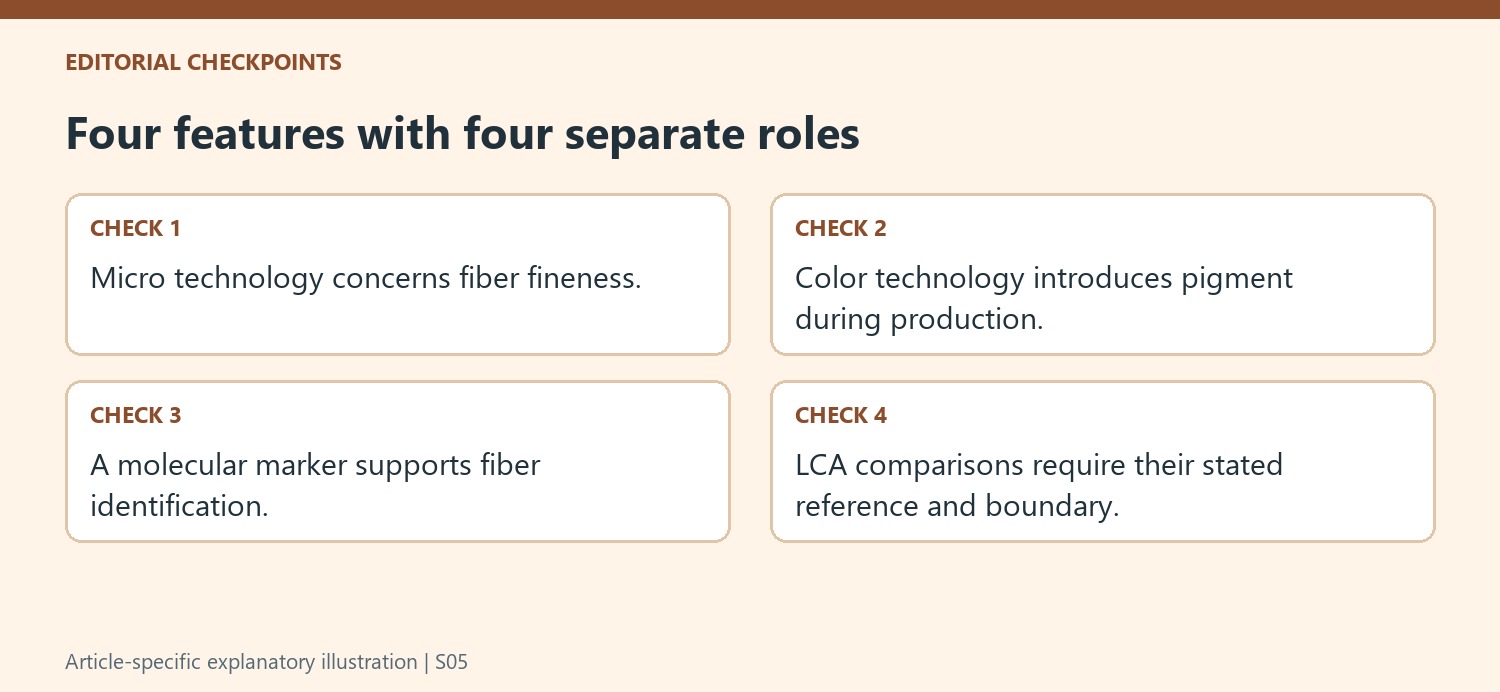
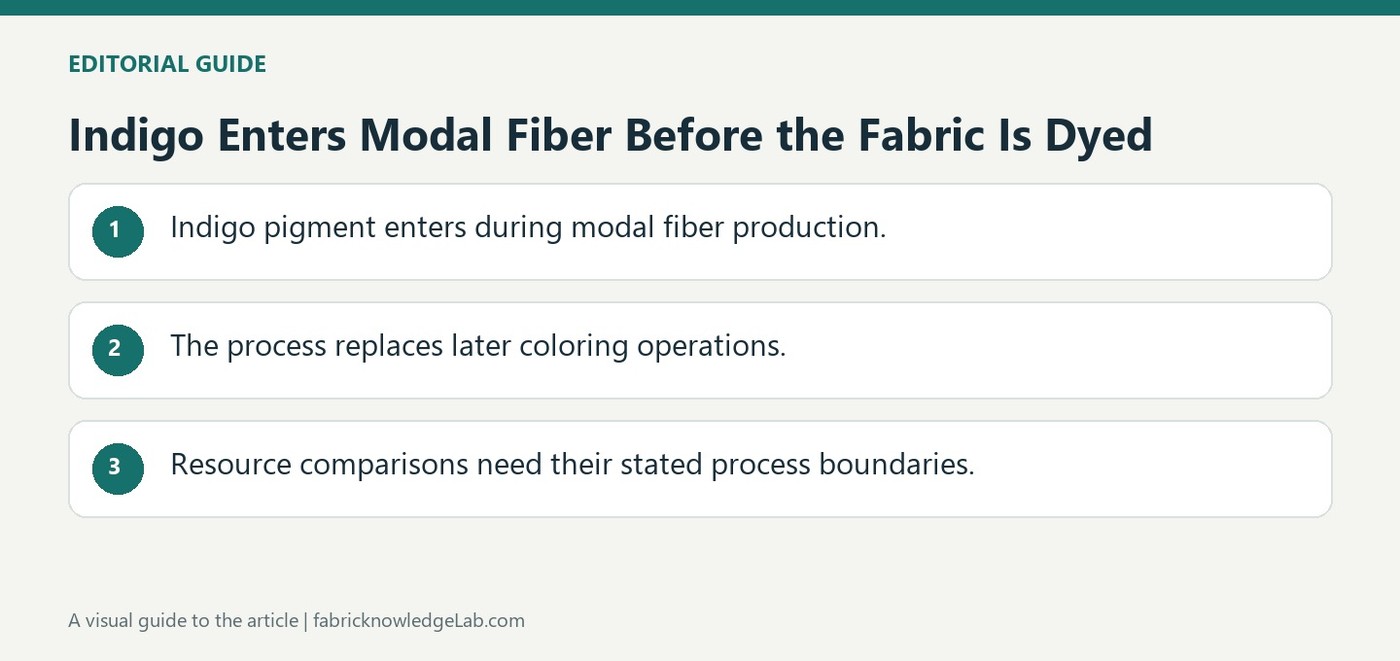
The page identifies Micro technology with particularly fine modal fibers in the TENCEL portfolio, emphasizing increased softness. Color technology addresses a separate issue: pigment is incorporated during fiber production, which can reduce downstream dyeing steps. These technologies should not be merged into a single assumption that every branded modal fabric uses both. Lenzing also describes a molecular marker intended to support authenticity and traceability. The marker concerns identifying the fiber within a supply chain, whereas fineness and coloring concern material and manufacturing choices. Each feature answers a different question about the product being specified.
Environmental comparisons require their reference case
Lenzing reports lower emissions and water consumption than generic modal, with the stated comparison linked to life-cycle assessment information in the Higg Materials Sustainability Index. It also references an EU Ecolabel and biodegradability certification for specified fibers and conditions. Those qualifications give the claims boundaries. They should remain attached to the relevant fiber, assessment, and certificate, rather than becoming an unrestricted statement about every finished textile. For a clear product description, distinguish sourcing, manufacturing impacts, traceability, and use-related properties instead of treating one favorable material claim as evidence for all the others.
Traceability and performance are different kinds of evidence
The molecular marker described by Lenzing is intended to help identify authentic TENCEL fibers. That is a supply-chain function. It is different from demonstrating that a finished garment has a particular level of softness, strength, or moisture comfort. The same page discusses those performance-related contributions, but they arise from material characteristics and the way a textile is made. A clear specification can therefore contain both identification evidence and finished-product test information without treating either as a substitute for the other. For a buyer, the useful question is which claim each document answers. Knowing that a fiber is authentic does not eliminate the need to understand its proportion, construction, or use in the article.
Micro and Color should remain separate options
Micro technology concerns the fineness of fibers within the named portfolio, whereas Color technology introduces pigment during fiber production. A product description that mentions one does not automatically establish that the other was used. This distinction is especially useful when comparing two branded modal fabrics whose appearance or touch differs. Ask which specific offering was supplied and how it was converted into yarn and fabric. The source presents a set of capabilities, not a promise that every TENCEL Modal textile includes every feature at once. Similarly, rich color, processing stability, and soft hand address different outcomes, so evidence for one characteristic should not be repurposed as proof of all the others.
Use the comparison that accompanies the claim
The page's material-impact statement compares the named modal fibers with generic modal and links the result to life-cycle assessment information. Its Color technology statement uses another basis concerning fabric production and dyeing, with the note excluding fiber impact from that calculation. These are not interchangeable totals. Adding their percentages together would not establish a valid overall garment saving because their boundaries and reference processes differ. The same care applies to biodegradability and ecolabel references: covered fibers, certificates, and conditions remain part of the claim. A product description is clearer when it keeps each comparison attached to its actual basis and evaluates the complete finished textile separately from the material supplier's overview.







Comments
0