 FabricKnowledge Lab
A rubber-based material description
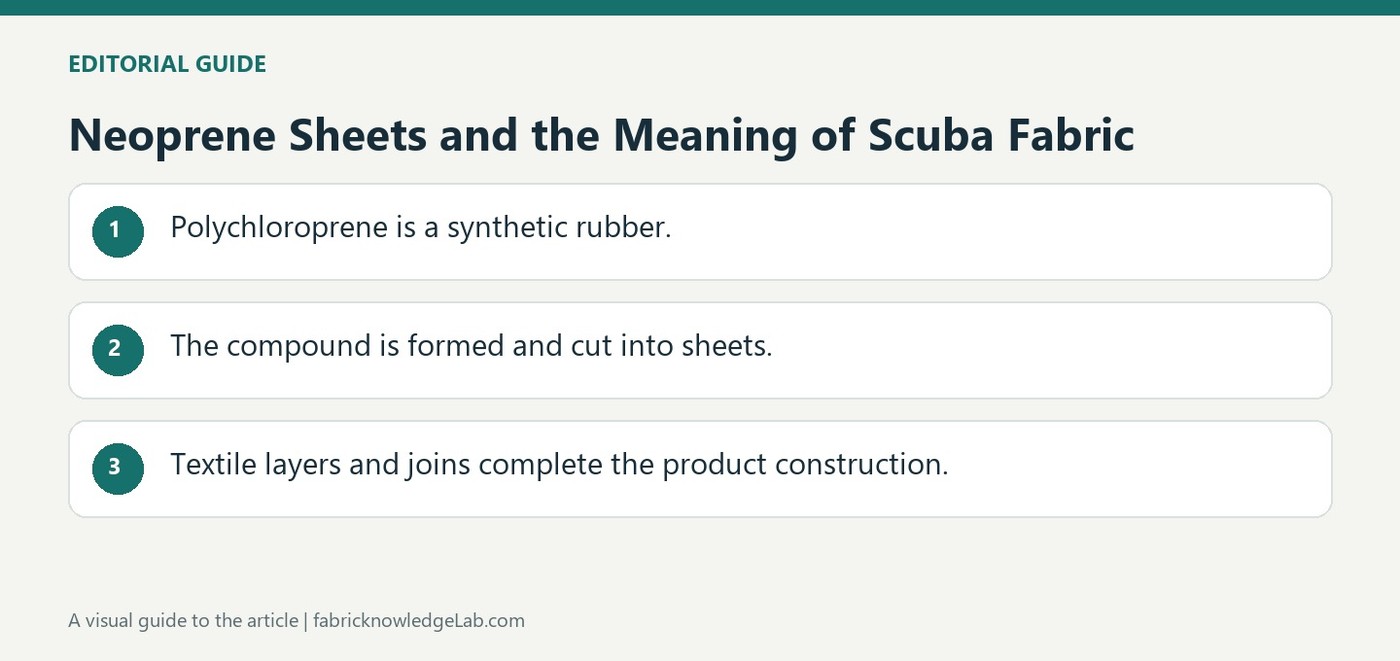
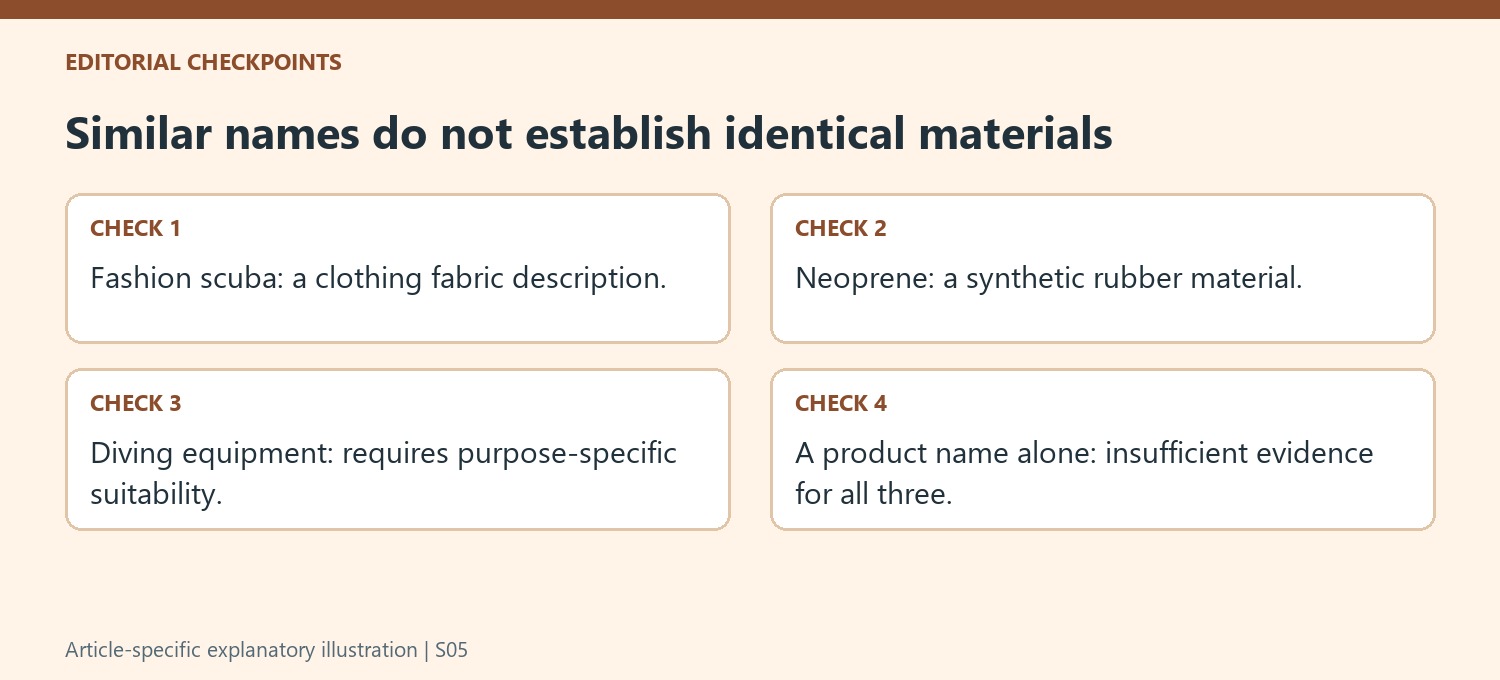
Sewport's scuba-fabric guide primarily describes neoprene, a synthetic rubber whose polymer is polychloroprene. That focus is useful to recognize before applying its manufacturing account to every product marketed with a diving-related name. The process it describes produces rubber sheets that can be laminated and cut, rather than beginning with yarns knitted into loops. A material's flexibility alone cannot identify its chemistry or construction. When a garment description uses the word scuba, the composition and construction details are therefore essential for determining whether a neoprene-focused explanation actually applies to the product.
From compound to laminated sheet
The source describes chloroprene being polymerized, followed by processing with additives to obtain the required material properties. The compound is mixed, formed, and cut into sheets of selected thickness. Textile layers may then be bonded to the rubber. The resulting sheet material can be stacked, marked with pattern shapes, and cut into garment or equipment panels. This sequence differs from making elastane yarn and blending it into a textile. Both routes can lead to flexible products, but the sheet, textile covering, and any joining materials each have distinct roles in the finished construction.
Applications require more than a familiar name
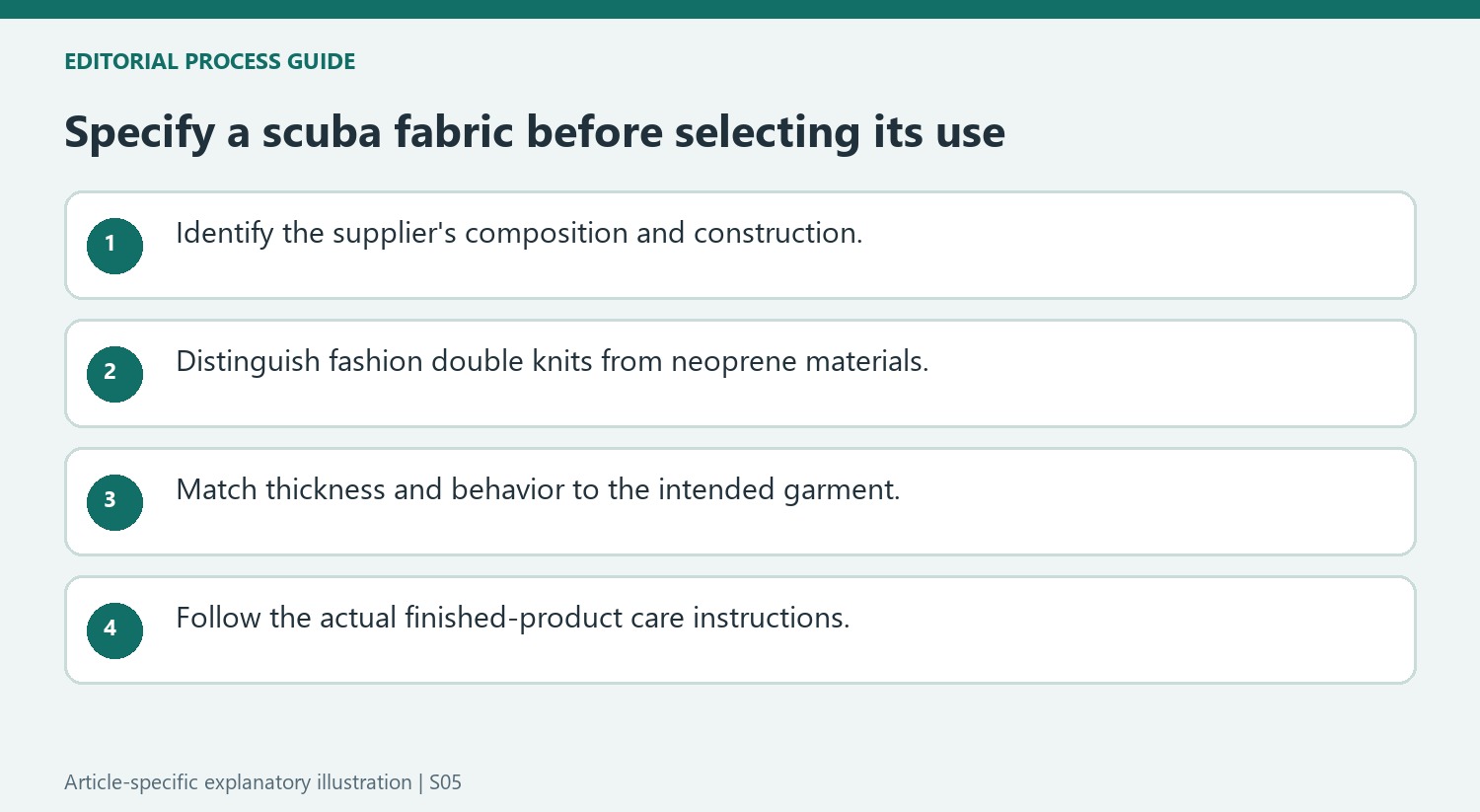
The guide lists wetsuits alongside cushioning, protective cases, seals, and other applications for polychloroprene-based materials. For apparel, it describes panels being joined and fitted with details such as zippers or pockets. Those examples show that the material is selected and assembled for specific functions. They do not establish that an ordinary fashion fabric with a similar name provides equivalent insulation or water-related performance. A useful specification should identify the actual rubber or fiber composition, thickness, textile layers, and intended use. The commercial name provides a starting point for questions, rather than a substitute for those details.
A laminated sheet has several material roles
The neoprene-focused guide describes a rubber compound, sheet thickness and textile layers bonded onto the sheet. Those are separate parts of the resulting material. The rubber provides one structural component, while an outer textile changes the surface presented to the user and the later manufacturing process. A product specification should identify the actual construction rather than referring only to a familiar diving-related name. This is particularly useful where a garment retailer uses scuba as a fashion term: the label alone does not prove that a rubber sheet is present. Look for composition and construction evidence before applying a neoprene manufacturing explanation to the item being considered.
Thickness is a specification rather than a universal quality ranking
The source describes cutting sheets to different thicknesses before they are supplied for further manufacture. That choice reflects an intended use, not a rule that the thickest material is always best. A protective case, a cushioning component and specialist water-related equipment ask different things from the sheet and its covering. Thickness also interacts with how the material can be cut and joined in a particular product. When comparing examples, identify the actual measured sheet and the purpose it serves. A garment's shape or smooth surface cannot reveal every layer within it, and flexibility alone does not establish that two products have identical thermal, water or mechanical behavior.
Joining and equipment design remain separate requirements
The guide describes panels being marked, cut and assembled, with additional components such as zippers and pockets introduced for the intended item. These assembly details matter because material identity does not complete an equipment specification. A flexible sheet used in a fashion garment should not be assumed suitable for a diving or protective application. Likewise, the presence of neoprene in a product does not certify all of its seams, closures or other components. Use the manufacturer's stated purpose and product-specific information when performance matters. For maintenance, follow the completed item's own instructions rather than transferring an unrestricted routine from another rubber or stretch textile. The accurate comparison identifies the sheet, any laminated layers and the assembled design, keeping each level of evidence distinct.







Comments
0