 FabricKnowledge Lab
A brand name within a fiber category
The LYCRA name is associated with elastane, the highly elastic synthetic fiber also called spandex. Sewport's guide traces its original development to DuPont in the 1950s and describes its subsequent role in clothing. The distinction between a brand and a generic material name is useful when reading product descriptions. A fabric advertised with LYCRA can still contain substantial amounts of cotton, wool, polyester, or other fibers. The branded stretch component does not replace the rest of the composition statement or identify the textile's construction, weight, and surface by itself.
From fiber production to a blended textile
The guide describes a solution-spinning process: chemical ingredients are reacted to produce a polymer solution, which is made workable and pushed through a spinneret. Fine strands form, are finished to assist handling, and are wound for further manufacture. Textile producers can then incorporate that material alongside other yarns. This separate production stage helps explain why a stretch fiber is usually described as an addition to a fabric rather than a complete clothing material. Its contribution is combined with the characteristics of the accompanying fibers and the way the textile is assembled.
Applications depend on fit requirements
Sewport lists underwear, bras, socks, cycling shorts, yoga clothing, and hiking apparel among the uses of this stretch-fiber category. It also notes motion-capture suits, where close contact with the performer's body supports the recording purpose. Across these examples, the recurring design requirement is extension around the body. That does not establish that two garments bearing the brand name will stretch equally or feel the same. To compare them, read the full fiber breakdown and consider the intended activity, fabric structure, and actual fit. The brand identifies one ingredient; the complete garment remains the unit that a wearer uses.
A brand reference is only one part of the composition story
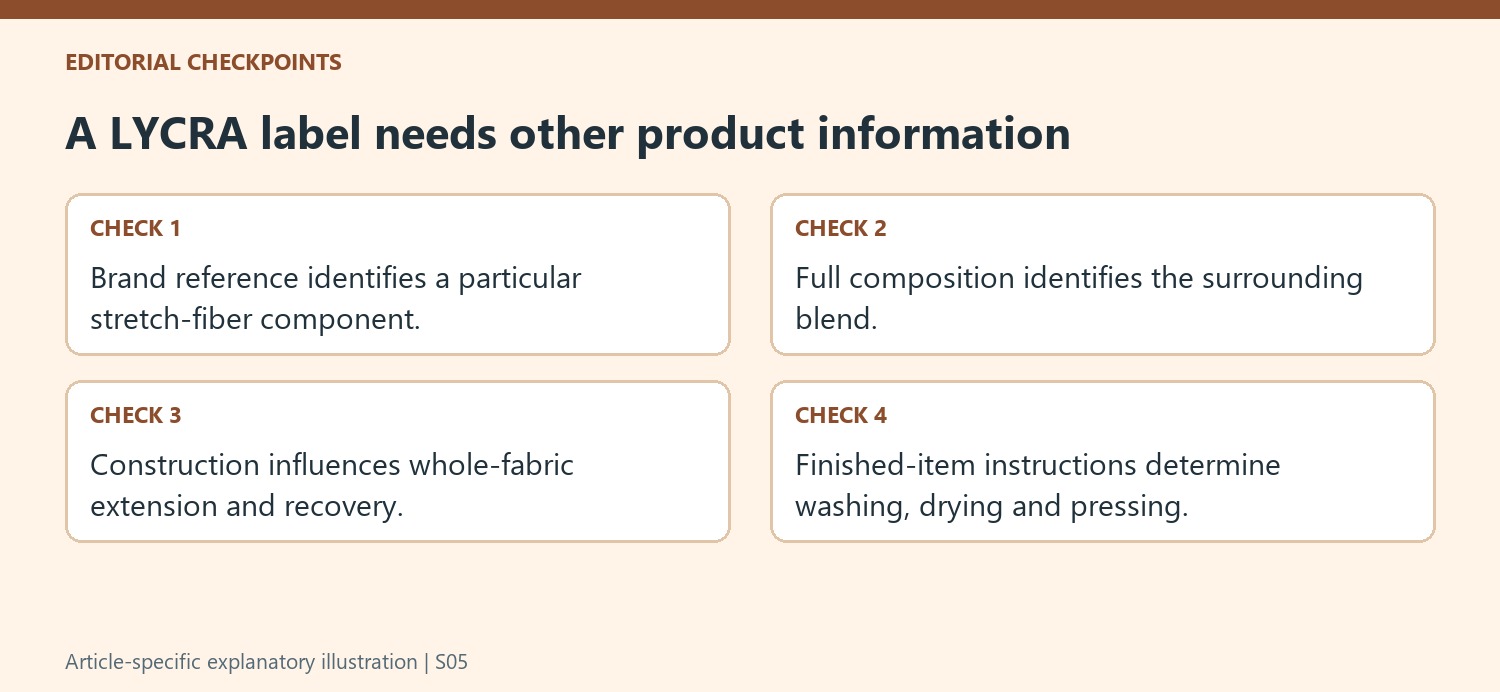
A clothing description can include LYCRA together with cotton, nylon, polyester or another main textile fiber. The brand reference identifies a particular stretch-fiber component; it does not automatically make the whole garment a pure-fiber product or specify its weave. Read the percentages and construction beside the brand name. This is useful when comparing a cotton-rich jersey with a stretch synthetic garment, since the surrounding textile contributes much of the visible surface and handling. The familiar name can help identify one ingredient, but it should not replace the full label or be used as a shortcut for predicting every property of the finished item.
Whole-fabric stretch cannot be calculated from one percentage
The guide emphasizes the fiber's capacity to extend, but a garment textile is a structure containing more than an isolated strand. A blend percentage is not a simple multiplier that determines exactly how far the entire fabric will stretch. Knit or weave, yarn arrangement and the direction tested all affect the result. Compare the actual sample in the movement the design requires and observe what happens after release. A close-fitting garment also depends on pattern shape and seam placement. Keeping those factors visible prevents a general fiber statement from becoming an unsupported numerical guarantee about the extension or fit of every fabric carrying a similar label.
Use specific product information for specific performance needs
Sewport lists underwear, socks, cycling garments, yoga clothing and other close-fitting applications. These uses demonstrate why a stretch component is valuable, but they do not establish one identical performance target across all products. Support in one area, freedom of movement in another and a comfortable surface can require different fabric choices. Identify the intended role and assess the complete garment accordingly. The same approach applies to care. A brand name does not cancel restrictions from other fibers, dyes, trims or finishes, and it should not be treated as permission to use a high iron or dryer temperature. Follow the finished item's label while using the fiber and brand information as context for how the textile was designed.



Comments
0