 FabricKnowledge Lab
Identify the animal behind the name
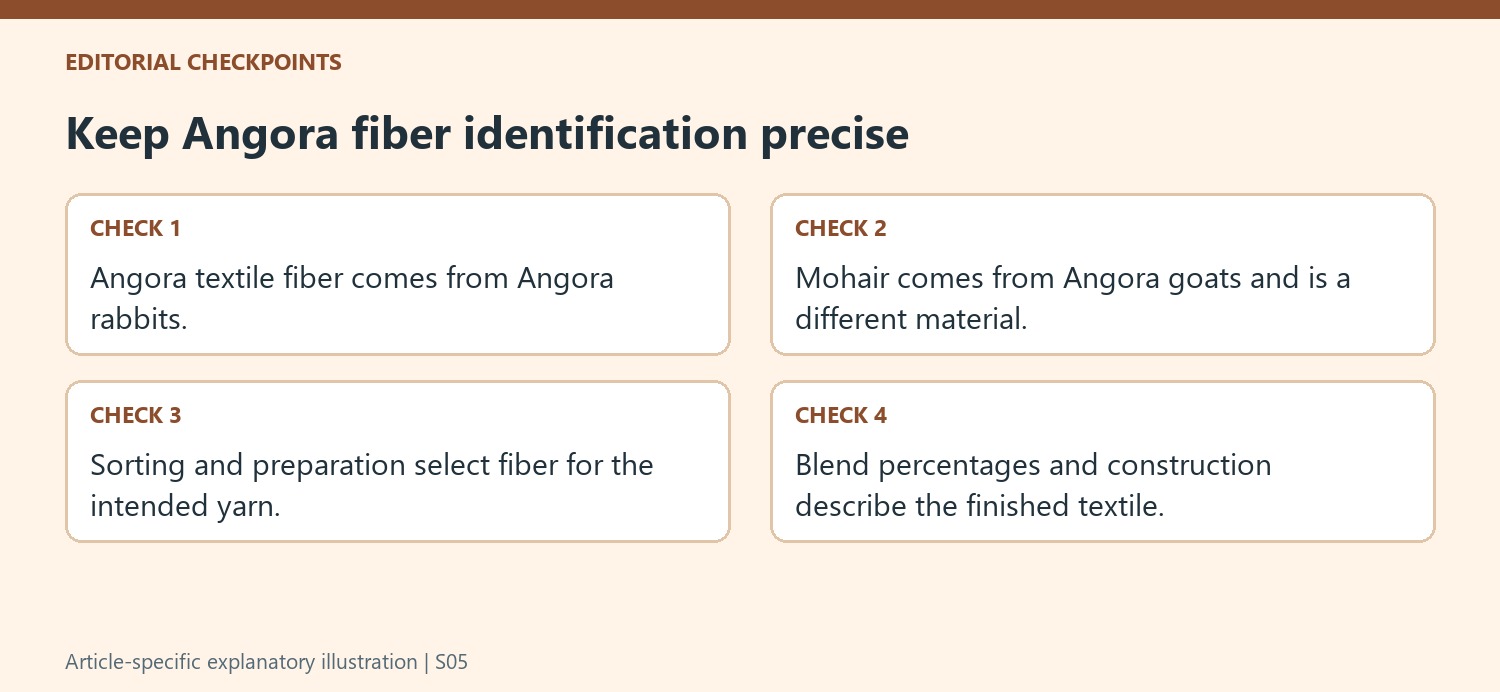
Angora is rabbit fiber, while mohair comes from the Angora goat. The similar animal names can create confusion, but they describe different textile materials. Sewport's guide identifies Angora rabbit coats as the source of the fine, fluffy fibers used in sweaters, cardigans, scarves, and gloves. It describes fiber diameters around 12 to 16 microns, helping explain the material's soft reputation. That description does not mean every product bearing the name contains only Angora: the actual composition of a yarn or garment remains a separate piece of information to check.
From coat growth to prepared fiber
The source describes coat growth over several months, with grooming needed to prevent matting. Harvesting methods depend on the rabbit and the condition of its coat. Some fiber is collected as it naturally loosens, while other coats are shorn. After harvesting, producers sort the material to remove mats, coarse guard hairs, and other unwanted pieces. Cleaning precedes spinning, and the resulting yarn can be used in its natural shades or dyed. These preparation stages are important because the visible softness of a finished item reveals little about how the coat was managed or collected.
Breed differences and purchasing questions
Sewport discusses English, French, Giant, and Satin Angora rabbits, with differences in coat appearance and fiber production. Satin Angora is singled out for particularly fine, silky fiber and lower output. For a buyer, however, a breed name or higher price alone does not establish good animal treatment. Useful questions concern the actual supplier, harvesting method, and documented handling practices. The source raises welfare issues, but those concerns should be assessed through evidence about a supply chain rather than assumptions about a country's entire production or a garment's luxurious appearance.
Angora and mohair identify different animal sources
The Angora guide concerns fiber from Angora rabbits. The familiar Angora goat supplies mohair, a different textile fiber, so the shared historical name should not collapse the two materials into one category. This distinction is useful when reading a blend label or comparing yarns. A product described as containing Angora should still state its composition, while a mohair product has a different raw-material story. The rabbit fiber's fine fluffy appearance is one reason the source discusses it in knitwear and accessories, but that appearance is not a substitute for identifying the actual material. A clear label separates the animal-derived component from the other fibers and the construction of the finished textile.
Sorting and preparation shape what reaches the spinner
The source describes removing unwanted material, including mats and coarser hairs, and sometimes separating fiber grades before spinning. These steps connect collection with the fine yarn sought for clothing. A soft raw coat is not uniform material ready for every use without preparation. The guide also describes more than one collection method, making the specific practice relevant to any sourcing claim. A broad statement about Angora does not document how an individual supplier collects fiber or cares for its animals. If that information affects a purchase, look for evidence about the actual source and method rather than inferring it from a high price, soft surface or reassuring general description of the fiber.
The finished blend determines more than the fluffy look
Sewport lists sweaters, scarves, gloves, coats and smaller household textiles among Angora applications. These products can use the fiber in different proportions and structures, so a visible fluffy surface does not establish one universal warmth or handling result. Read the whole composition and consider how the item will be worn. A scarf at the neck and a lined coat place the textile in different contact situations. The source's broad comfort claims should not be turned into a promise that no wearer can react to an animal fiber. Likewise, the animal origin does not specify a laundering routine. Follow the particular garment's care label, including any restrictions introduced by blends, finishing or assembly, instead of assuming that every Angora item can be cleaned like a familiar sweater already in the wardrobe.


Comments
0