 FabricKnowledge Lab
A textile fiber in a packaging role
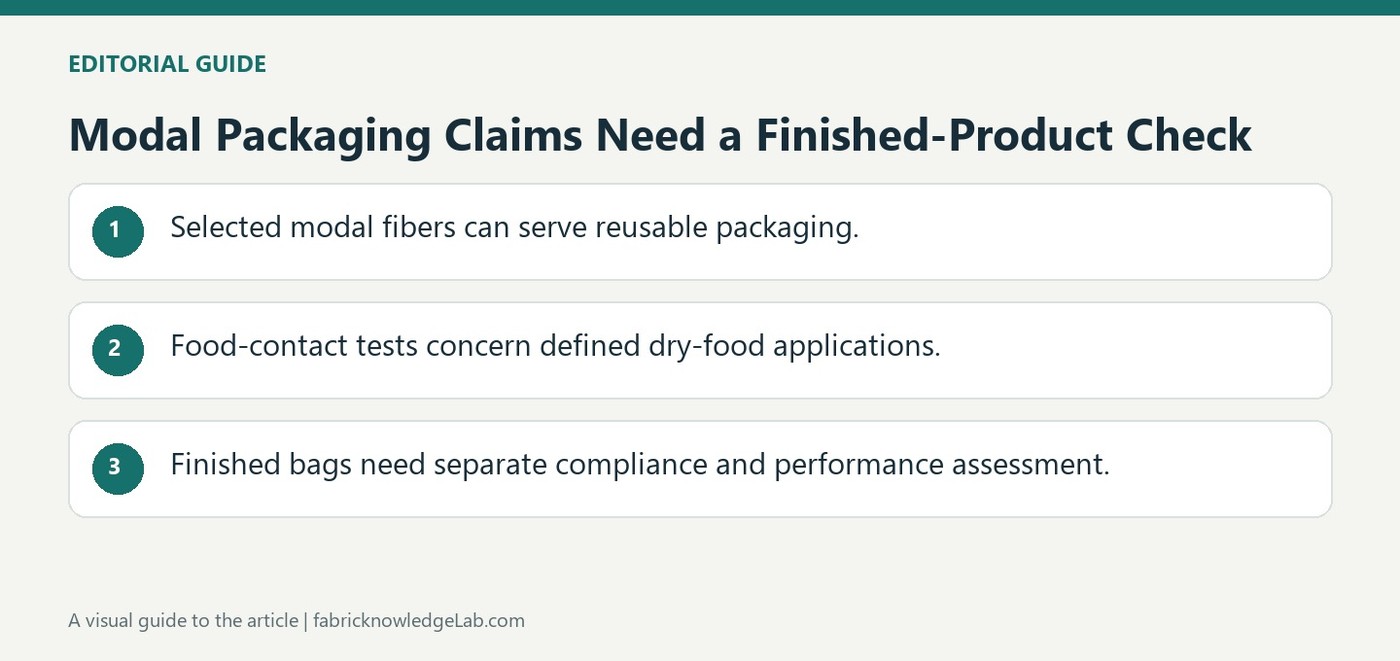
Lenzing describes selected LENZING Modal fibers as a possible alternative to plastic in reusable bags and nets. Its product page identifies wood as the natural raw material and highlights softness and durability for these applications. The packaging context is distinct from ordinary clothing: a bag may need to carry a load, contact food, or meet local regulatory requirements. The page therefore contains qualifications that matter as much as the headline material benefits. It presents a fiber option for selected applications, rather than a blanket approval for every packaging design made with any modal-containing textile.
Food-contact testing has a defined scope
The page cites independent testing by Swiss Quality Testing Service for specified food-contact applications involving dry foods. That wording does not establish suitability for all foods, temperatures, storage periods, or complete packaging constructions. The finished bag may include other fibers, dyes, coatings, seams, or accessories that require separate consideration. Lenzing explicitly says suitability and regulatory compliance depend on the complete composition, construction, and intended use. For a packaging developer, the practical task is to match the actual application to the relevant test evidence, rather than treating the presence of a tested fiber as sufficient on its own.
Biodegradability certificates also have boundaries
Lenzing refers to TÜV AUSTRIA certification for specified standard modal fibers and environmental conditions. Its qualification states that certification applies to the covered fibers and does not automatically extend to the finished package. The page also describes recovery and reuse of process chemicals and material-impact comparisons with generic modal. Those are production and fiber-level statements, not substitutes for evaluating a complete bag. A clear packaging specification should identify the certified fiber type, all added materials, the intended service conditions, and the evidence supporting end-of-life claims for the finished construction.
Build the packaging specification from every component
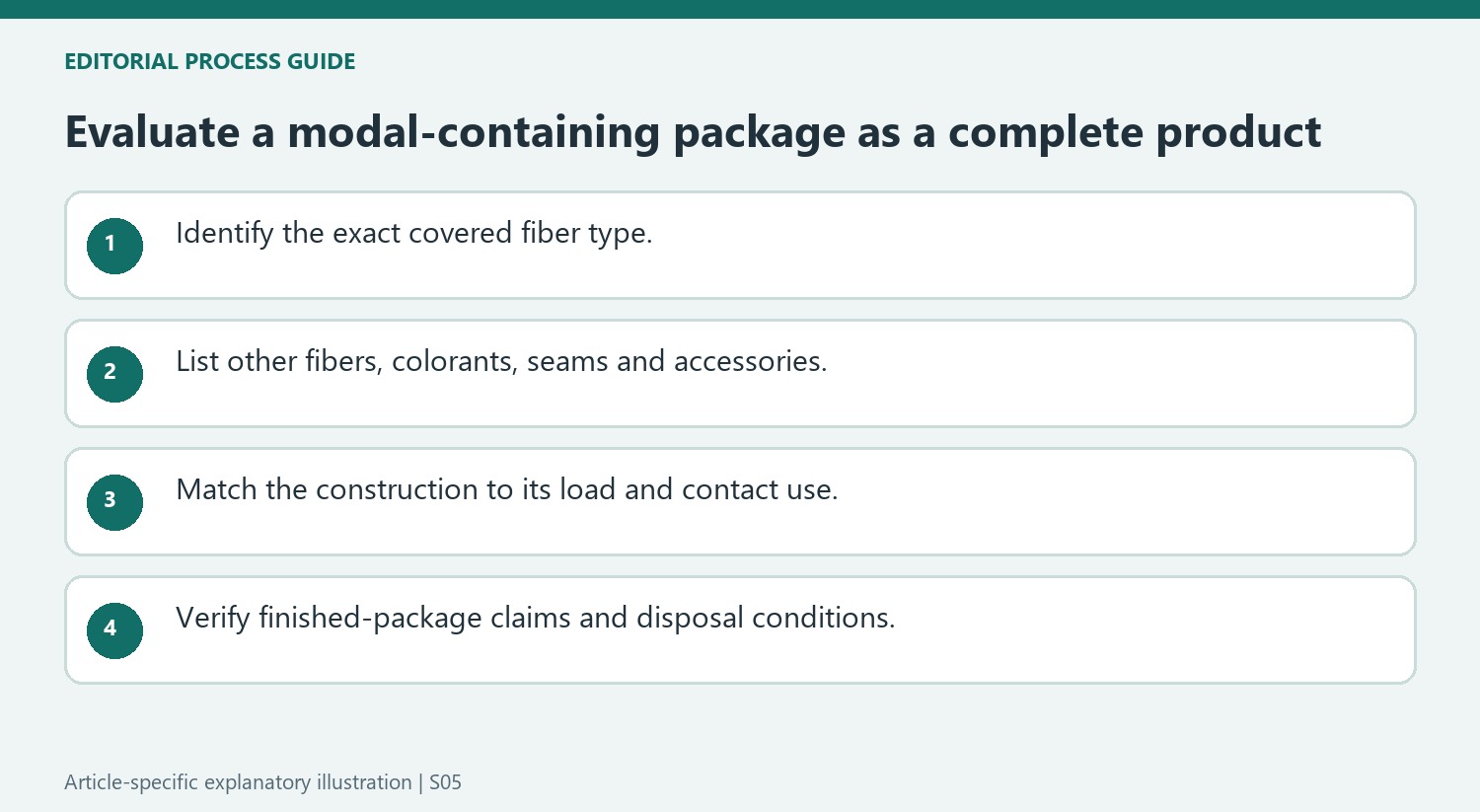
A reusable net or bag is a constructed product. The modal fiber may be one input, while yarn choices, stitching, closure parts, colorants, and any added treatment contribute to the finished article. The source's qualifications make this distinction explicit: suitability and durability depend on complete composition, construction, and intended use. A developer should therefore keep a component list beside the proposed application, rather than relying solely on the preferred fiber's product page. For example, a dry-food use needs evidence appropriate to that food-contact situation, while a load-carrying claim needs evidence about the assembled package. These are related design questions, but success in one does not establish success in the other.
End-of-life descriptions need their stated environment
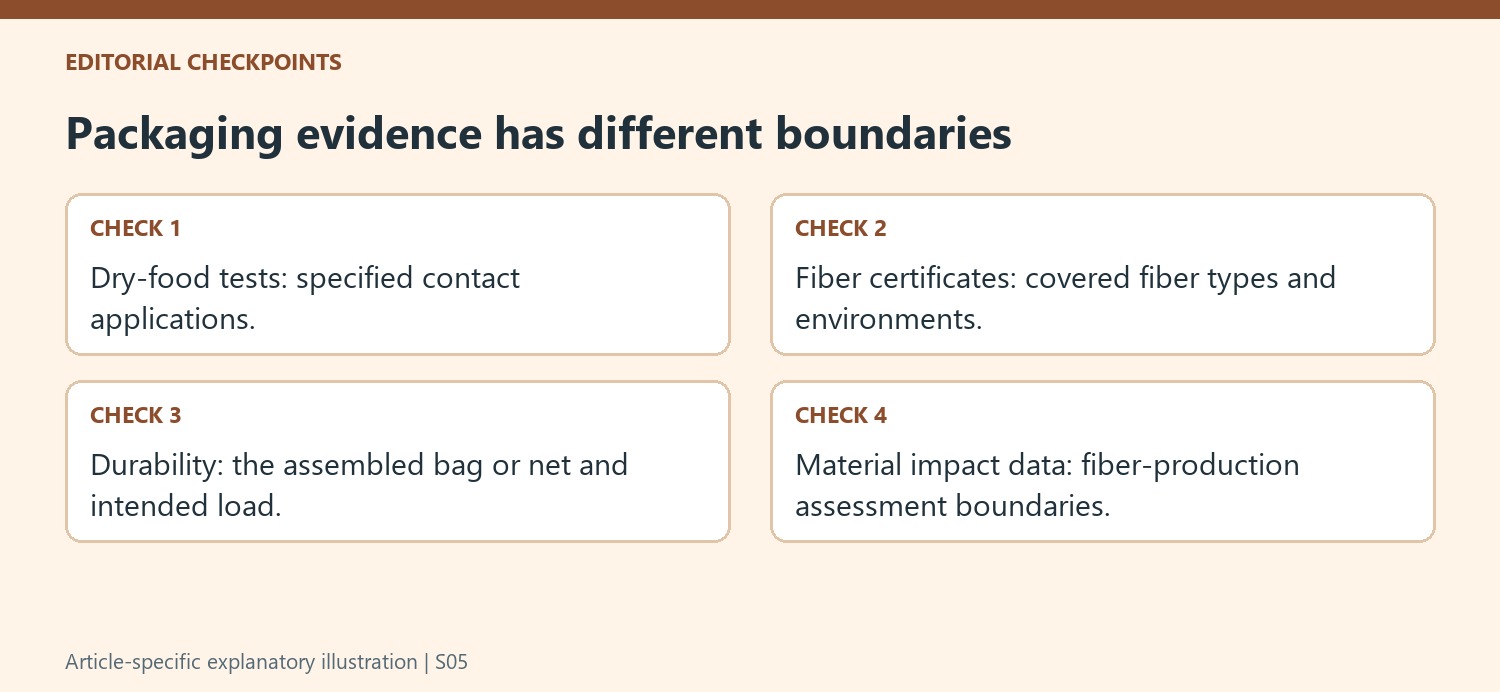
The page refers to biodegradability in specified environments and compostability under defined conditions. Those are statements about covered fiber types and certificates, not permission to discard any modal-containing bag outdoors. A complete package may contain components outside the scope of the fiber certificate, and the relevant environment matters to the claim. An accurate product description should identify what has been assessed and avoid silently extending a material-level result to the finished construction. This is particularly important for reusable packaging, because the article's service function and its eventual disposal route are different stages. The presence of a biodegradable ingredient does not by itself describe the time, conditions, or local arrangements needed for the whole product's end of life.
Read production comparisons beside their boundaries
Lenzing also discusses recovering and reusing chemicals and comparing material impacts with generic modal. The accompanying notes identify life-cycle assessment standards and Higg MSI information, with a boundary at fiber production rather than every later packaging operation. That makes the comparison informative about the input material, while leaving subsequent conversion, use, and disposal to be considered separately. A packaging proposal should retain the reference case and assessment version when repeating a quantified or comparative statement. It should also confirm that the supplied fiber is the covered product. Keeping those details alongside the claim helps a customer distinguish documented manufacturing information from a broader assertion that the entire bag has been independently evaluated.
References
- Replacing plastic bags and nets with LENZING™ Modal. lenzing.com.








Comments
0