 FabricKnowledge Lab
The change concerns where the input comes from
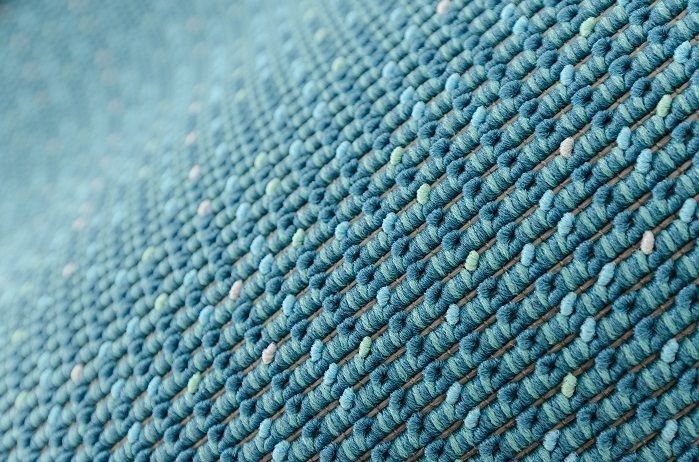
ECONYL is Aquafil's branded regenerated nylon material. Sewport describes recovered nylon waste as the input rather than starting solely with new fossil-derived feedstock. It identifies discarded nets and other nylon-containing waste as part of the context for developing the system. This is an important sourcing distinction, but it does not transform the resulting fiber into cotton, wool, or another natural textile. A regenerated synthetic fiber still needs to be described accurately by its material identity and by the specific recycled-content claim made for the product.
Regeneration is more than reusing a whole net
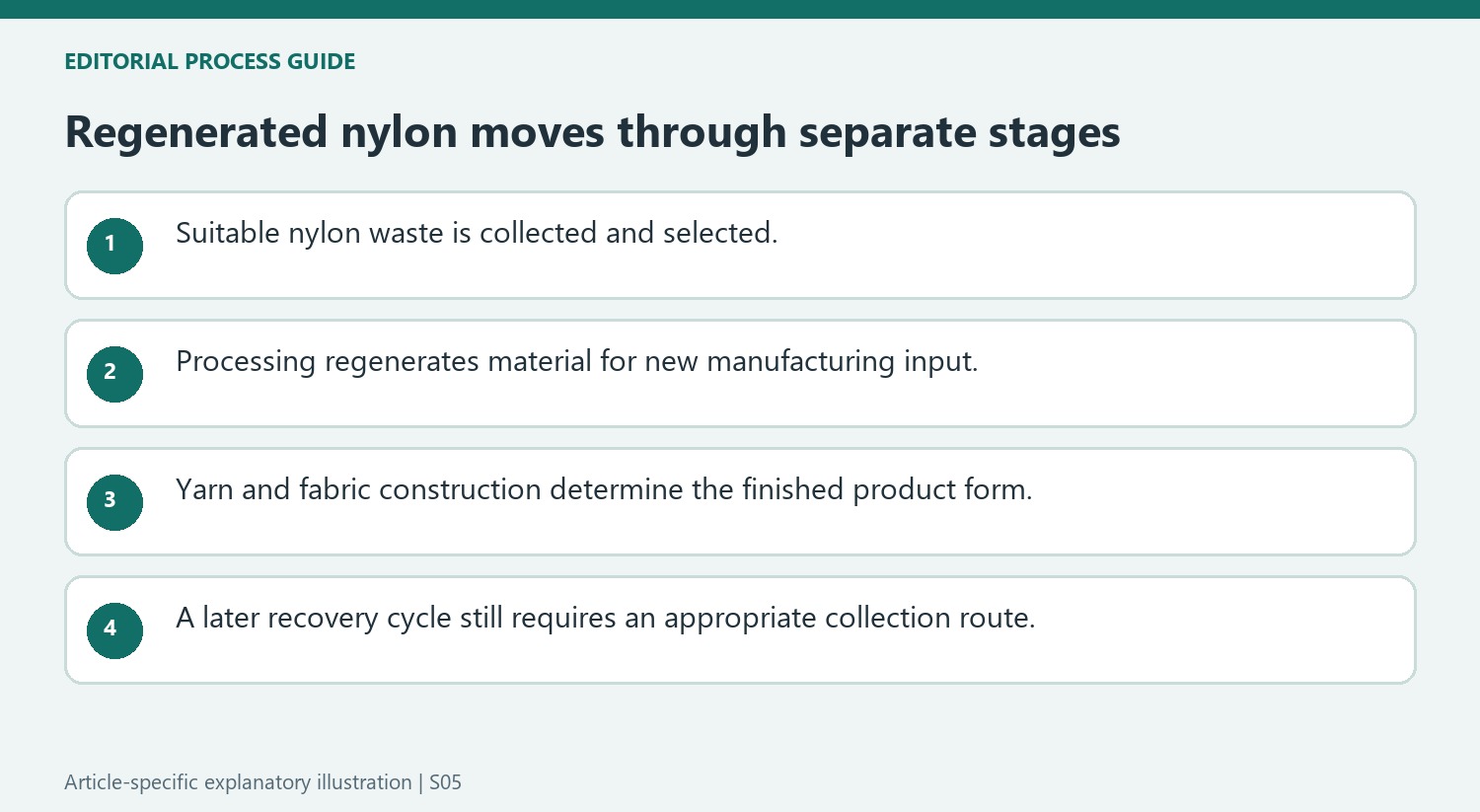
The source discusses breaking down recovered nylon and reconstituting material for new yarn, while acknowledging that its account does not provide the complete proprietary production details. That limitation should be retained rather than filling the gap with an invented chemical recipe. Collection, processing, and new fiber production are separate stages. The useful point is that waste can enter a route toward fresh nylon material, not that a used net is simply woven unchanged into every garment advertised with the brand name.

Applications include clothing and carpet
Sewport lists carpeting, stockings, leggings, tights, swimwear, and selected sportswear among ECONYL applications. These products rely on different structures even when they draw on a related regenerated material. Check the full composition of the finished item, including any stretch fiber, lining, or other component, before interpreting its recycled-content message. The source of the nylon does not alone establish a universal care method or a complete end-of-life solution. It also should not be turned into an unrestricted claim of zero environmental impact; manufacturing, product use, and available recovery systems remain relevant to the finished textile's broader story.
The recovered input still needs a regeneration route
The ECONYL account discusses nylon waste entering a process that breaks down and reconstitutes material for new fiber. That distinction matters because recovery can mean more than cutting a used textile into another shape. A regenerated yarn is prepared as a new manufacturing input rather than carrying every visible feature of the discarded net or carpet forward unchanged. The source does not provide a complete proprietary process specification, so a detailed chemical recipe should not be inferred from its broad outline. What can be stated clearly is the sequence of suitable waste collection, processing and new material production. Each stage is part of the development, and none should be omitted in a simple claim that waste becomes clothing.
The source of nylon does not dictate the whole fabric
The guide's applications include carpeting, close-fitting clothing and swimwear. These products use different yarn arrangements and garment designs despite drawing on a related regenerated material. A swim garment may include a stretch fiber and lining, while a carpet has a different construction and function. Their shared nylon source does not make those additional materials disappear. Read the full composition and identify which part of the product uses the branded input. This is the practical way to connect a recycled-material claim with a real item: distinguish the recovered origin of one component from the complete textile specification and the construction that supports the intended use.
Circularity claims need an actual next step
A material developed from recovered nylon demonstrates a route into a new product, but the completed item still needs a viable collection and processing system if it is to enter another cycle. The guide's sourcing discussion does not establish that every mixed-fiber garment is accepted by every local recycler. Check any available return or recovery instructions for the actual item. The same precision applies during use: regenerated nylon remains a synthetic fiber material, so its sourcing does not automatically change all of its heat or care requirements. Follow the garment label and avoid treating recycled content as a substitute for maintenance information. Clear separation of input, manufacturing, use and recovery gives a more accurate account than an unrestricted zero-impact promise.






Comments
0