 FabricKnowledge Lab
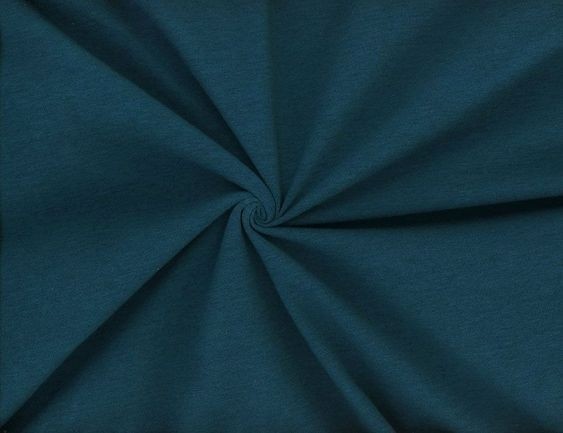
Separate construction from composition
Jersey is a knitted textile, not the name of one raw fiber. Sewport's guide notes a historical connection with wool and describes modern examples made from cotton and synthetic materials as well. A label stating only jersey therefore leaves an important question unanswered: what yarn was used to make it? The term also differs from an athletic jersey, which names a garment. Some sports shirts use jersey-knit fabric, but the garment name does not establish a particular fiber composition. Separating those meanings makes product descriptions easier to interpret without assuming that every similar-looking shirt is materially identical.
How yarn becomes a knitted surface
The production account describes yarn being fed into knitting machinery to form the connected structure of the fabric. Dyeing may take place before knitting or after the fabric is made, depending on the product. The source lists several variations, including single jersey, interlock, jacquard jersey, stretch jersey, and slub jersey. These names draw attention to different aspects: construction, pattern, elastic-fiber addition, or irregular yarn texture. Interlock provides a different surface arrangement from single jersey, while a slub yarn creates visible variation. None of those descriptions removes the need to identify the underlying fibers.
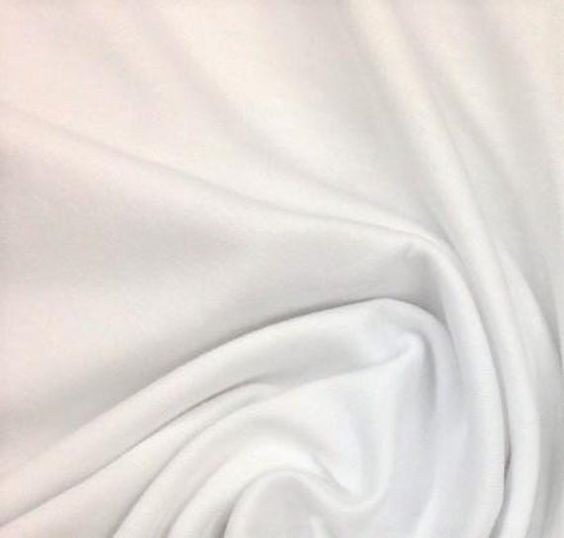
Why everyday uses vary
T-shirts and underwear are familiar applications, but the guide also lists dresses, sweaters, athletic clothing, sheets, and pillowcases. Those uses demonstrate the range available within a knitted-fabric family. A wool garment and a cotton bedsheet can both be jersey without sharing the same warmth, weight, or care requirements. For a useful comparison, read the fiber label alongside the knit description and inspect the actual fabric. The construction helps explain flexibility and surface appearance, while composition and finishing provide additional context for how a particular jersey product will perform in use.
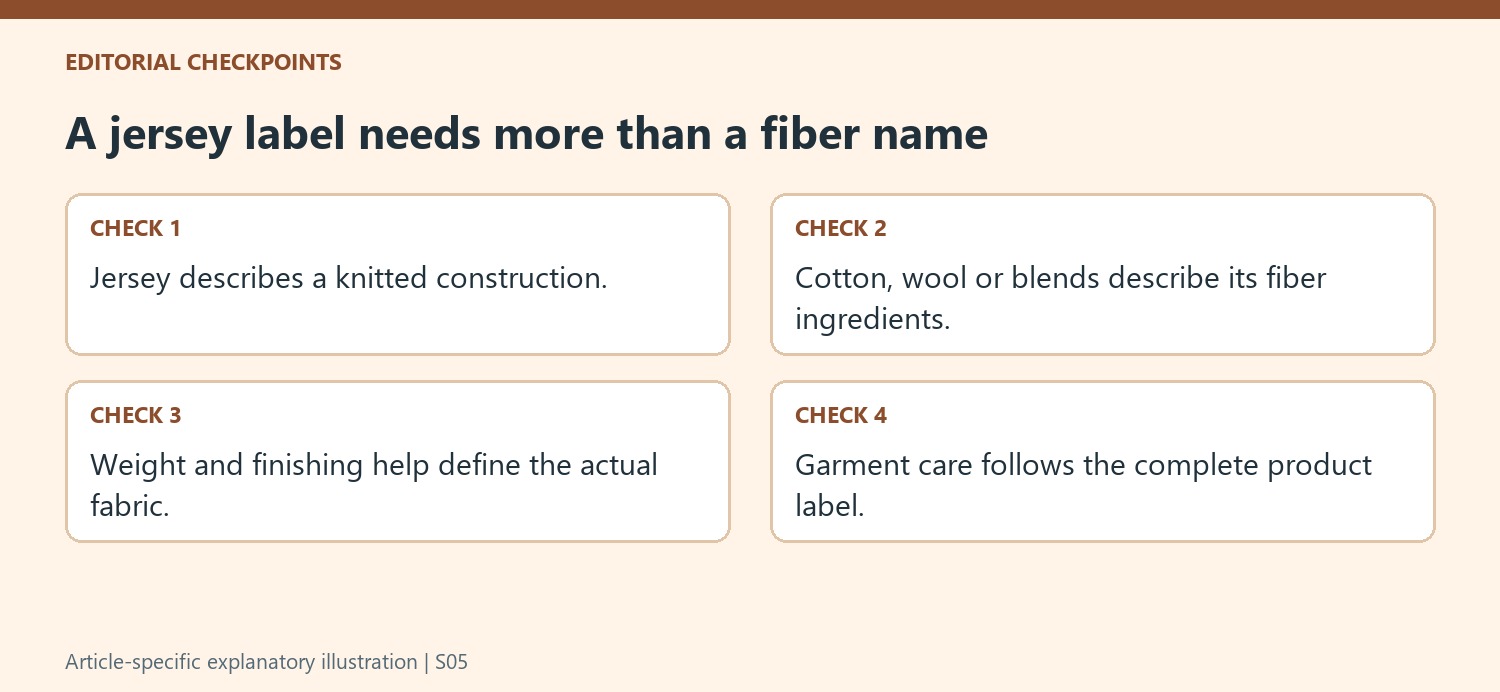
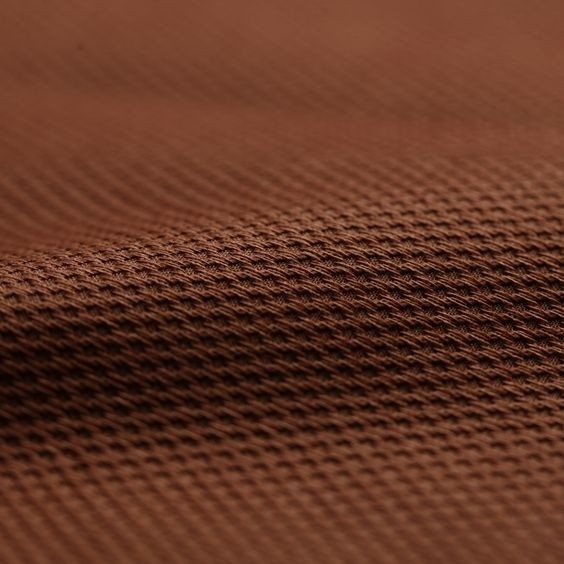
The loop structure matters before the garment name
Jersey identifies a knitted fabric, whereas an athletic jersey is the name of a garment that can use different textiles. The source makes that distinction explicitly, and it is useful when a product description uses the same word in both ways. To identify the cloth, look for the construction and fiber information rather than the garment category alone. Cotton, wool and manufactured fibers can all enter jersey production, so the knit name does not establish a raw material. This also explains why jersey can appear in underwear, T-shirts, dresses and household products without every example having one identical thickness, surface or intended level of warmth.
Yarn choice and color placement are additional decisions
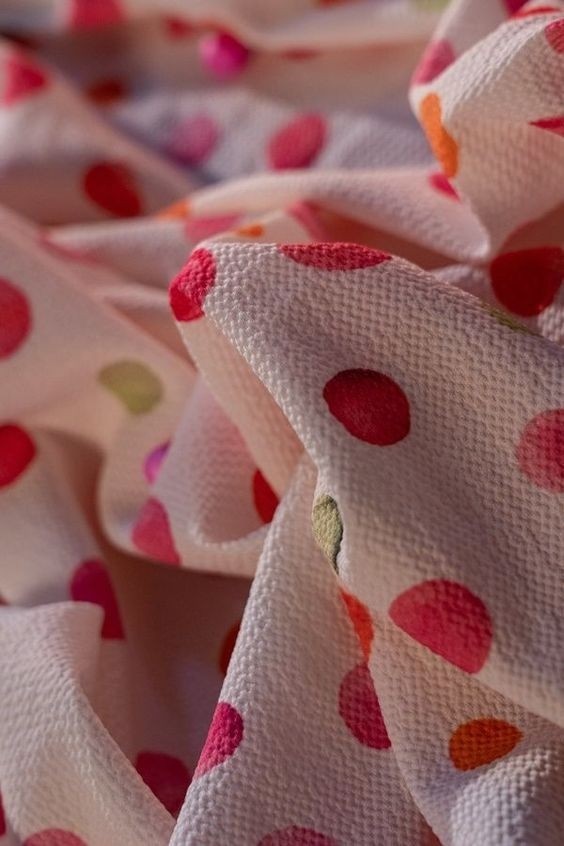
Sewport describes loading the chosen yarn into knitting equipment and forming the characteristic fabric before later garment manufacture. The yarn can be colored before knitting, or color can be applied at a later textile stage, depending on the intended result. These alternatives concern the production route, while the loop structure supplies another part of the cloth's identity. When comparing samples, keep those features separate. A multicolored jersey and a solid jersey may share the same broad knit category while differing in yarn preparation, fiber mixture and finishing. The most useful description goes beyond the word stretch and identifies the actual material and structure selected for the garment.
Assess the actual drape and recovery for the design
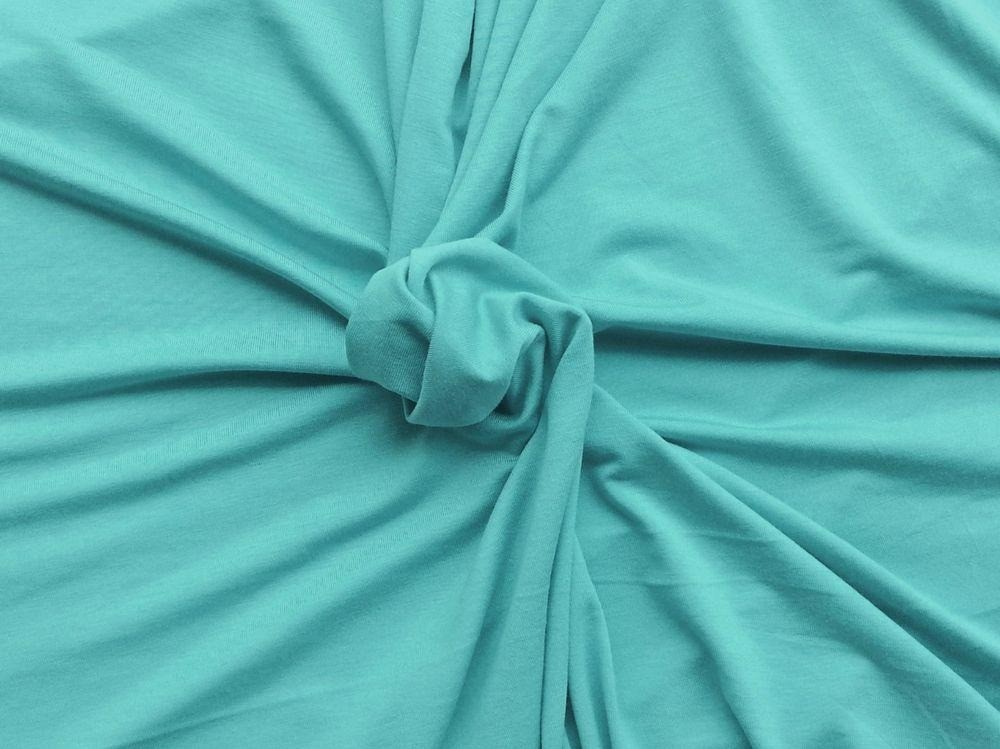
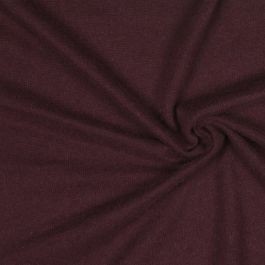
The guide associates jersey with comfortable close-to-skin clothing and a useful draping character. The intensity of that effect varies with the material and construction, so a sample should be assessed in the role it will occupy. Let it hang and observe movement, then compare its extension and return in the direction the garment will use. A light draped dress and a more substantial casual top need not call for the same jersey. Composition can also include a separate stretch component, which should be read on the label instead of assumed from appearance. For care, follow the finished item's instructions. The knitted category does not replace the restrictions associated with wool, dyes, blends or assembled details. This keeps jersey's versatility useful without turning it into a promise of one performance profile across every product.






Comments
0