 FabricKnowledge Lab

Stretch is a role within the blend
Spandex is the generic stretch fiber also known as elastane. Sewport's guide explains that it is commonly combined with cotton, wool, polyester, and other textile fibers rather than used alone. Its contribution is easiest to see in clothing that must extend as the body moves while maintaining a close fit. The guide lists underwear, socks, swimwear, cycling clothing, and performance costumes. Those uses do not make all spandex-containing fabrics interchangeable. The same stretch ingredient can be part of a soft everyday knit, a more substantial sports textile, or an elasticated section within a garment.
Waistbands, socks, and fitted clothing
A waistband illustrates the difference between a garment's main material and a localized stretch component. Spandex may be concentrated in the area that must expand during dressing and then sit close to the body. In socks, it supports the fit needed to keep the article in place while still allowing it to be pulled on. In cycling or swimming apparel, stretch is incorporated across larger fabric areas. Sewport also describes motion-capture suits, where a close silhouette helps recording systems follow the performer. Each example uses elasticity to solve a different design problem.

Avoid simple percentage arithmetic
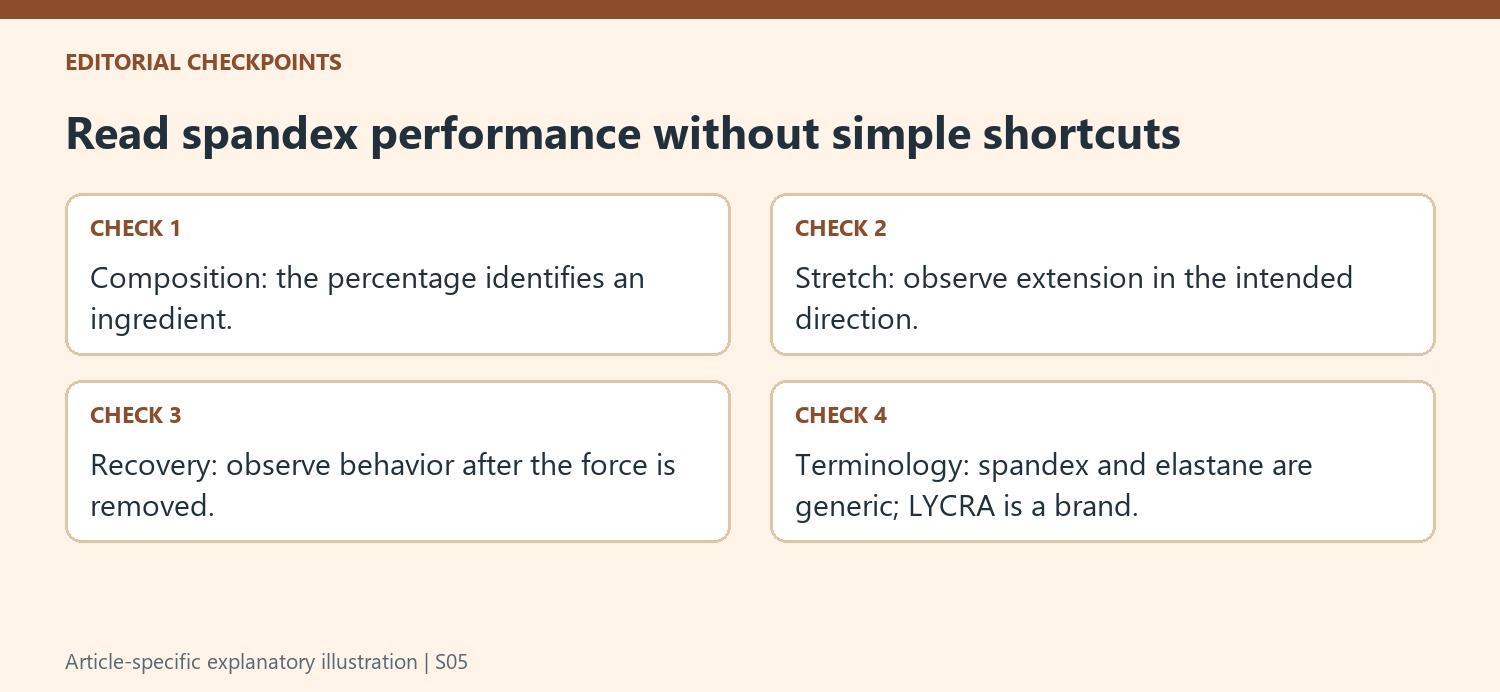
The source outlines solution dry spinning, in which a polymer solution is extruded through a spinneret, solidified into fine strands, finished, and wound for later textile manufacture. That production history identifies the fiber, but it does not give a universal formula for finished-fabric stretch. A blend percentage alone cannot reveal exactly how far a garment will extend. Yarn arrangement, knitted or woven construction, and garment design remain relevant. When comparing products, use the composition label to identify spandex, then assess the actual fabric and fit instead of translating fiber-level stretch claims directly into a guaranteed garment measurement.
Stretch and recovery are related but separate observations
A fabric can extend under force, and its behavior after that force is removed is another part of evaluating it. The spandex guide emphasizes the elastic component added to many garment textiles, which makes both observations relevant. The amount present is one factor, but construction and the way the fiber is incorporated also matter. Check the actual cloth in its intended direction of movement rather than assuming that every blend stretches equally in length and width. This is especially useful for a close-fitting garment, where the pattern relies on a particular response. The fiber's ability to extend does not by itself provide a complete measure of the fit or lasting shape of the assembled item.
Small additions can serve a deliberate structural role
The guide discusses adding spandex to cotton, polyester and other textiles. In those products, the stretch component does not have to dominate the visible surface to influence how the fabric moves. That is why composition and construction need to be considered together. A blend label identifies ingredients, while the yarn and fabric arrangement determine how those ingredients work in the structure. When comparing two garments, hold the intended use constant and look at the actual movement and handling. A stretch shirt, a pair of leggings and a fitted woven garment ask different things from their textiles even if each includes a modest proportion of the same elastic fiber.
Generic terminology should not imply a specific branded product
Spandex is a general name, and elastane is another generic term used for this fiber category. LYCRA is a brand designation, so it should not be assumed to identify every spandex yarn made by every producer. The source's discussion of synonymous use is useful for recognizing related labels, but a brand claim needs its own evidence in the actual product description. The same precision helps with care: a stretch-fiber name is not a complete instruction for washing, drying or pressing a blend. Follow the finished label and evaluate the textile rather than transferring broad production or heat claims to every garment. This keeps a familiar stretch ingredient understandable without treating all constructions and suppliers as one identical material specification.














Comments
0