 FabricKnowledge Lab
A targeted protective covering
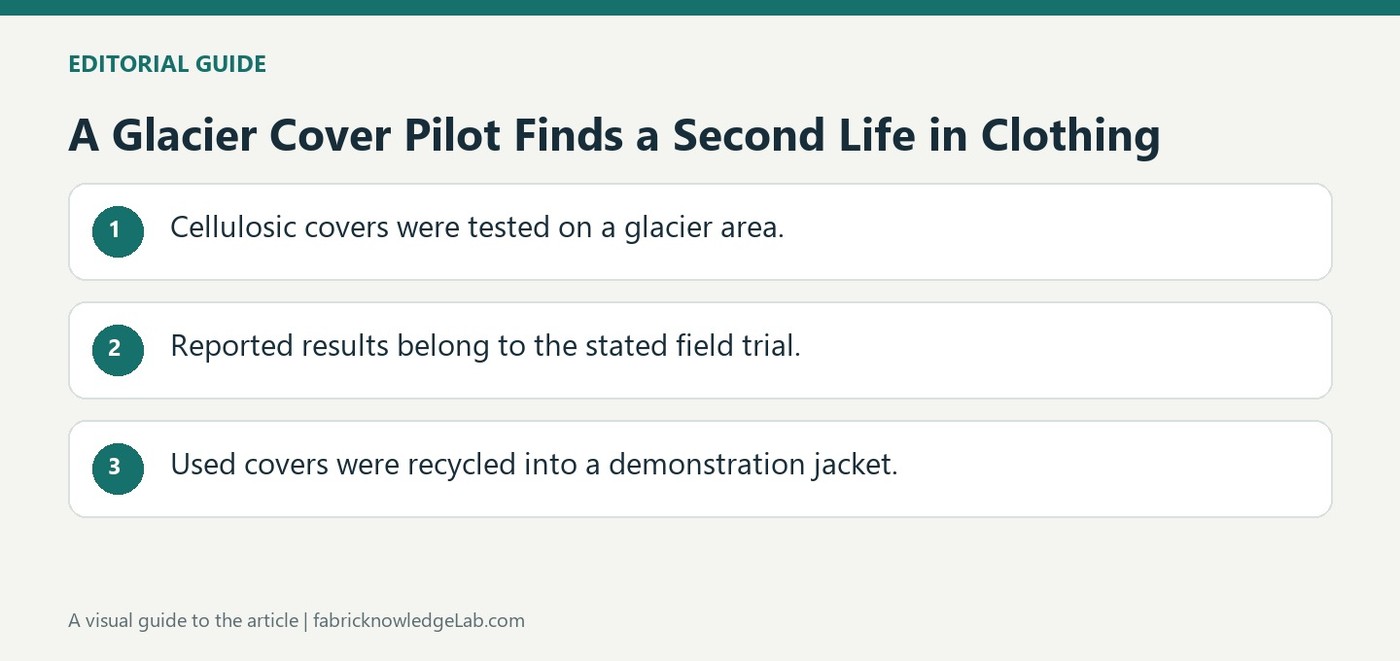
Lenzing's Glacial Threads project connects two normally separate textile applications: temporary glacier covers and clothing. In its announcement, the company describes cellulosic nonwovens as an alternative to fossil-based materials used to cover ice and snow. The stated aim includes reducing the release of persistent plastic fragments from these coverings. This is a specific material intervention at covered glacier sites. It should be understood within that scope, rather than as evidence that a textile cover can resolve the wider causes of glacier loss or replace reductions in global warming.
What the field trial reported
The announcement describes an initial test over a small area of the Stubai Glacier in Austria. Lenzing reports that four meters of ice were preserved from melting, citing work involving the University of Innsbruck and Austrian glacier lift operators. It says the pilot expanded during 2023 to Austrian glaciers used for tourism. These details give the claim a location and a trial context. They do not establish that the same result will occur under every combination of weather, glacier conditions, installation method, and covering area, so the reported figure should remain attached to the project described.
From spent cover to demonstration jacket
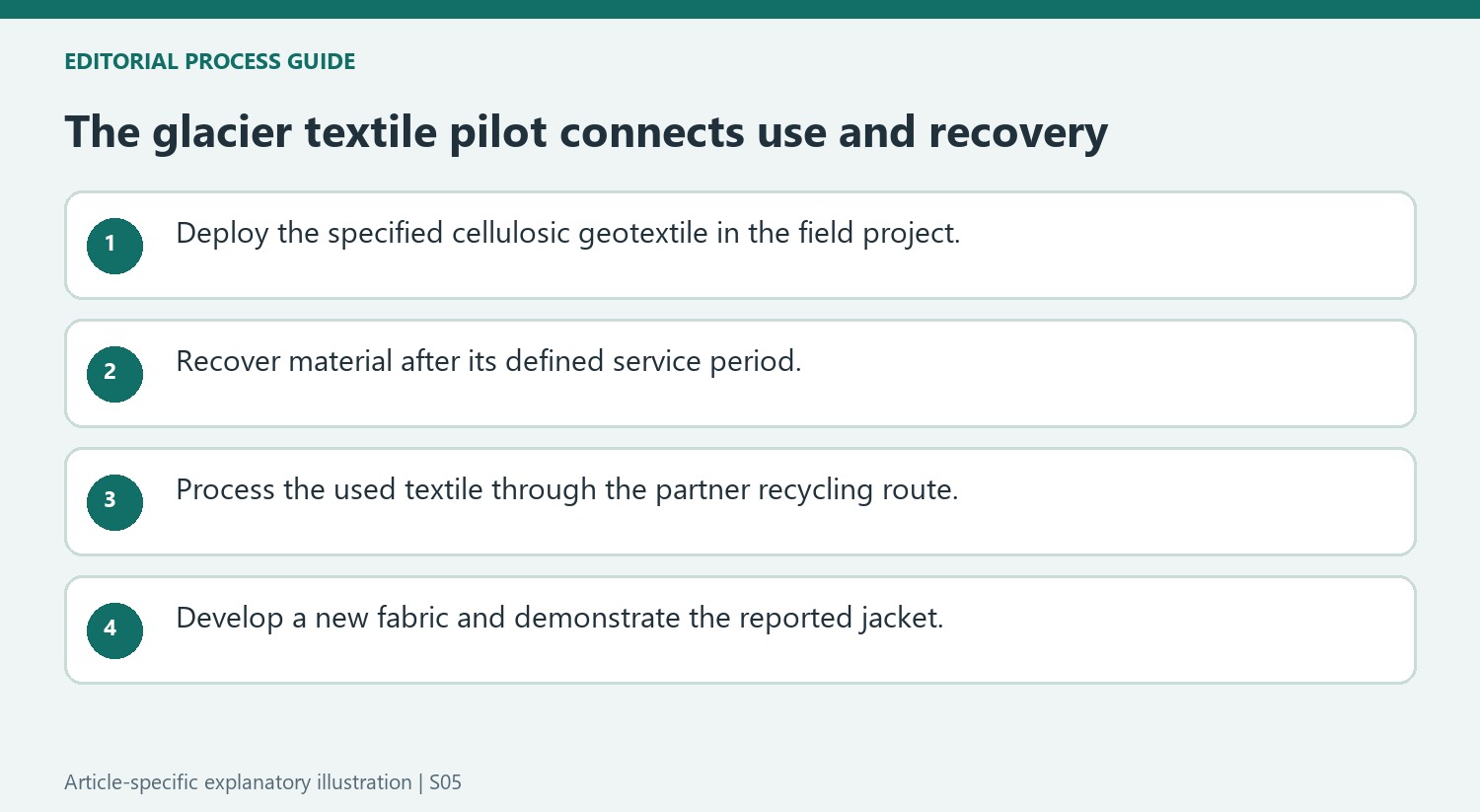
The second part of the project concerns what happens after use. Lenzing says glacier geotextiles typically remain in service for about two years and reports a successful recycling trial that produced a Glacier Jacket. Partners included mechanical recycler Marchi & Fildi, denim manufacturer Candiani Denim, and fashion studio Blue of a Kind. The demonstration links collection and fiber recovery with fabric production and garment design. It provides a practical example of a proposed second life, while the announcement's pilot status remains essential context when considering commercial scale, repeatability, or the fate of every used cover.
The glacier cover and the later garment are separate demonstrations
Lenzing's report describes using a cellulosic nonwoven as a glacier-cover material, then working on a second life for that textile. The first task concerns the cover's role at the glacier; the second concerns processing material after its period of service. These are related stages, but success in one does not automatically establish the other. The report presents a jacket as a concrete output from the recycling pilot, which makes the second stage more specific than a general intention to reuse waste. It remains a described project outcome rather than proof that every used glacier cover is already entering the same clothing route at commercial scale.
A partner network handles different parts of the route
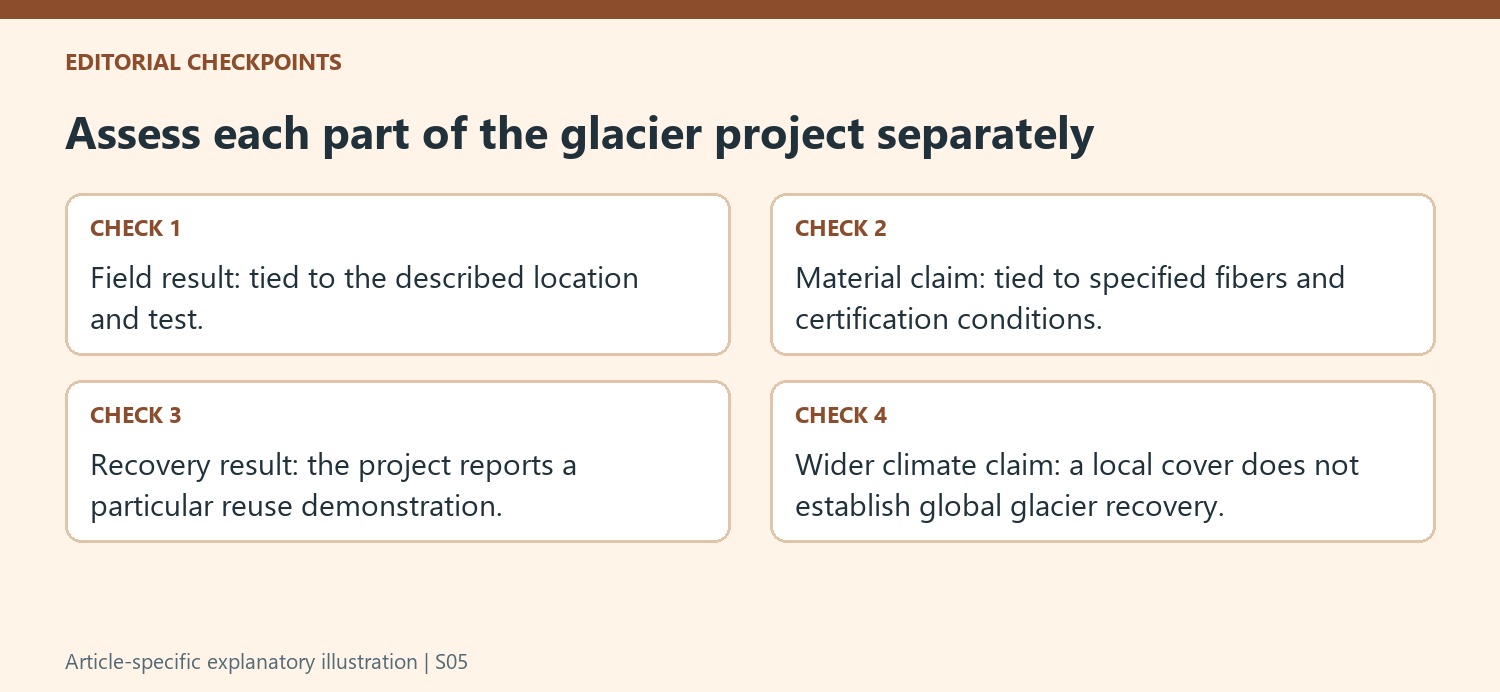
The source names Marchi and Fildi for mechanical recycling, Candiani Denim for fabric manufacture and Blue of a Kind as a fashion studio. Those roles illustrate why turning a used technical textile into clothing requires more than simply cutting it into a garment. Recovery, material processing, fabric development and design each contribute to the reported result. The jacket demonstrates collaboration across those stages, not a claim that the original geotextile and the final apparel have identical structures. When assessing such a project, identify what material was recovered, what processing was demonstrated and which finished product was actually made. This connects a circularity statement to observable steps without assuming that all possible end products have been validated.
Keep the field and certification claims within their conditions
The report connects its glacier findings to a specific field test and describes expansion within the Austrian tourist-glacier context. Those conditions matter. A local covering project is not a measurement of global glacier recovery or a substitute for addressing the causes of warming. The source's biodegradability discussion also identifies particular fibers and certification environments, with exceptions noted for some products. Those qualifications should remain attached to any summary of the material. Neither a certification nor a successful reuse pilot means the cover should be left as litter after use. The practical project story is the combination of a defined protective application and an organized later recovery route, with evidence assessed at each stage rather than condensed into an unlimited environmental promise.











Comments
0