 FabricKnowledge Lab

Separating wood into useful streams
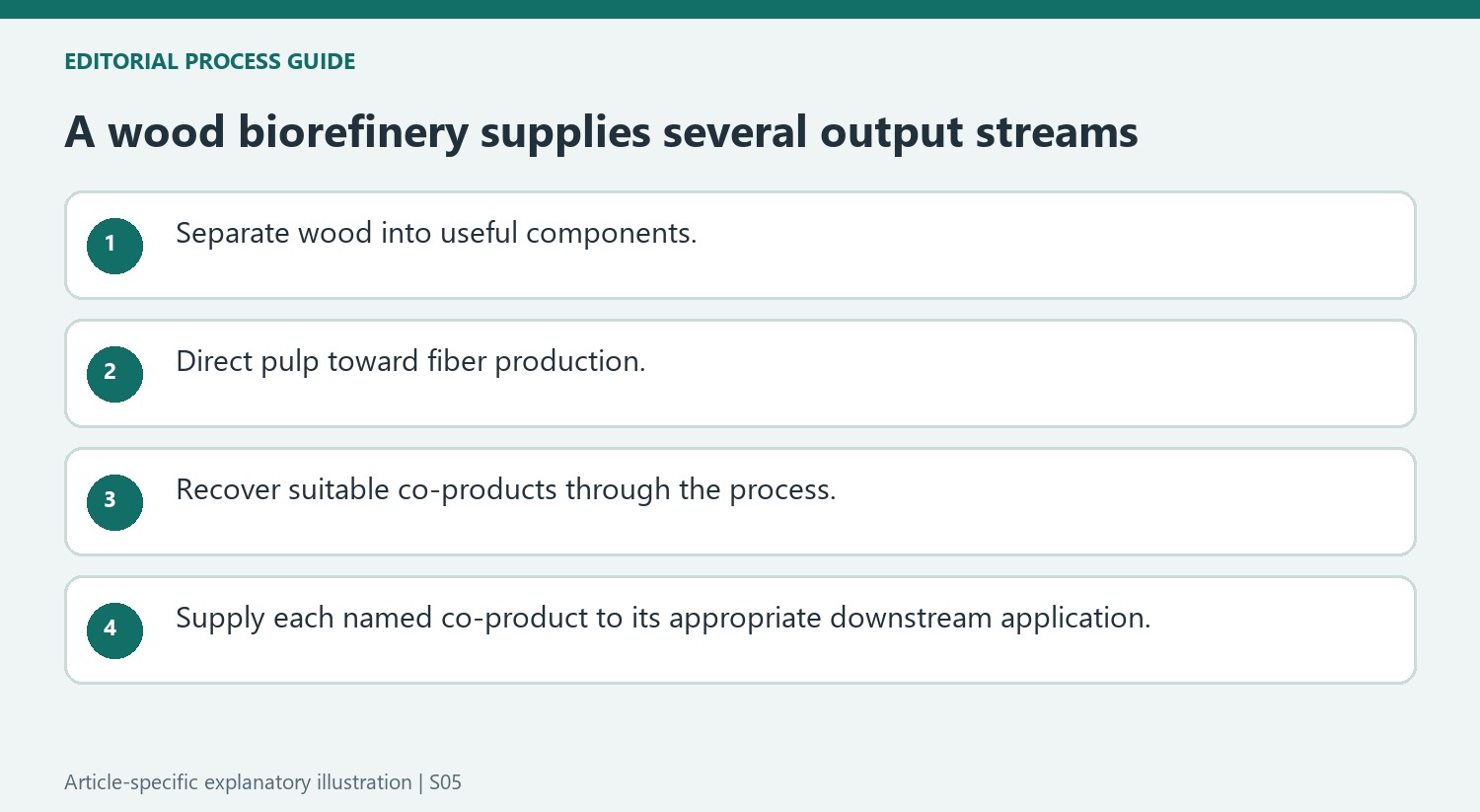
A wood-based textile fiber represents only one output from a broader processing system. Lenzing describes its biorefinery approach as separating wood into individual components for pulp, fiber production, and additional products. The company says it has used this concept for decades. Rather than presenting the entire raw material as destined for clothing, its overview identifies several other streams with their own industrial applications. This distinction matters when reading about wood-derived fabrics: the textile product sits within a network of processing and recovery activities, rather than being the sole result of the operation.
Acetic acid and furfural applications
Two examples are biobased acetic acid and furfural. Lenzing lists food, pharmaceutical, cosmetics, chemical, solvent, and textile applications for its acetic acid product. Its furfural entry describes a different set of uses, including a starting material for furfuryl alcohol, solvent applications in lubricating-oil refining, and uses involving resins and herbicide production. These are separate chemical products, not alternative names for the cellulose fiber in a garment. Their presence illustrates how components recovered during wood processing can supply markets beyond the textile mill and enter products with quite different requirements.
Other outputs beyond the wardrobe
The overview also lists magnesium lignosulphonate for areas including animal feed, ceramics, tanning, construction auxiliaries, and board production. Soda ash serves glass and pulp-and-paper applications, while sodium sulphate is listed for detergents, cleaning agents, and glass. Hemilye is associated with pulp and paper. Together, these entries make the biorefinery concept more concrete: multiple useful streams leave the process. The table describes applications, however, rather than providing a complete environmental comparison. Assessing a particular textile still requires information about its fiber process and finished product in addition to this wider production context.
The biorefinery divides wood into several useful streams
Lenzing's biorefinery concept begins with the idea that wood has value beyond the pulp used for fiber manufacture. Separating components allows the operation to recover co-products for other applications rather than treating every non-fiber output as unusable residue. This is a production-system description. It does not mean acetic acid, furfural and lignosulphonate all become ingredients in the same garment. Each stream leaves the process for an appropriate downstream use. Keeping those destinations separate makes the concept understandable: textile fiber is one outcome within a wider industrial system, and the additional products help explain why a wood-processing site may serve markets outside clothing and household textiles.
The named products have different application lists
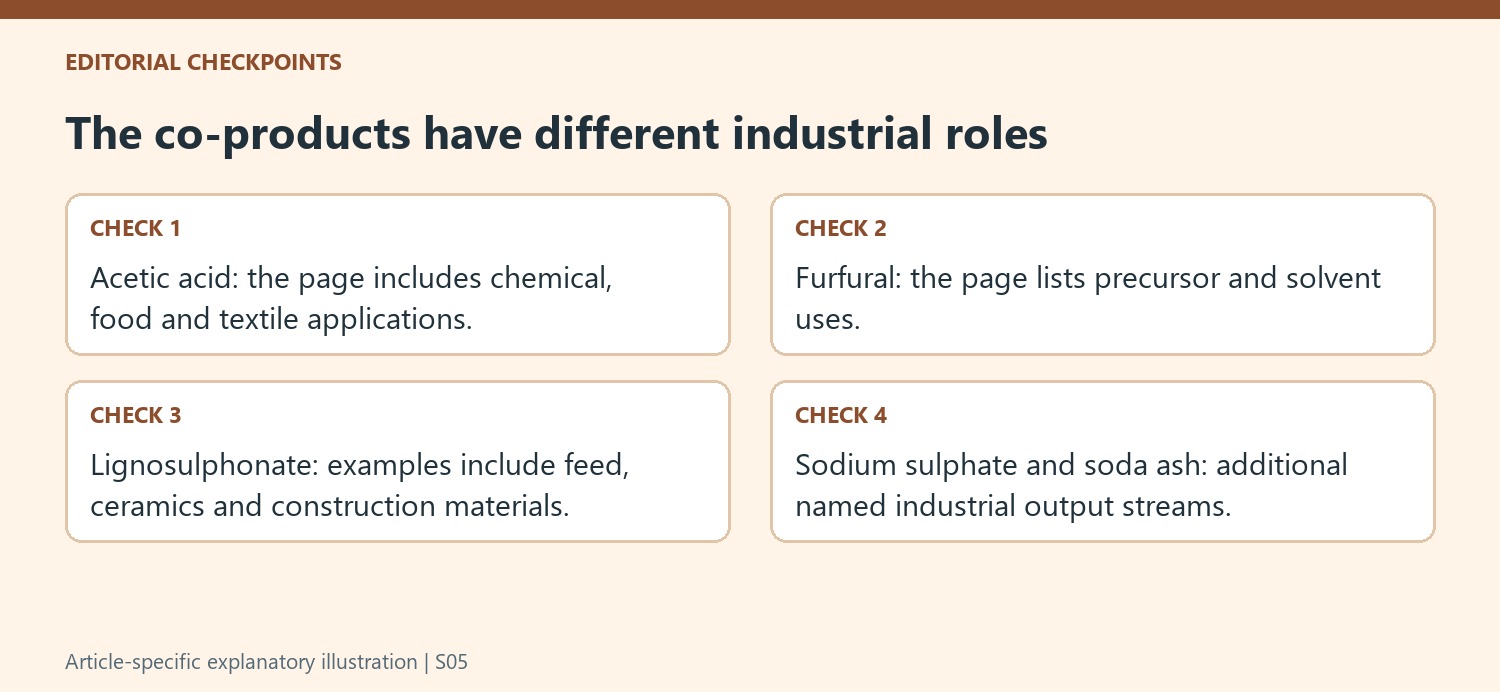
The source connects biobased acetic acid with food, pharmaceutical, cosmetics and chemical uses, including solvents and textile applications. It describes furfural as a precursor or solvent for several industrial routes. Magnesium lignosulphonate appears in a different set of examples, including animal feed, ceramics, tanning and construction-related materials. These lists demonstrate the diversity of the recovered streams, not a claim that the products can substitute for one another. A buyer of a chemical or technical ingredient still needs the relevant grade and specification. The material's biorefinery origin explains where it comes from, while its chemical identity and product requirements determine where it can actually be used.
Fiber production and co-product recovery have related boundaries
The page also lists soda ash, sodium sulphate and hemilye with their respective industrial uses. These examples broaden the picture beyond one branded fiber. They help explain why an assessment of a production site can involve allocation and recovery questions rather than only the weight of textile output. The page itself does not provide a complete numerical lifecycle comparison for each co-product, so a broad efficiency concept should not be converted into an unsupported zero-waste or zero-impact measurement. The defensible point is specific: the described operation seeks useful applications for separated components. To compare a particular output, identify that product, its application and the evidence for the claim being made, keeping the overall biorefinery concept distinct from a finished garment's performance or sourcing specification.
References
- Wood, the perfect all-rounder. lenzing.com.














Comments
0