 FabricKnowledge Lab
A synthetic fiber with familiar uses
Acrylic often appears in the same product categories as wool, including sweaters, hats, gloves, blankets, and rugs. Its familiar knitted appearance can therefore hide a very different starting material. Sewport describes acrylic as a fiber made from polyacrylonitrile, rather than hair harvested from an animal. The guide gives an acrylonitrile content of at least 85 percent for the acrylic classification. That definition concerns the fiber itself; a finished garment may combine acrylic with other fibers, so the complete composition label still matters when identifying what a sweater contains.
Turning dissolved polymer into fibers
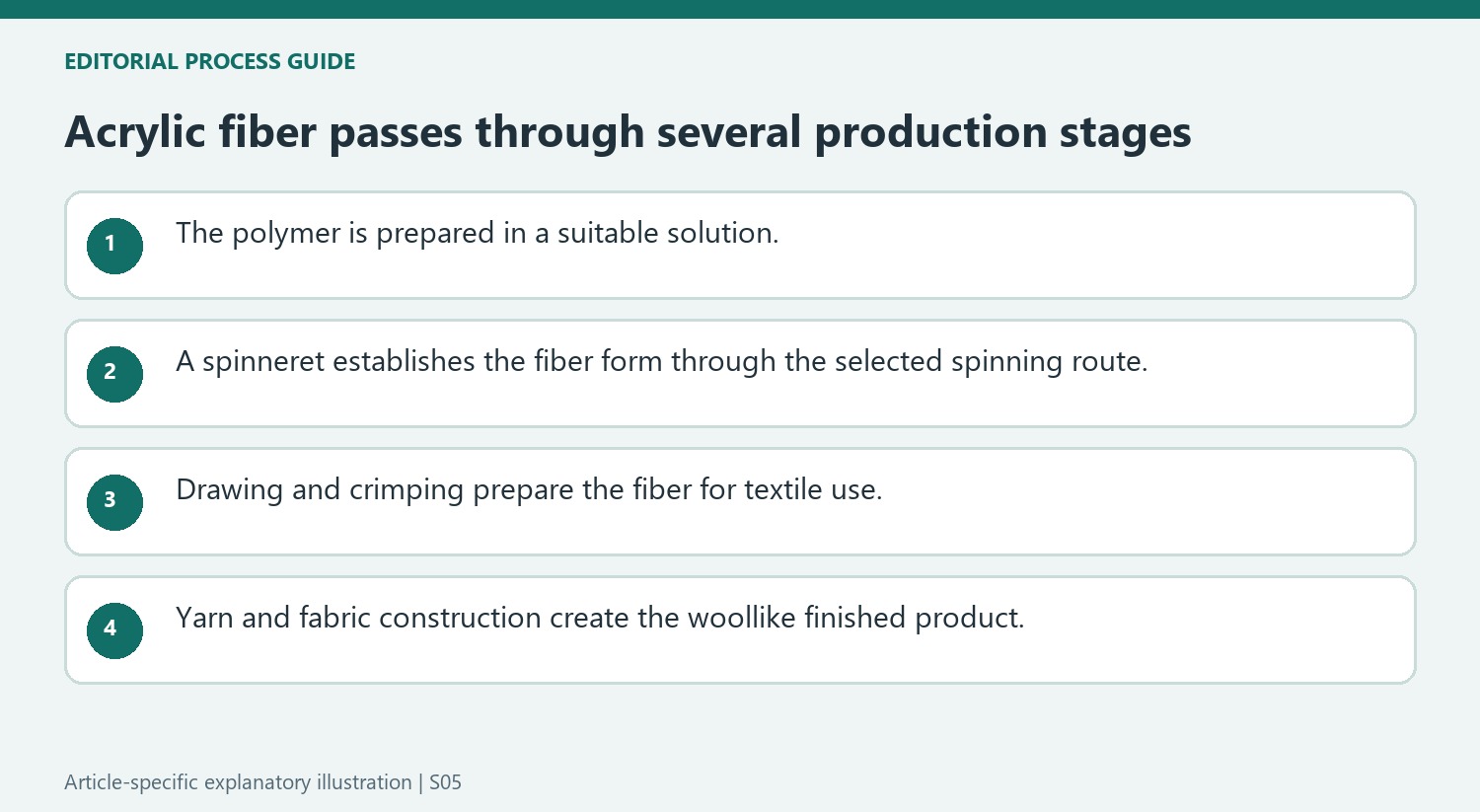
The manufacturing account begins with polymer formation, followed by dissolving that polymer so it can pass through the small openings of a spinneret. Sewport describes both wet spinning and dry spinning routes. In the first, a liquid bath helps form the fibers; in the second, heated gas removes solvent. The resulting material is washed, stretched, and crimped before becoming yarn. These stages explain why an industrially produced polymer can eventually become a soft, bulky material suitable for knitting rather than remaining a solid piece of plastic.
Yarn appearance and finished construction
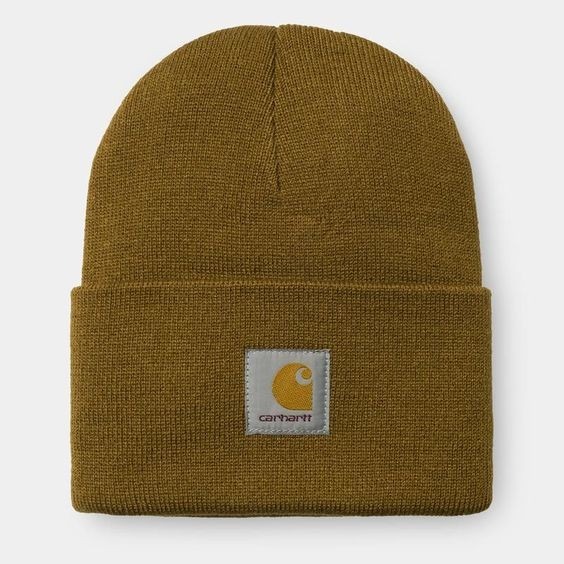
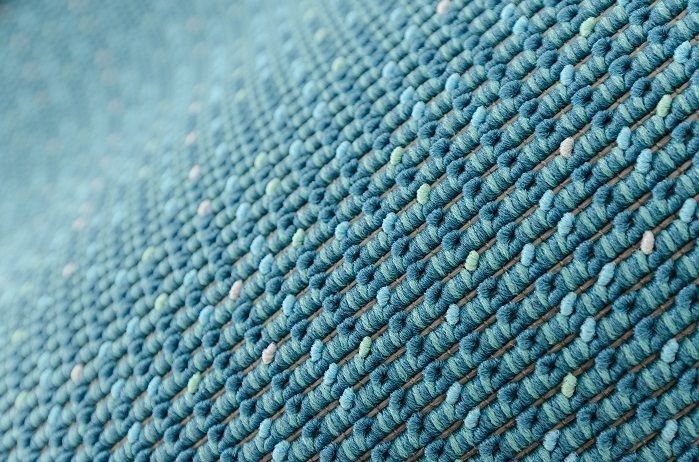
After spinning, yarn can be supplied to textile factories or sold for hand knitting. Sewport lists apparel alongside upholstery, carpeting, and other household textiles, showing that acrylic is a material category with several construction possibilities. A knitted hat and a woven furnishing fabric can share a fiber name while differing substantially in thickness, surface, and use. The guide also distinguishes acrylic from related variants such as modacrylic. For practical comparison, begin with the exact fiber description, then examine the yarn and fabric structure instead of treating every woollike surface as the same textile.
Fiber formation and yarn formation are separate operations
The acrylic guide describes a prepared polymer solution passing through a spinneret, followed by a route that establishes the fiber. Its wet-spinning and dry-spinning descriptions use different ways of handling the solvent during that stage. These are industrial fiber-production methods, not two ways of washing a finished sweater. After fiber formation, further operations such as drawing and crimping help prepare the material for textile use. Spinning or other yarn preparation comes before knitting or weaving the final cloth. Following this sequence makes it easier to understand why a manufactured fiber can be designed for a woollike appearance without being wool, and why its final surface still depends on later yarn and fabric choices.
A fiber-definition percentage is not a garment blend percentage
The source identifies a high proportion of acrylonitrile units as part of the acrylic fiber definition. That is a classification of the manufactured fiber material, not a statement that every garment marketed as acrylic must contain the same percentage of acrylic textile fiber. A sweater can blend acrylic with other fibers, and the composition label describes that completed mixture. These percentages answer different questions. One concerns the chemistry used to classify a fiber; the other concerns the materials assembled into a product. Reading them separately avoids a common confusion when comparing a pure acrylic yarn with a blended knit that includes wool, cotton or another material.
A woollike surface does not establish wool performance
Sewport discusses acrylic in sweaters, hats, blankets and other applications also associated with wool. The overlap explains its role as an alternative material, but visual similarity is not proof that all properties are identical. Compare the actual knit, surface and intended use rather than substituting the word woollike for a complete specification. The guide also raises pilling and heat-related care questions. Those should lead to checking the finished item's instructions, not adopting an unrestricted washing rule from a general fabric description. Dyes, blends and garment structure remain relevant. A careful purchase or care decision uses the identified fiber alongside the actual textile and label, preserving the distinction between an imitation of a familiar appearance and an exact substitute for every wool product.


Comments
0