 FabricKnowledge Lab
A conversion rather than an entirely new site
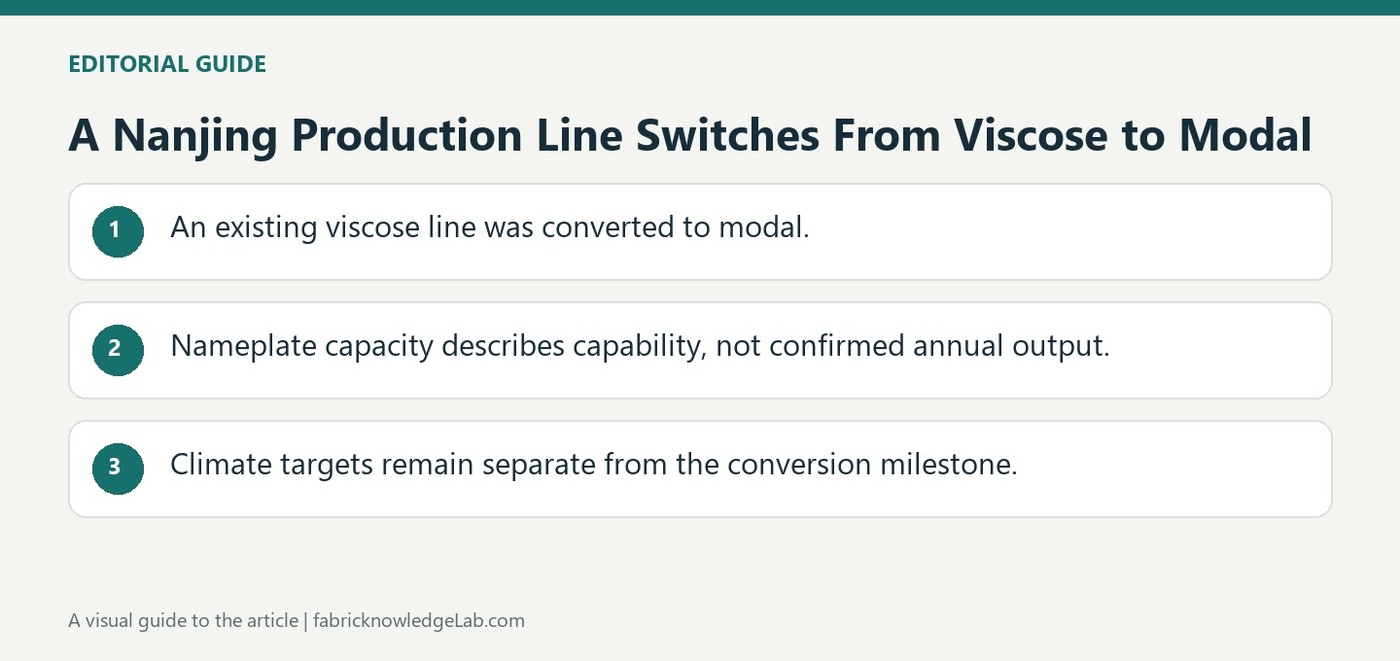
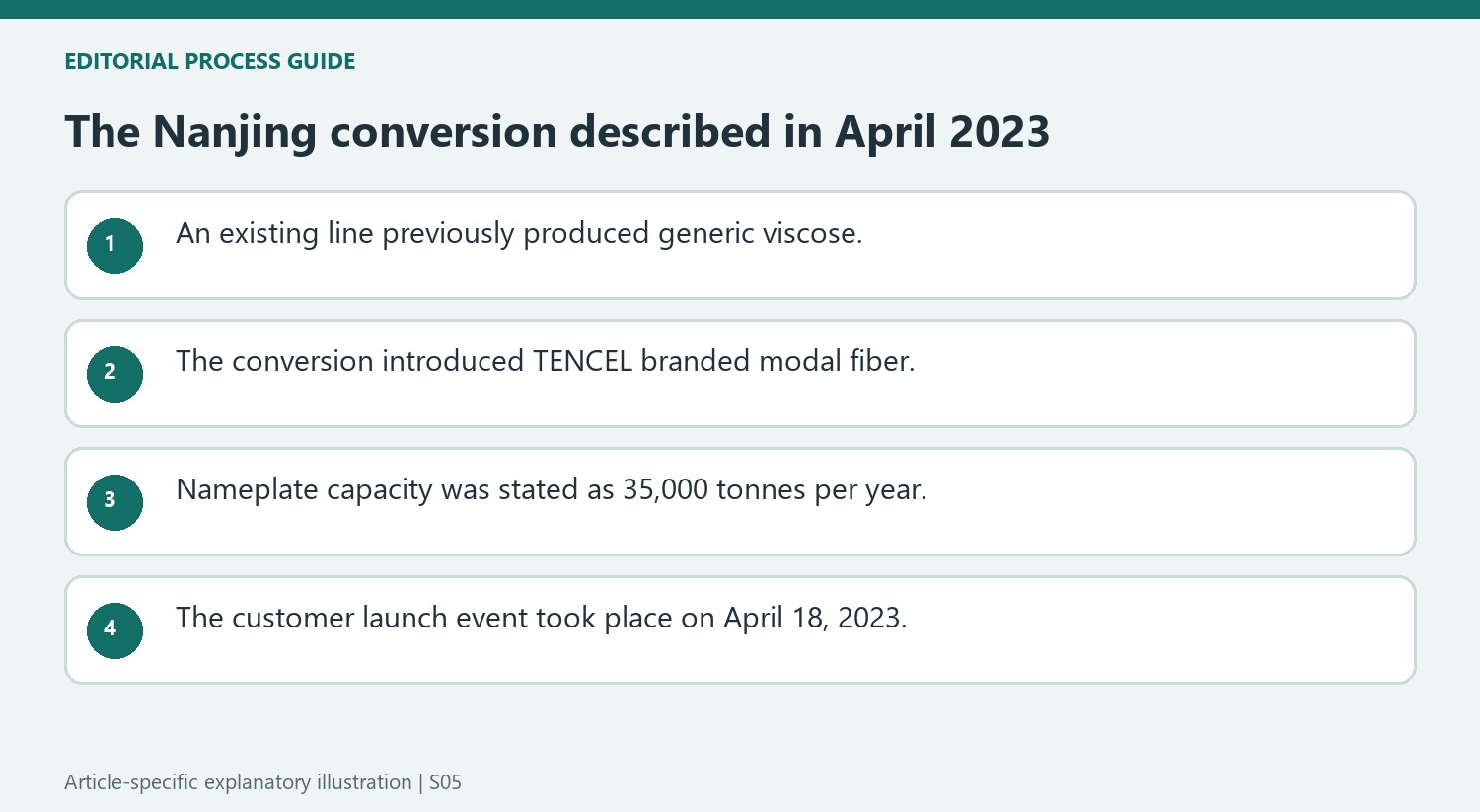
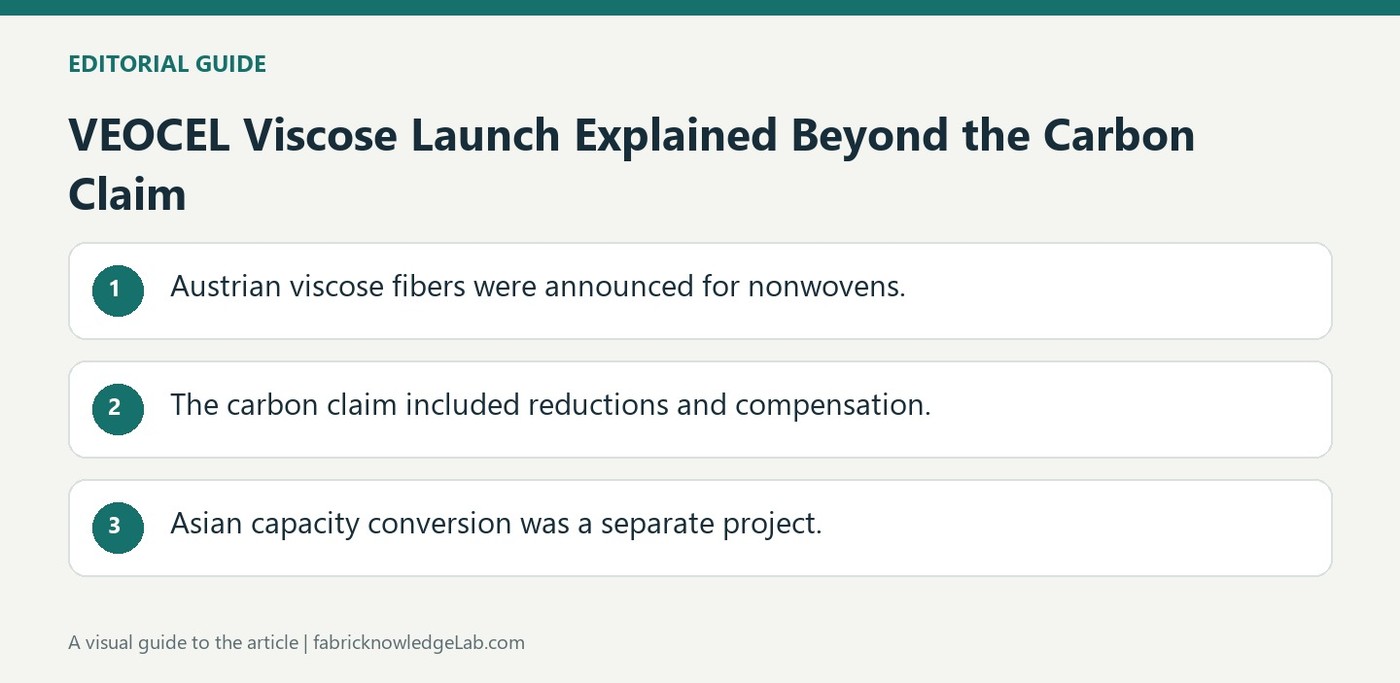
Lenzing reported that a production line at its Nanjing site had been converted from generic viscose to TENCEL branded modal fibers for textiles and clothing. The announcement identified a nameplate capacity of 35,000 tonnes per year and described the change as enabling locally produced TENCEL fibers for Chinese customers. A customer event marking the launch took place on April 18, 2023. These details place the story in a specific historical setting. The documented milestone was a completed line conversion, rather than the construction of an entirely new manufacturing complex or a statement about current output.
Capacity figures describe a production capability
The annual figure refers to nameplate capacity, which describes the line's stated production capability. It should not be read as a confirmed quantity of fiber actually manufactured or sold during every year. Lenzing positioned the conversion as a response to demand for specialty fibers in Asia and said the site's portfolio also included ECOVERO fibers for textiles and viscose fibers for nonwovens. Those products address different downstream uses. The switch to modal therefore formed part of a portfolio change, not a claim that every fiber leaving the site had become the same material.
Investment and climate plans remain distinct claims
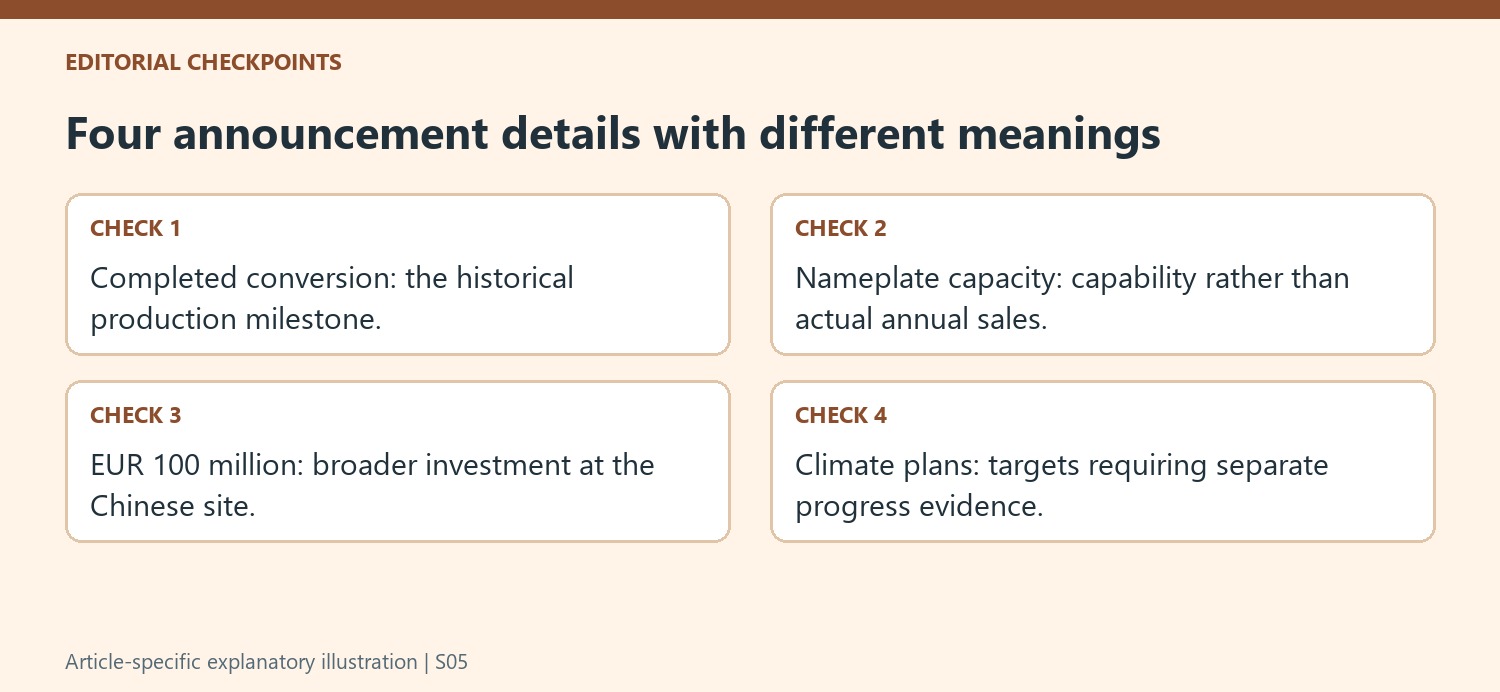
The report also described EUR 100 million of investment at the Chinese location to upgrade products and reduce emissions. It discussed a transition toward renewable electricity and the company's climate targets as understood at the time. These statements explain the wider program around the modal line, but a production milestone does not itself verify achievement of every future environmental goal. Readers evaluating the announcement should separate the completed conversion, the stated capacity, the investment program, and the longer-term targets. Each answers a different question about how the site was being developed.
What local fiber production changes in the chain
Lenzing linked the conversion to Chinese customers' access to locally produced TENCEL branded modal fibers. That statement concerns an upstream material supply. Fiber still has to enter downstream processes before it becomes yarn, fabric, and clothing, and those stages may involve different businesses and locations. The announcement therefore supports a narrower conclusion than saying every finished garment has become locally made. It shows how one producer was repositioning a particular site to serve a regional specialty-fiber market. Keeping the production stage visible also makes the brand reference clearer: the launch concerned a named modal-fiber offering, rather than a general certification of everything sold by a customer using that fiber.
Read the number with its unit and scope
The figure of 35,000 tonnes per year belongs to the converted line and is identified as nameplate capacity. It describes a production capability over an annual period, rather than warehouse stock, a monthly shipment, or a customer sales total. The EUR 100 million figure belongs to the broader investment program at the Chinese location. Presenting both figures together is useful, provided their scopes remain distinct. The source does not justify allocating every euro of that program solely to the modal conversion. Likewise, dividing the investment by the line's capacity would not establish a reliable cost for producing a tonne of fiber, because the announcement does not provide that calculation's operating assumptions or cost boundaries.
A historical milestone needs a historical reading
The April 2023 launch event documents when the company celebrated the converted line with customers. The release also describes ambitions around electricity and emissions, but those statements should retain their original time context. A target announced alongside a completed industrial change is still a target until separate evidence confirms its achievement. Readers reviewing the report later can use the conversion as a documented milestone while consulting newer reporting for subsequent output, energy sourcing, or progress against climate goals. This approach preserves the useful specificity of the original announcement. It also prevents a historical news item from quietly turning a dated plan into a statement about the site's present condition.















Comments
0