 FabricKnowledge Lab
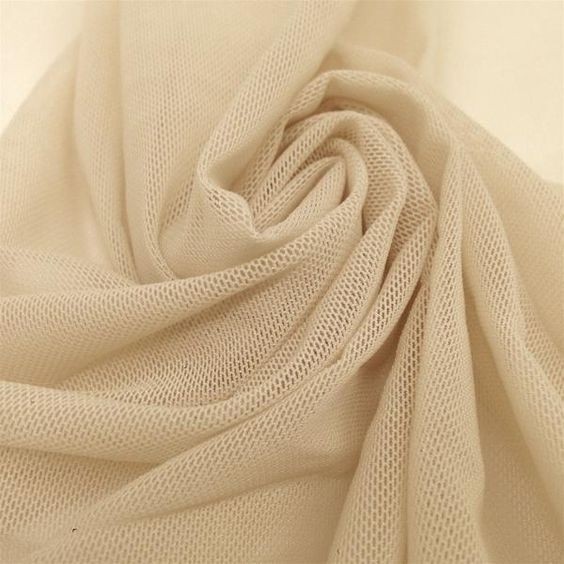
The openings are the defining visual feature
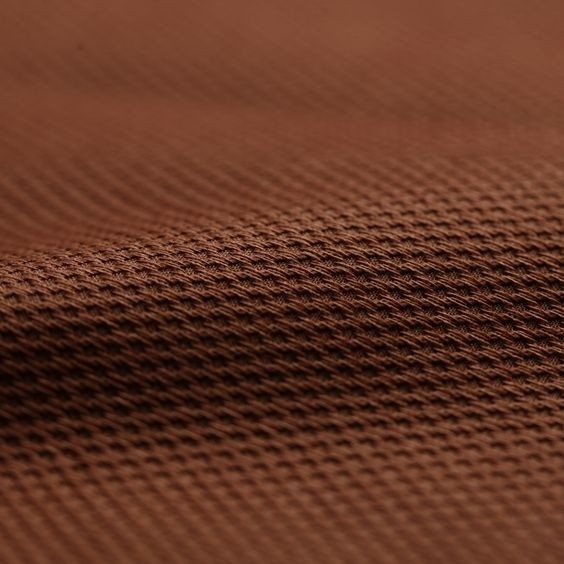
Mesh fabrics have an open, net-like structure with visible spaces between the yarns. Sewport describes this permeability as central to their use in clothing and other products. The word does not identify one exact hole size or shape: some structures form a regular square pattern, while others use a different geometry. A lightweight sports jersey and a finer decorative net can therefore share an open appearance without having the same strength, stretch, or surface feel. Examine the actual structure rather than assuming that every fabric called mesh is interchangeable.
Synthetic yarns can support several variants
The source discusses polyester and nylon as common materials for mesh. Fiber production precedes the textile-forming stage, after which the yarn is arranged into the desired open structure. Different constructions and added stretch can create products such as power mesh and powernet. Their names describe more specific uses and handling than the general mesh category. This distinction matters when selecting a replacement fabric: matching the visible openings alone does not establish that a new material will provide the support, recovery, or flexibility required by the original design.

Applications demand different kinds of openness
Sewport lists athletic jerseys, shorts, workout clothing, lingerie, shapewear, and screen-printing-related uses among mesh applications. Air passage may be valuable in one product, while controlled stretch or a regular opening pattern matters more in another. A material selected for a garment should be judged by its composition, construction, and intended role together. Check the finished item's care instructions as well, particularly where delicate open sections or stretch yarns are present. A broad claim that mesh lets air through does not settle questions about opacity, fit, durability, or whether a particular open textile is appropriate for a different task.
Opening size and support are separate design questions
The mesh guide emphasizes visible spaces, but those spaces can vary in shape and density. A net-like appearance does not measure the force a fabric can support or how far it stretches. This is important when comparing a decorative mesh with a power mesh intended for a more supportive role. The two can look related at first glance while using different yarns and constructions. Examine the sample in the orientation and position proposed for the garment, and compare its recovery and surface as well as its openings. Matching a photograph of hole size alone is an incomplete replacement strategy because the structure has to perform a particular job once it becomes part of the product.
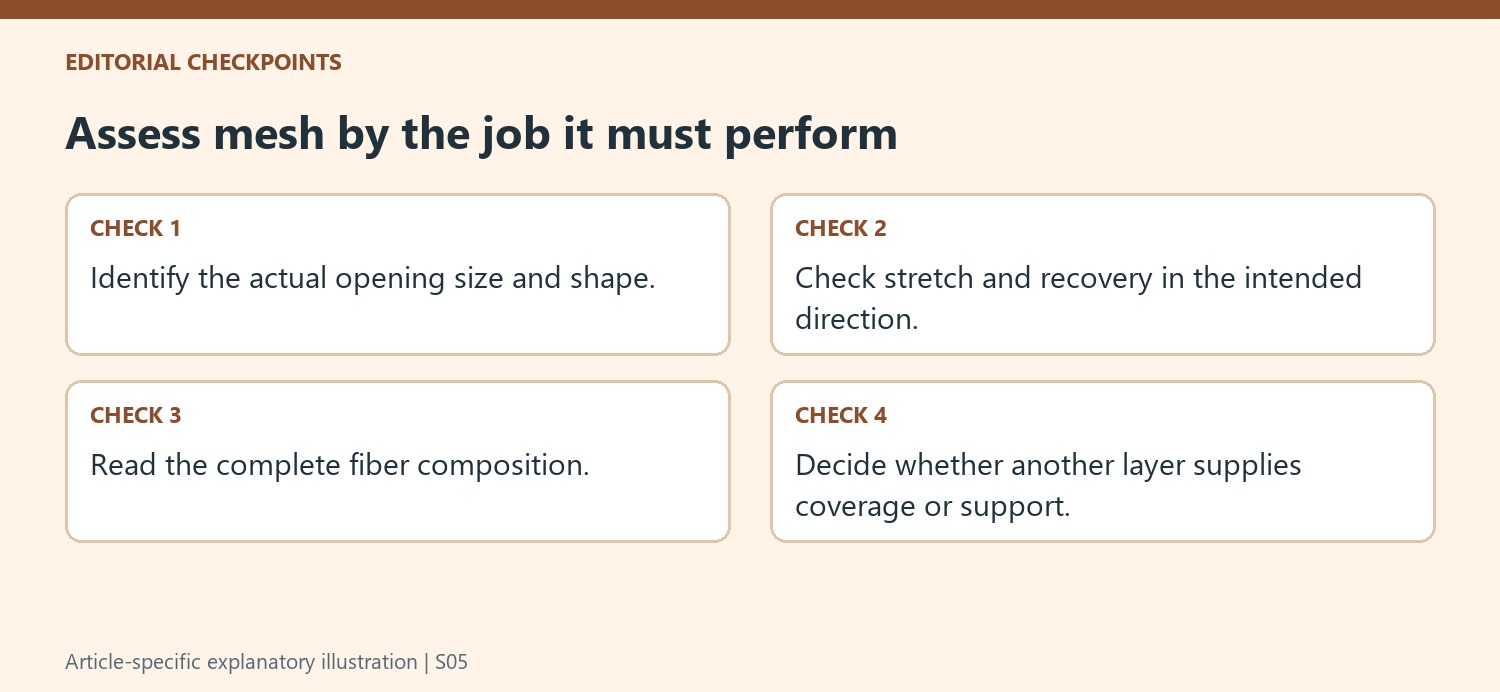
The same openness can serve different applications
Sewport lists sports jerseys, workout clothing, lingerie, shapewear and non-apparel netting among the uses. These examples are connected by an open structure but prioritize different results. A jersey may use openness as part of a light garment surface, while a decorative overlay uses it to show another layer underneath. A technical screen needs its own regularity and material specification. None of those roles is fully defined by the word breathable. Think about what passes through the structure, what needs to remain supported and whether another layer supplies coverage. This turns the visual idea of mesh into an end-use question rather than assuming that every open textile solves the same problem.
Material and construction remain independent choices
The source discusses nylon and polyester as common mesh materials, but the broad category does not specify one polymer or one manufacturing arrangement. A knitted or otherwise constructed open textile should be described accurately rather than assumed to be a conventional close weave simply because it is fabric. Added stretch fibers introduce another variable, especially in close-fitting products. Read the full composition and supplier description before choosing a care routine or substituting a cloth in a pattern. The actual finished item's instructions remain relevant to delicate open sections and assembled details. A useful comparison combines the structure, material and intended role, keeping the attractive visual openness in context with the support, flexibility and handling the design requires.



Comments
0