 FabricKnowledge Lab
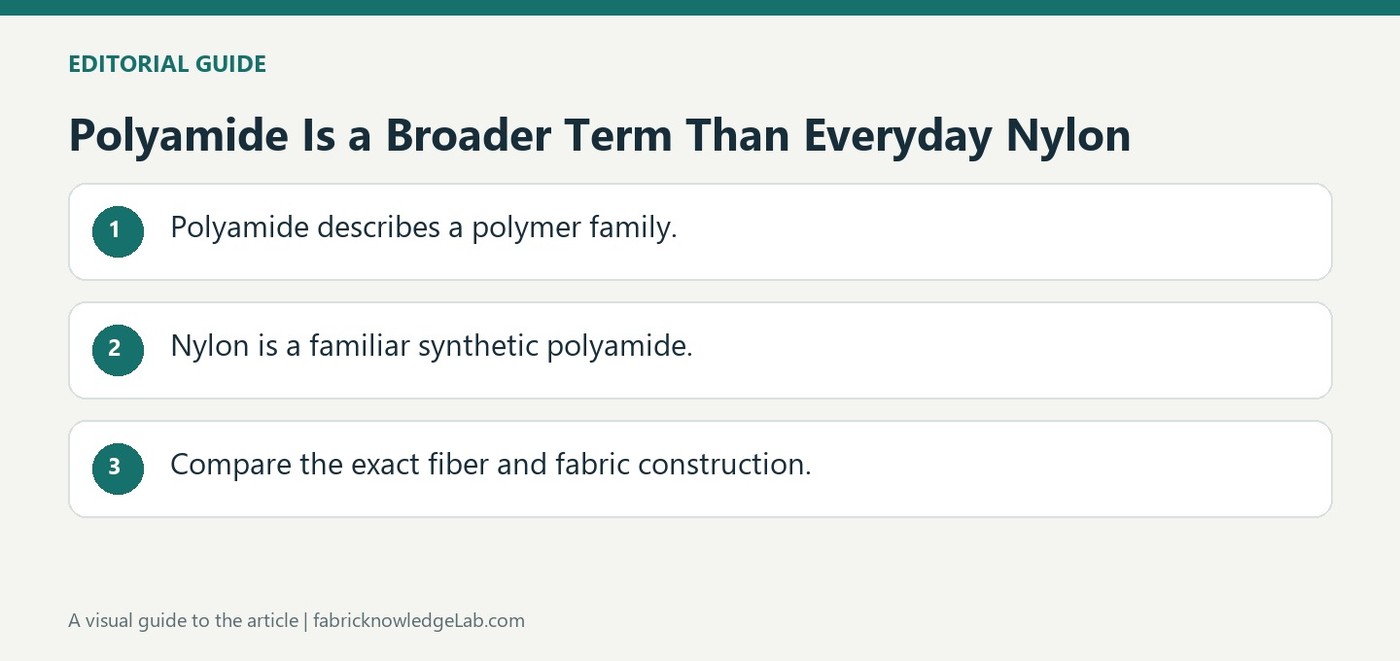
The family name includes different materials
Sewport uses polyamide as a broad category and identifies nylon as its most familiar clothing example. It also discusses specialized polyamide materials associated with different industrial uses. That breadth is the key distinction: the family name does not mean that every member has the same heat behavior, stiffness, or application. A garment label saying polyamide provides composition information, but a technical product needs a more precise material specification. Do not transfer properties from a specialized protective fiber to ordinary nylon clothing simply because both fall under a related chemical category.
Fabric construction and blends remain important
The source describes nylon in hosiery, close-fitting clothing, and blends with other textile fibers. These applications emphasize how a polymer can be formed into fine yarn and combined with different materials. The final result depends on yarn, knit or weave, and any stretch component rather than the category label alone. A polyamide-containing sports garment is therefore not fully described by one fiber percentage. Its structure and other ingredients contribute to movement, surface feel, and the intended function of the finished item.
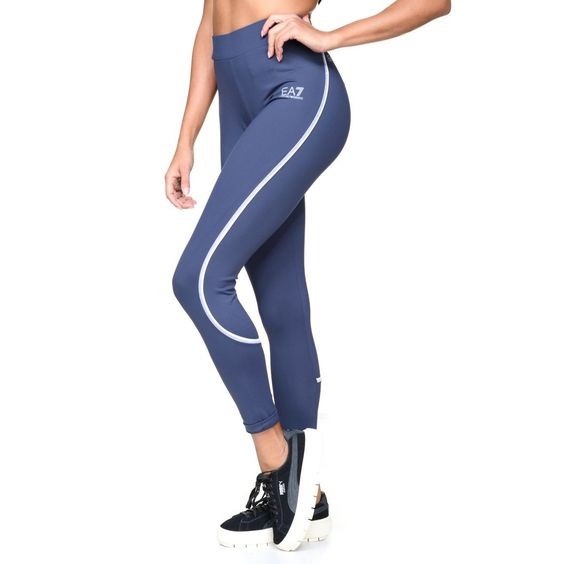
Do not generalize care across the family
Sewport notes that ordinary nylon can be damaged by excessive heat and contrasts apparel uses with more specialized industrial applications. That makes the actual material and product instructions important when pressing or laundering a garment. A general discussion of strong synthetic fibers does not establish one safe iron setting for all polyamides. Check the complete label and the intended use. The most useful reading of polyamide is as a starting classification, followed by identification of the specific fiber and textile, rather than as a complete performance rating or a guarantee that all related products can substitute for one another.
A chemical family is broader than a clothing label
The polyamide guide includes everyday nylon and specialized materials such as aramids within a broader discussion. That breadth is useful because it prevents a family name from being mistaken for one performance specification. In ordinary clothing descriptions, polyamide often identifies a nylon component, while a specialized technical textile needs a more precise material name and relevant performance information. The fact that materials share a chemical classification does not mean they tolerate the same heat or serve the same protective role. Read the actual product description before transferring a property from an industrial example to a pair of tights or a sports garment. The family relationship explains terminology; it does not establish interchangeability.
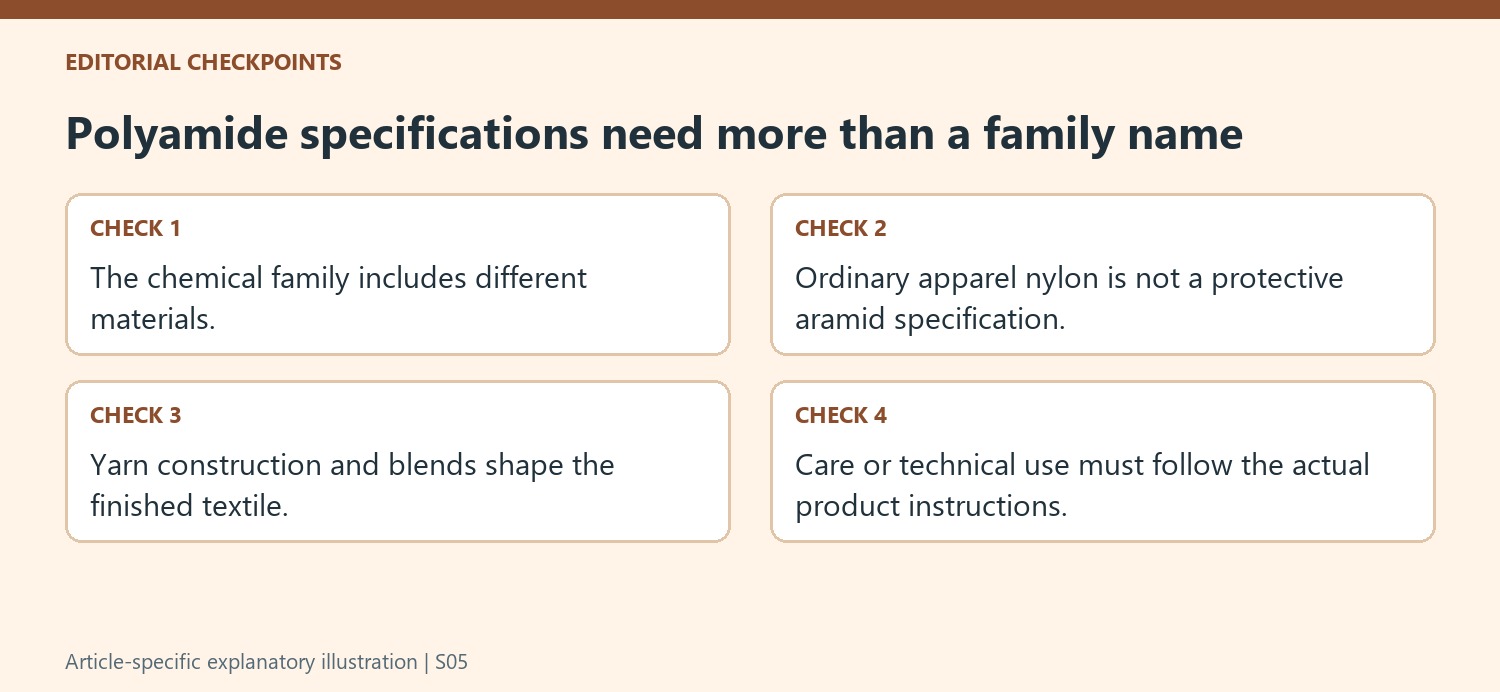
The product structure completes the composition statement
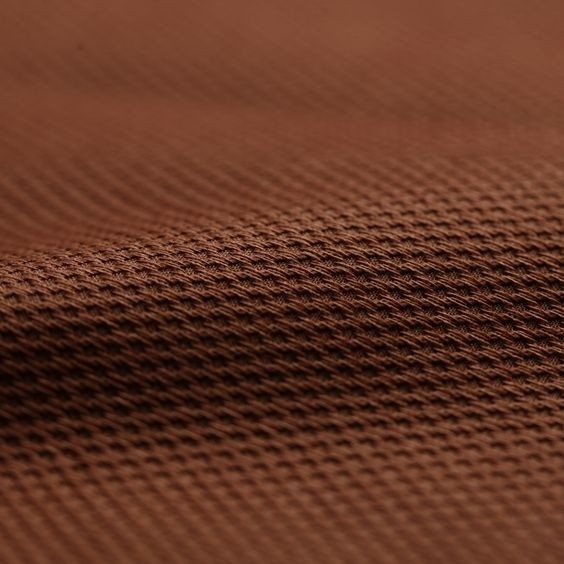
The guide's hosiery and form-fitting clothing examples show how fine manufactured yarns can be organized into very different textile structures. A fiber percentage states composition but does not reveal yarn size, loop arrangement or the contribution of another stretch component. These details help determine how the finished item moves and feels. When selecting a replacement fabric or comparing garments, examine the actual construction alongside the composition. A smooth woven polyamide blend and a close-fitting knit need not behave alike even if both list the same broad fiber family. This is why a useful specification includes the intended product role, rather than relying on one percentage as a complete account of movement or recovery.
Processing stages should not be collapsed into the garment
Sewport describes polymer preparation, filament formation and further operations before textile manufacture. Those stages establish a manufactured fiber, after which yarn and fabric choices still remain. The source also discusses blends, which adds another decision between fiber production and the finished item. Keep these stages separate when interpreting a performance claim. A strong fiber reputation does not on its own specify the strength of a seam or the care of an assembled garment. For ordinary apparel, use the item's own laundering and pressing instructions, especially where excessive heat is a concern. For a specialized application, seek the actual material and test specification. This preserves the useful classification while requiring evidence at the level where the product will actually be used.




Comments
0