 FabricKnowledge Lab
The expansion concerns a specific viscose product
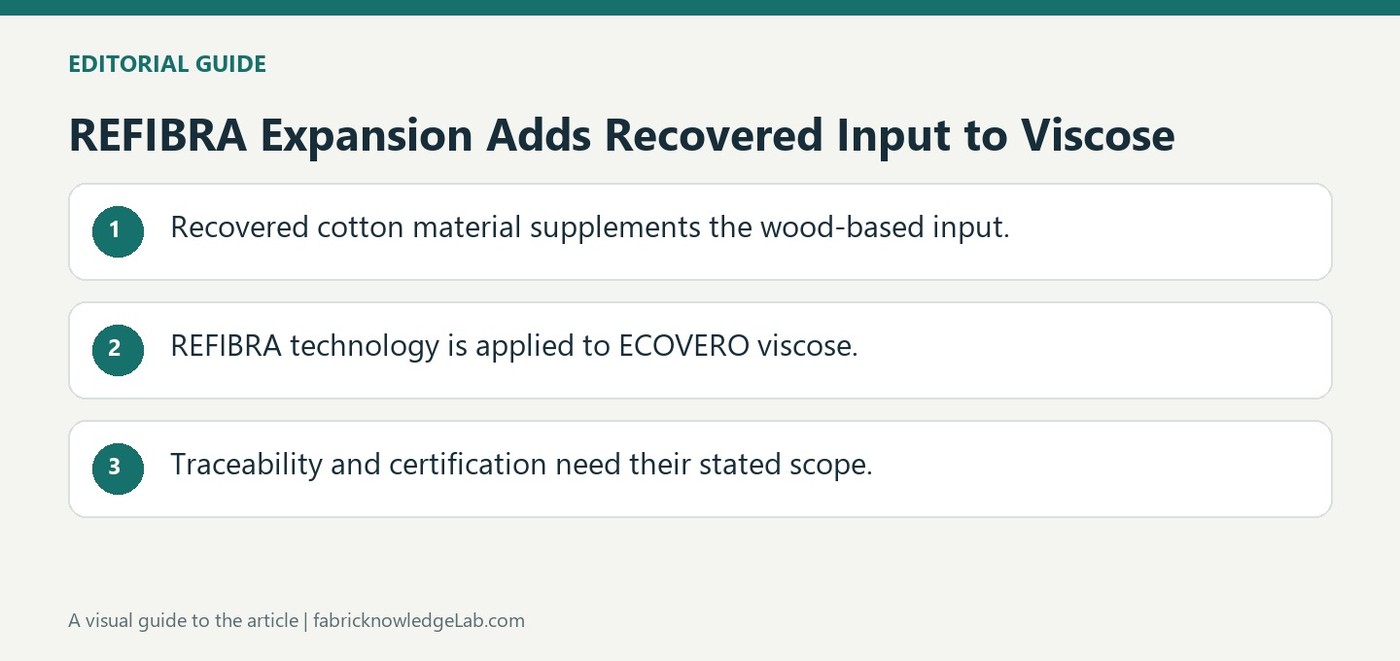
Lenzing announced the extension of REFIBRA technology from its existing lyocell offering to LENZING ECOVERO branded viscose fibers. This is a product-development statement about a named regenerated-cellulose fiber, not a claim that all viscose is already recycled. The company positions the offering as a way for mills, garment manufacturers, and brands to incorporate recovered textile resources into new material. Keeping the brand and technology names together is important because they identify the particular development described in the announcement.
Recovered material is part of the feedstock
The release states that the new fiber contains up to twenty percent post-consumer textile raw material. It identifies cellulose-rich materials and polyester-cotton blends among the collected inputs and describes sorting in collaboration with industry partners. The phrase up to describes a maximum in the stated offering, not a guarantee that every product labeled with a similar technology name contains exactly that proportion. It also refers to the fiber's raw-material input, which should not be confused automatically with the recycled percentage of an entire finished garment that may contain other fibers and components.
Traceability is part of the intended value
Lenzing says the fiber can be identified through the supply chain, including fabric and final-product stages. That is presented as support for transparency and authentic product claims. The announcement also describes worldwide availability and an intention to raise recovered input in the future. Distinguish those statements: a present product specification and a future improvement target are not the same thing. For a finished clothing purchase, look for the actual composition and the manufacturer's clear content claim rather than treating a general circularity message as proof that the whole garment is made entirely from recovered textiles or can be recycled through any local system.
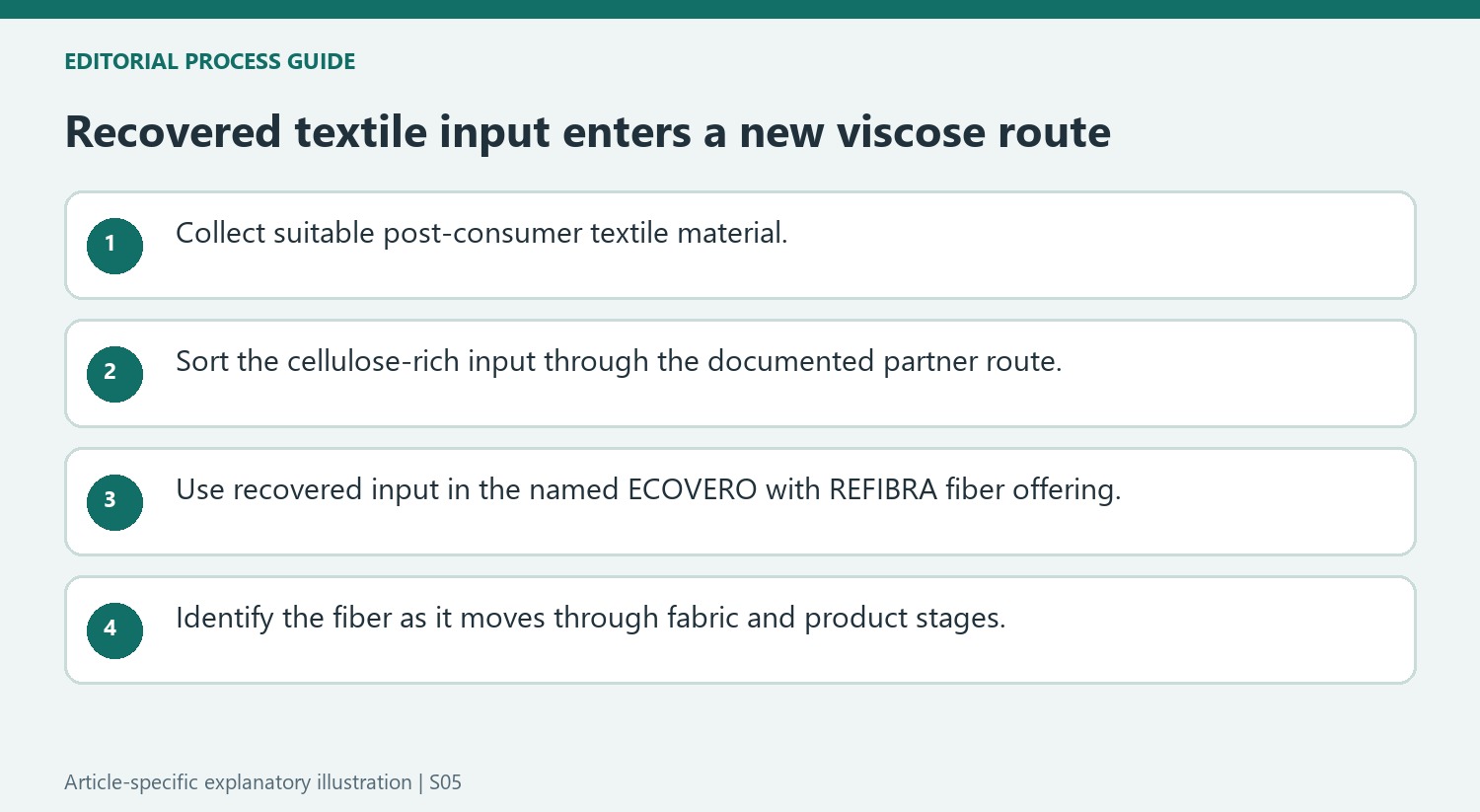
Collection and sorting precede the new viscose input
The REFIBRA expansion announcement identifies post-consumer textiles as a recovered raw-material source and names cellulose-rich materials and polyester-cotton blends among the inputs. That description implies a collection and sorting route, rather than indiscriminate use of every discarded garment. Lenzing describes working with industry partners on those stages. A textile waste stream still has to provide suitable material before it can enter a new fiber product. Keeping collection separate from fiber manufacture makes the circularity message more concrete: the announcement concerns a particular route for recovering a useful input, not a claim that any mixture of used clothing can be placed directly into a viscose spinning process without preparation or selection.
The percentage belongs to the named fiber offering
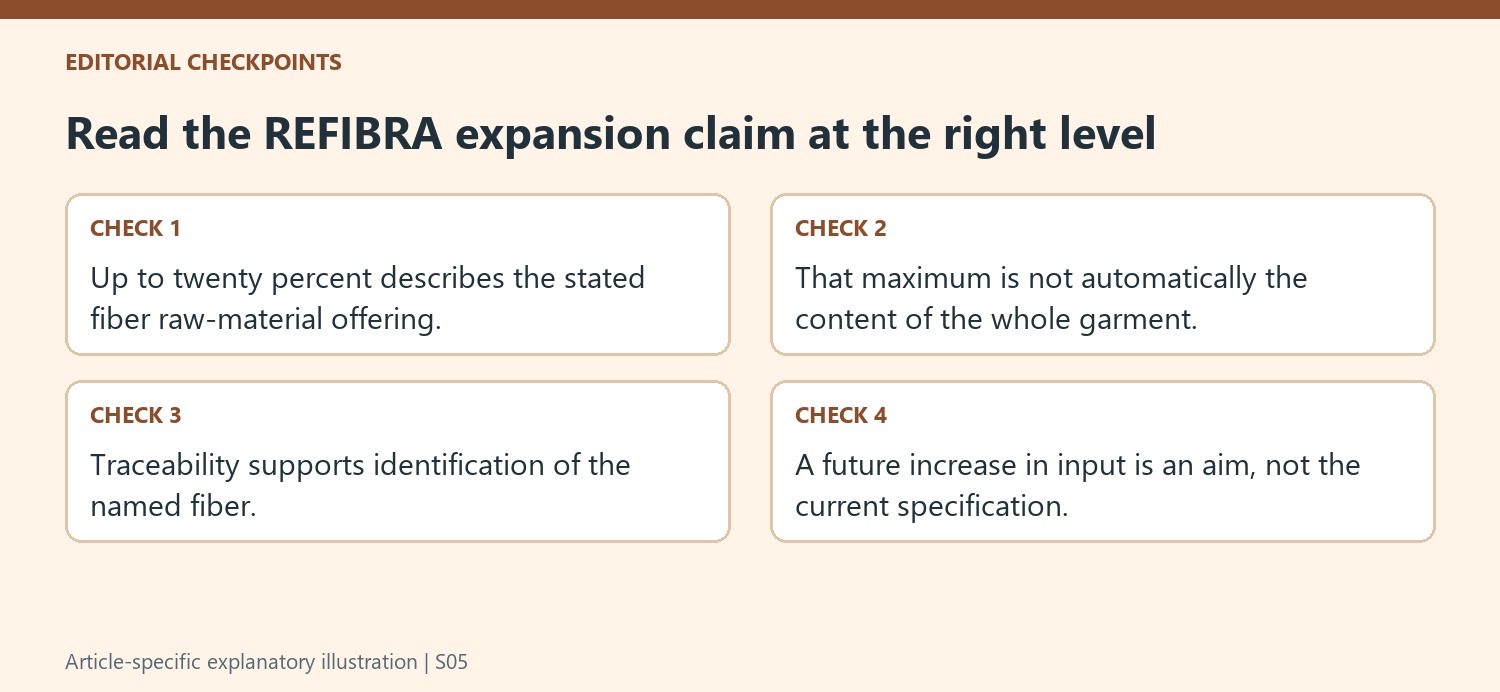
The release's up-to-twenty-percent figure describes post-consumer textile raw material in the announced ECOVERO fiber offering. It is not automatically the percentage of recycled material in a finished jacket, dress or household textile. Such an item may mix this fiber with other yarns and include linings, trims and fastenings. Even within the fiber claim, up to identifies an upper value rather than saying that every batch or finished product has exactly the maximum. A clear retail description should identify which material the percentage concerns. This gives a reader a usable content statement without inflating a fiber-level development into a claim about every component of an assembled product.
Traceability supports identification rather than local recyclability
Lenzing says the material can be identified at successive stages from fabric to final product. That capability is intended to support genuine sourcing and product claims as the fiber moves through the value chain. It answers a different question from whether a consumer can return the completed garment to a nearby collection scheme or whether that scheme can recycle its entire blend. The release also mentions increasing recovered input in the future, which is a development aim rather than the present specification. Keep those distinctions when comparing products. Ask what is currently included, how the named fiber is identified and what practical recovery route is actually available for the final item. This makes a circular-material announcement useful without assuming that one technical advance has already solved every later sorting and end-of-life challenge.






Comments
0