 FabricKnowledge Lab
Nylon is a fiber material, not a weave
Nylon belongs to the polyamide family and appears in many kinds of clothing and other textiles. Sewport discusses stockings, tights, sportswear, and blended fabrics among its applications. Those uses demonstrate that the material name does not identify one thickness, surface, or garment structure. A fine hosiery yarn and a substantial woven textile can both contain nylon while serving very different purposes. Begin a comparison with the actual product specification rather than assuming that a fiber's historical use in stockings explains how every nylon fabric will behave.
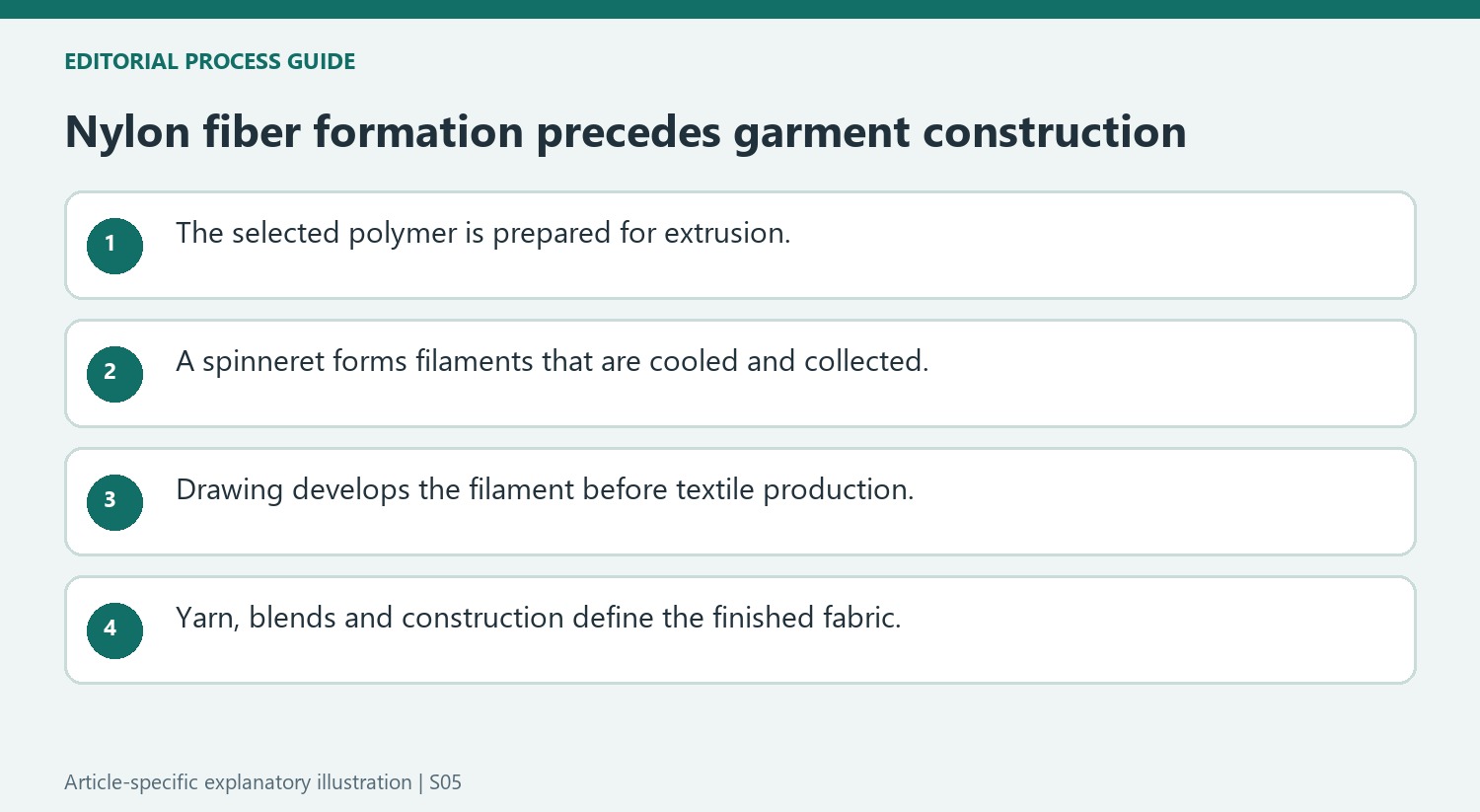
Extrusion and drawing prepare the fiber
The source describes producing a molten polymer and forcing it through small openings in a spinneret. The resulting filaments are cooled and wound, then stretched through drawing. Drawing changes the organization of the polymer chains and helps develop the fiber's useful properties before it becomes part of a textile. This controlled sequence is separate from weaving or knitting the final fabric. It explains why polymer production, fiber formation, yarn preparation, and garment construction should not be collapsed into a single step called making nylon cloth.

Blends and structure determine practical performance
Sewport describes nylon combined with fibers such as cotton, polyester, wool, or stretch materials to create different textile combinations. Each ingredient and the chosen construction can affect the result. A nylon-containing garment should therefore be assessed by its complete composition and intended use rather than one sweeping claim about all synthetics. The source also notes sensitivity to excessive heat, making the finished item's pressing and laundering instructions important. Check those instructions before treating a nylon blend as equivalent to a cotton-only garment, even when the two items initially look similar in shape, color, and surface finish.
Nylon's manufacturing sequence precedes its fabric identity
The nylon guide follows polymer preparation with extrusion through a spinneret, cooling and drawing. The spinneret creates filaments, while drawing develops their organization before later yarn and textile operations. That order explains why the process should not be described as a machine extruding a complete garment. Several distinct stages connect the polymer to a useful fabric. A product specification may identify nylon without revealing each stage, so additional details about yarn format and construction remain valuable. This is especially clear when comparing fine hosiery with a more substantial woven material: the shared fiber family does not mean the same yarn size or the same structural role within the finished product.
Blending can change a textile without changing the fiber's name
Sewport describes nylon alongside cotton, polyester, wool and stretch fibers in different textile combinations. A blend gives a designer several materials to work with, while knitting or weaving establishes how they form the cloth. These decisions help explain why the same nylon percentage can appear in products with different handling. Compare the complete composition and construction rather than assigning the entire result to whichever fiber is most familiar. A garment intended to move closely with the body is a different design problem from a woven accessory. The useful question is what each component and structural choice contributes to that particular item, not whether every nylon-containing textile belongs to one universal performance category.
Use heat and care information from the completed item
The source notes nylon's sensitivity to excessive heat, which makes pressing and laundering instructions relevant to actual use. That does not establish one safe iron setting for every nylon blend. A garment also contains dyes, finishes, seams and possibly other materials with their own requirements. Follow the label on the item instead of treating a visually similar cotton product as the cleaning reference. The guide's wide application range is a further reason for this precision: clothing and other consumer textiles can use nylon in quite different ways. Fiber identity is useful background, but the finished specification is what connects that background to a practical routine for wearing, cleaning and maintaining a particular product.



Comments
0