 FabricKnowledge Lab

A brand can contain several fabric categories
Sewport explains that Polartec offers a range of textiles rather than a single uniform fleece. Fleece remains closely associated with the name, but the source also discusses materials intended for base layers and weather-protective clothing. The distinction matters in a product comparison: a branded fabric selected for a warming midlayer does not automatically provide the properties needed for a rain shell. Identify the exact fabric family and intended layer instead of treating the logo or the word fleece as a complete specification for every garment.
Fiber production and finishing affect the result
The guide describes polyester-based fleece production using fiber extrusion followed by fabric formation, dyeing, and any additional finishing required for the intended application. It also discusses recycled PET as one possible source of polyester input. The source material and the subsequent fabric treatment answer different questions. Recycled content does not establish that a fleece is windproof, waterproof, or suitable for a particular flame-related use. Those performance requirements belong to the specific developed textile and the finished garment's stated purpose, rather than to polyester or recycling as general categories.

Choose the fabric for the actual clothing role
Sewport lists jackets, sweaters, hats, shirts, trousers, gloves, and base layers among applications across the brand's range. It distinguishes specialized moisture-handling fabrics from warming fleeces and weather-oriented products. These examples illustrate why one fabric name cannot substitute for checking the precise specification. Compare weight, construction, intended function, and the care label on the actual garment. Avoid carrying broad comparisons from one historical fleece description into every current product: the useful question is whether the named fabric and finished design provide the combination of warmth, movement, and weather resistance required for that particular use.
A layer system needs different fabrics for different jobs
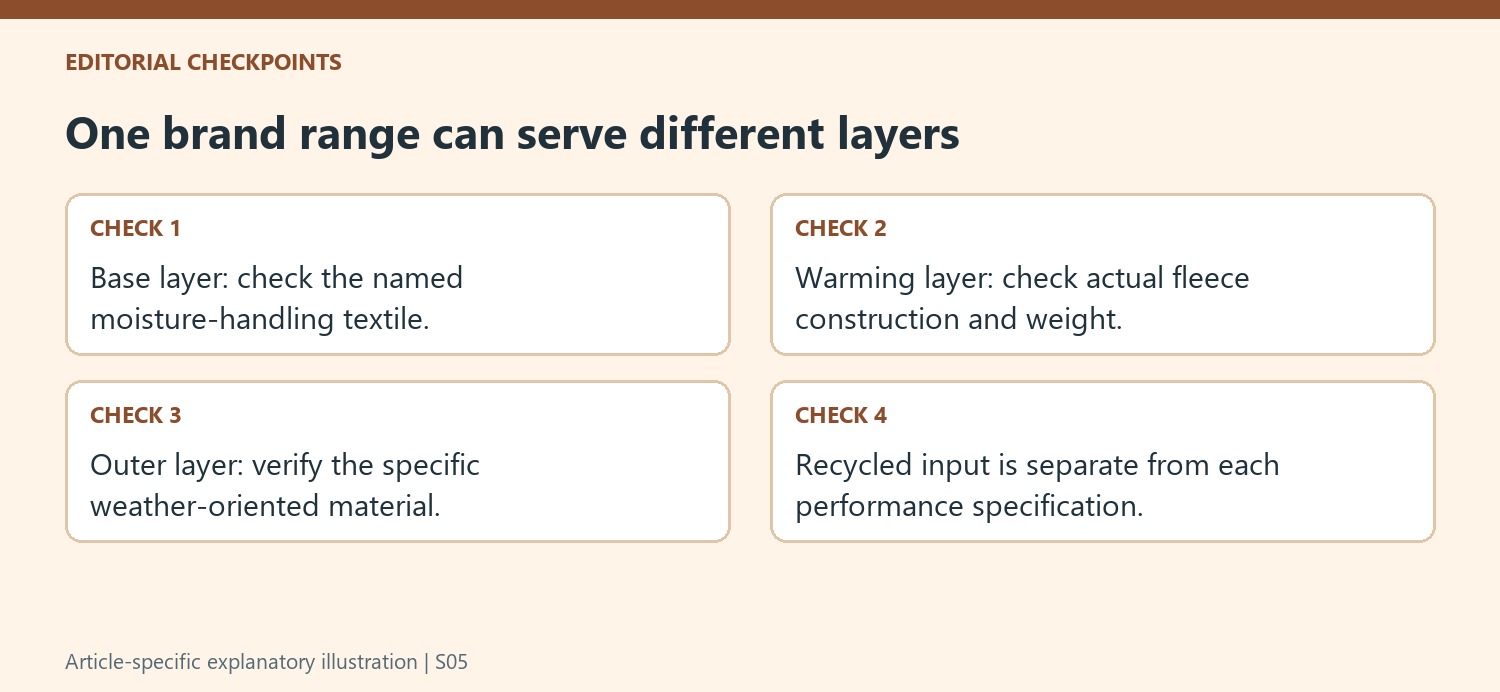
The Polartec guide describes a brand range reaching beyond its familiar fleece category. A base layer, warming midlayer and weather-oriented outer textile do not need the same balance of properties. The fact that one company develops fabrics for all three roles does not combine those roles into every product it supplies. For a clothing decision, identify where the garment sits in the intended system, then compare the named textile family. Warmth may be the main question for one layer while moisture handling or protection from weather dominates another. This is more useful than choosing from the brand name alone or applying one fleece description to a specialized fabric developed for a different function.
Recycled input and functional finishing answer different questions
Sewport discusses recycled PET as a possible input to polyester-based fleece. That information concerns the source of part of the manufacturing material. Fabric formation and any subsequent finishing establish another part of the product specification. A recycled input does not automatically provide wind resistance or a particular protective certification, just as a performance finish does not identify whether the polymer input was recycled. Read those claims separately. The source's manufacturing discussion connects fiber formation with later textile production, showing why both matter. A finished garment should be evaluated through its composition, actual fabric construction and documented purpose rather than treated as a direct reflection of the origin of its polyester alone.
Compare the actual textile rather than a historical generalization
The guide includes broad comparisons about older fleece products and a history of the brand. Those passages provide context, but they cannot establish a present specification for every fabric now using the name. A modern product comparison should use the exact material and intended function identified by the supplier. Check the fabric weight and surface, observe how it handles in the planned garment and use the stated care instructions. If weather or specialized protection is essential, look for the relevant product-specific information rather than inferring it from a general fleece label. This keeps the useful history of synthetic fleece separate from claims that need evidence about a particular current textile and the finished garment made from it.







Comments
0