 FabricKnowledge Lab
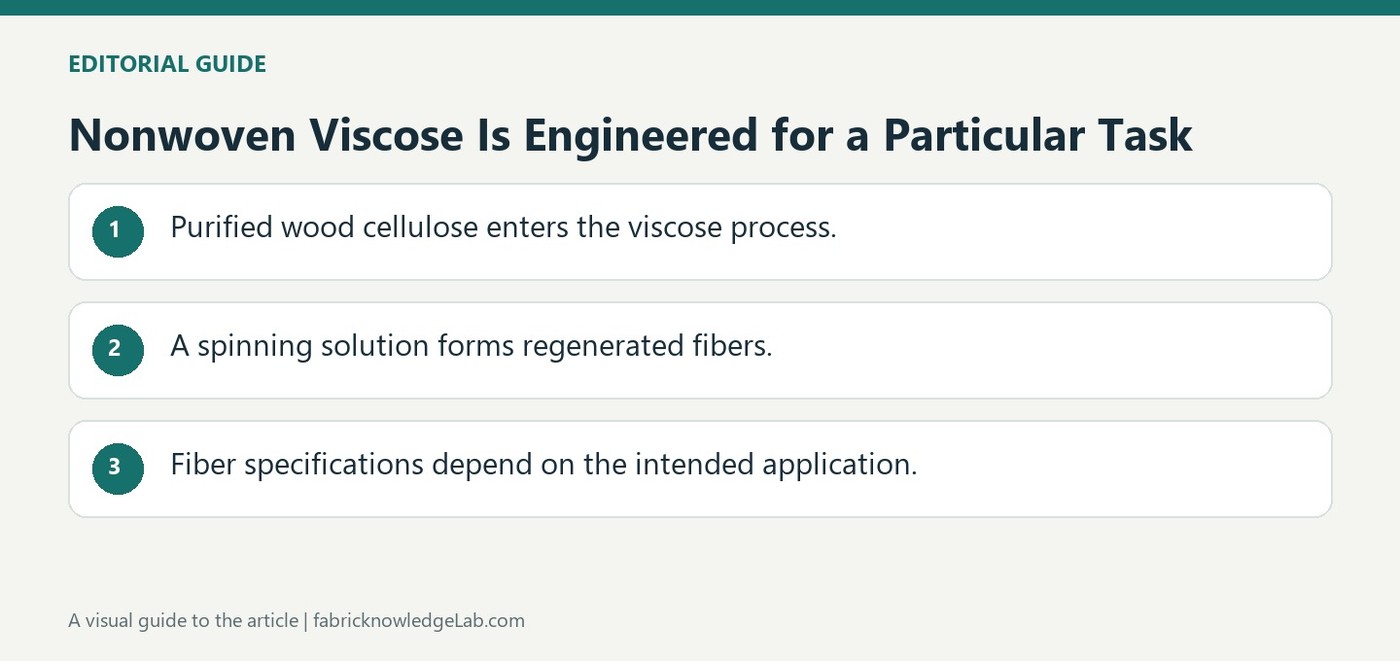
A fiber offering for nonwoven products
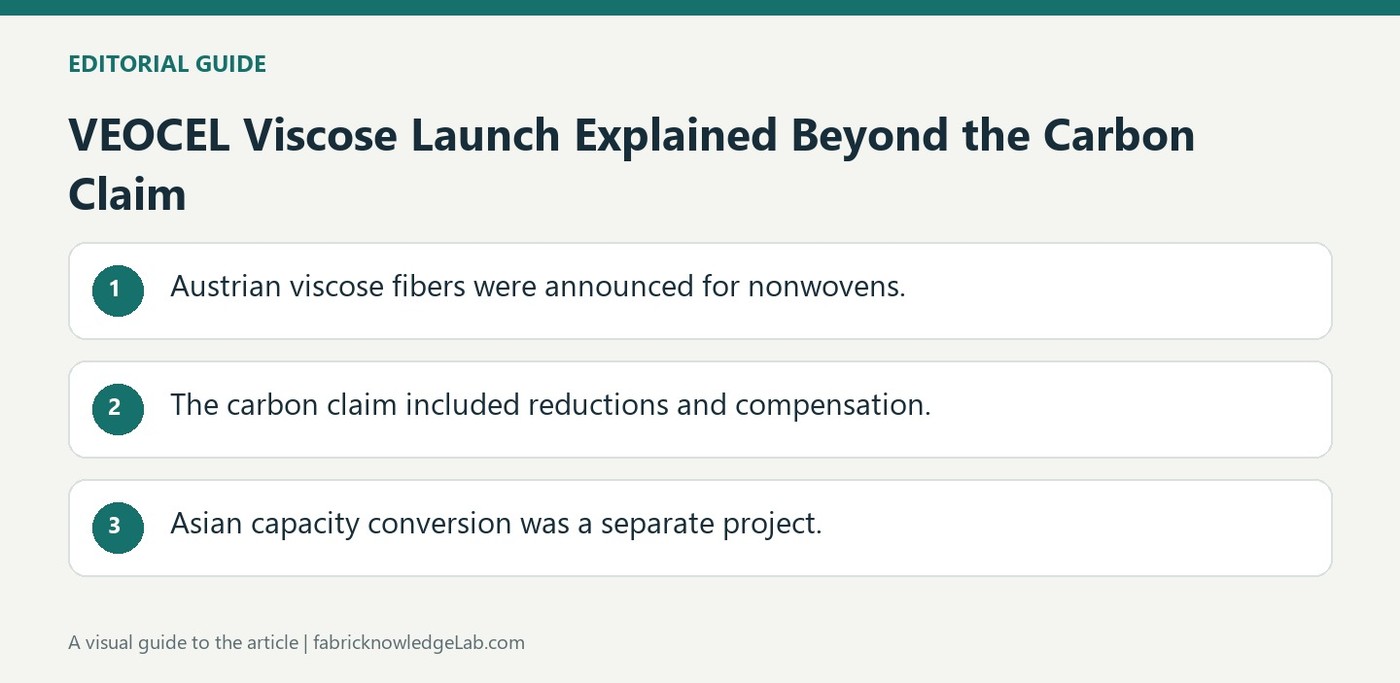
Lenzing presents its branded viscose as a wood-based fiber developed for engineered nonwoven applications. This is a more specific description than assuming that every viscose product is an apparel fabric woven from yarn. The page emphasizes tailoring fiber quality to the intended product and using the material either alone or as a blending partner. A nonwoven developer therefore needs to consider the fiber specification and the complete product construction. The raw material name alone does not identify how fibers will be assembled or what performance the final article must provide.
Moisture handling and blending are design choices
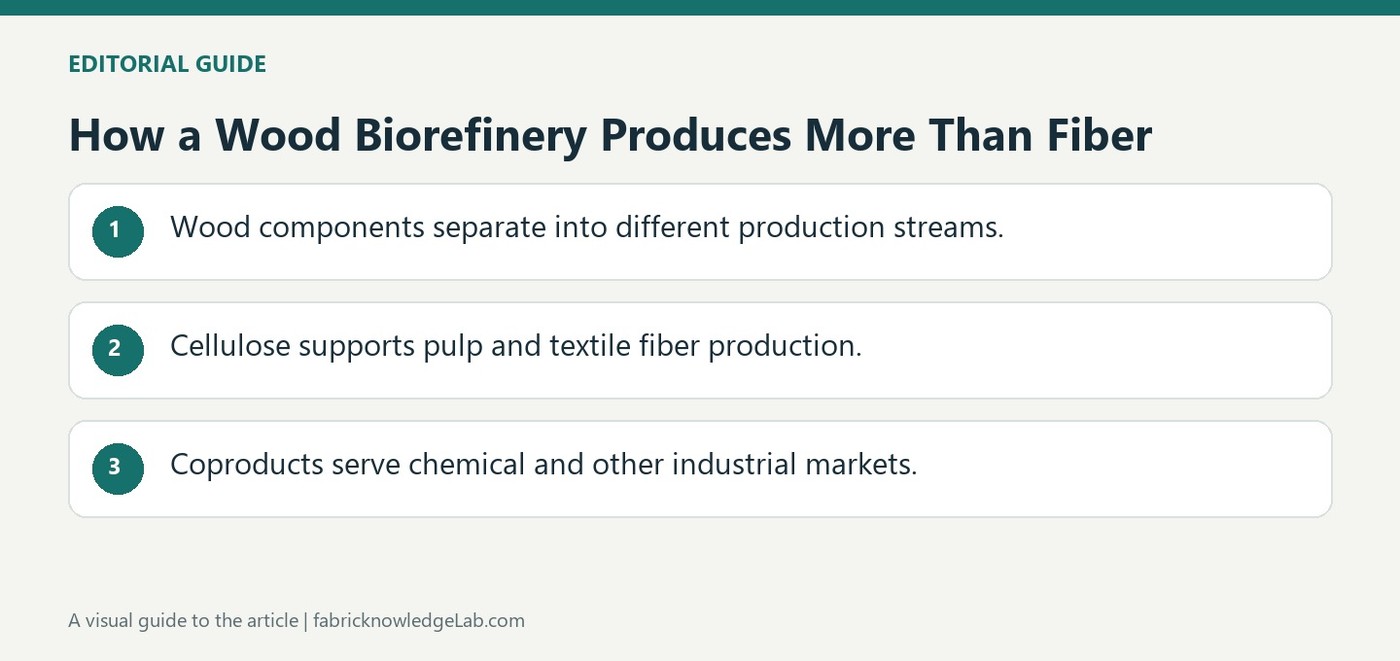
The manufacturer associates the fiber with a uniform distribution of absorbed moisture. It also identifies cotton, polyester, polyamide, and glass among possible blending partners. These combinations show why a nonwoven's behavior cannot be inferred solely from the presence of viscose. Other fibers and the way the product is engineered can change strength, structure, and functionality. Lenzing describes recovery of production co-products as part of its resource-use approach, linking fiber manufacture with additional applications for material from the process rather than treating wood input as the only relevant production detail.

Environmental claims have defined boundaries
The page identifies certified or controlled wood and pulp sources and discusses biodegradability and compostability under specified conditions. Its footnotes restrict those claims to the relevant fiber ranges and test environments and note geographic limitations on how some claims apply. It also distinguishes production-stage assessment from a complete finished-product life cycle. Report those boundaries rather than turning a certified fiber statement into an unrestricted guarantee for every nonwoven blend. A final product containing additional fibers, finishes, or other components needs its own clear description of composition and appropriate end-of-life options.
A nonwoven product starts with an engineered fiber choice
The LENZING Viscose page addresses nonwoven applications, making the fiber a component in a larger engineered product. It highlights moisture management and the ability to tailor fiber quality for a task. These are more specific ideas than treating viscose as the name of one ready-made garment cloth. A nonwoven developer can select fibers and combinations to serve a particular function, so the finished structure still needs its own description. When evaluating a product, distinguish the branded fiber from the assembled material containing it. The raw material can contribute useful properties without determining every feature of the final sheet, composite or other engineered article on its own.
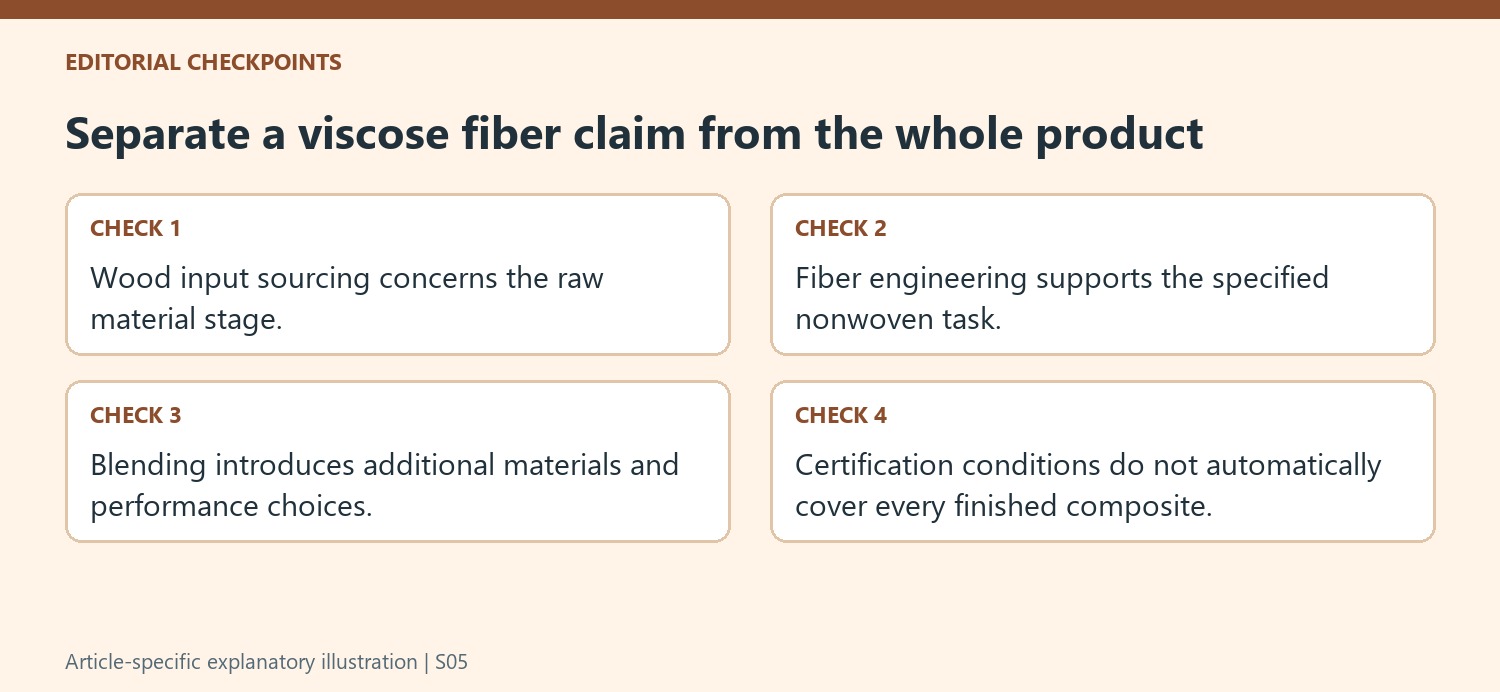
Blending extends the specification beyond viscose
The source lists cotton, polyester, polyamide and glass among possible blending partners. These materials can bring different characteristics to an engineered construction, which explains the emphasis on a defined performance target. The list does not imply that every blend is appropriate for every use or shares the same disposal route. Identify the actual combination before transferring a claim about viscose fiber to the complete product. The same distinction applies to moisture distribution. The guide describes a characteristic of its fiber, while the final product also depends on the proportion and arrangement of other components. A useful technical description therefore names the fibers, the intended task and the finished structure rather than relying on one familiar ingredient.
Certification wording identifies conditions rather than a universal outcome
Lenzing discusses biodegradability and compostability with defined environments, certification conditions and regional qualifications. Those details are part of the claim, not optional footnotes to be removed when describing a product. A result for a specified fiber does not automatically certify a composite containing different materials, coatings or binders. Likewise, responsible wood sourcing addresses the input supply, while production emissions and end-of-life behavior concern different stages. The page also describes recovery of process co-products, which is another production feature with its own scope. Read each statement at the stage it actually covers. This gives a clearer understanding of the material's documented attributes while avoiding an unsupported conclusion that every finished article containing the fiber has one identical environmental profile.





Comments
0