 FabricKnowledge Lab
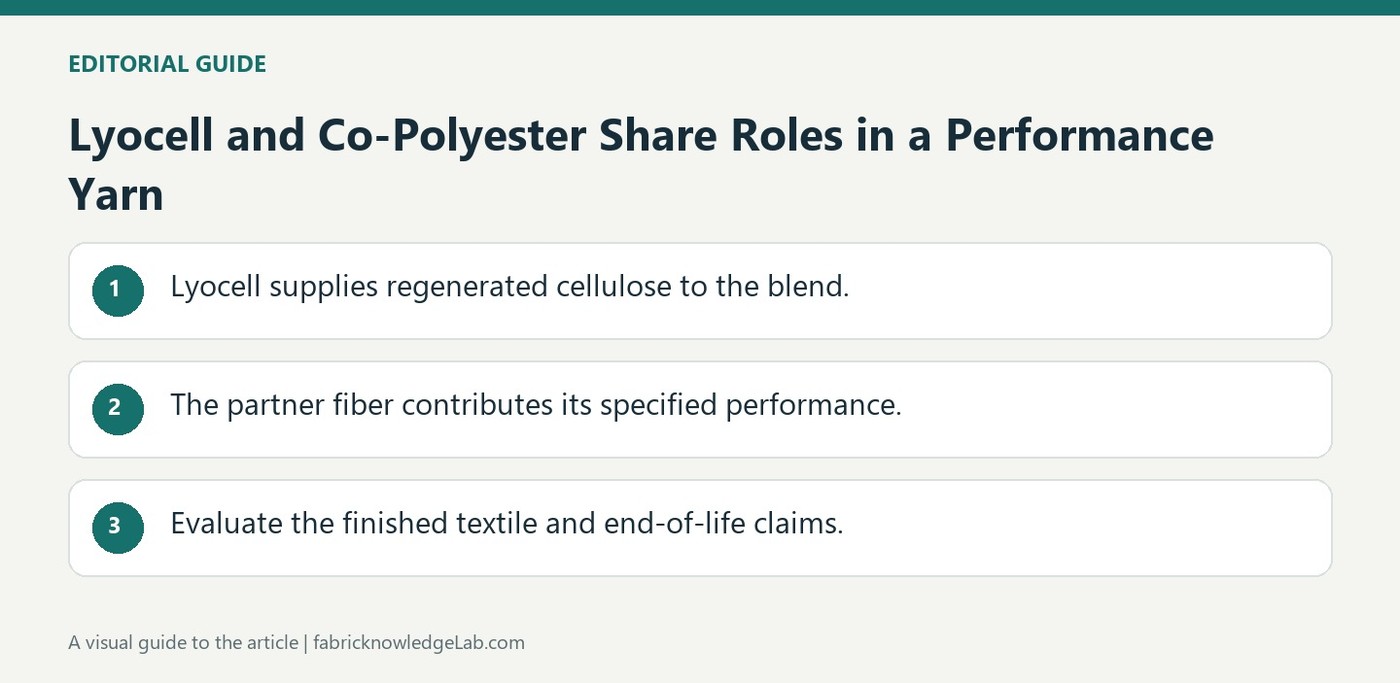
The partnership combines two fiber technologies
Lenzing's announcement describes a yarn combining TENCEL Lyocell A100 with OceanSafe's naNea co-polyester. The materials have different roles rather than being two names for the same fiber. The lyocell component is wood-based and made through Lenzing's described closed-loop process, while the co-polyester supplies another set of performance attributes. The announcement presents the combination as an alternative for active and everyday clothing. It does not imply that all lyocell blends or every polyester-containing fabric share the same formulation or the same tested properties.
Comfort and durability claims need attribution
The companies associate the lyocell component with softness and moisture control and the co-polyester with tear strength, endurance, and quick drying. These are claims in the partnership announcement, not the results of a comparison conducted for this article. The release also discusses biodegradability and recyclability with qualifications and referenced conditions. Those terms should not be shortened into a promise that a finished garment can be discarded anywhere without consequence. Fiber claims, blend construction, available collection systems, and the conditions covered by a test remain distinct parts of the product's environmental story.
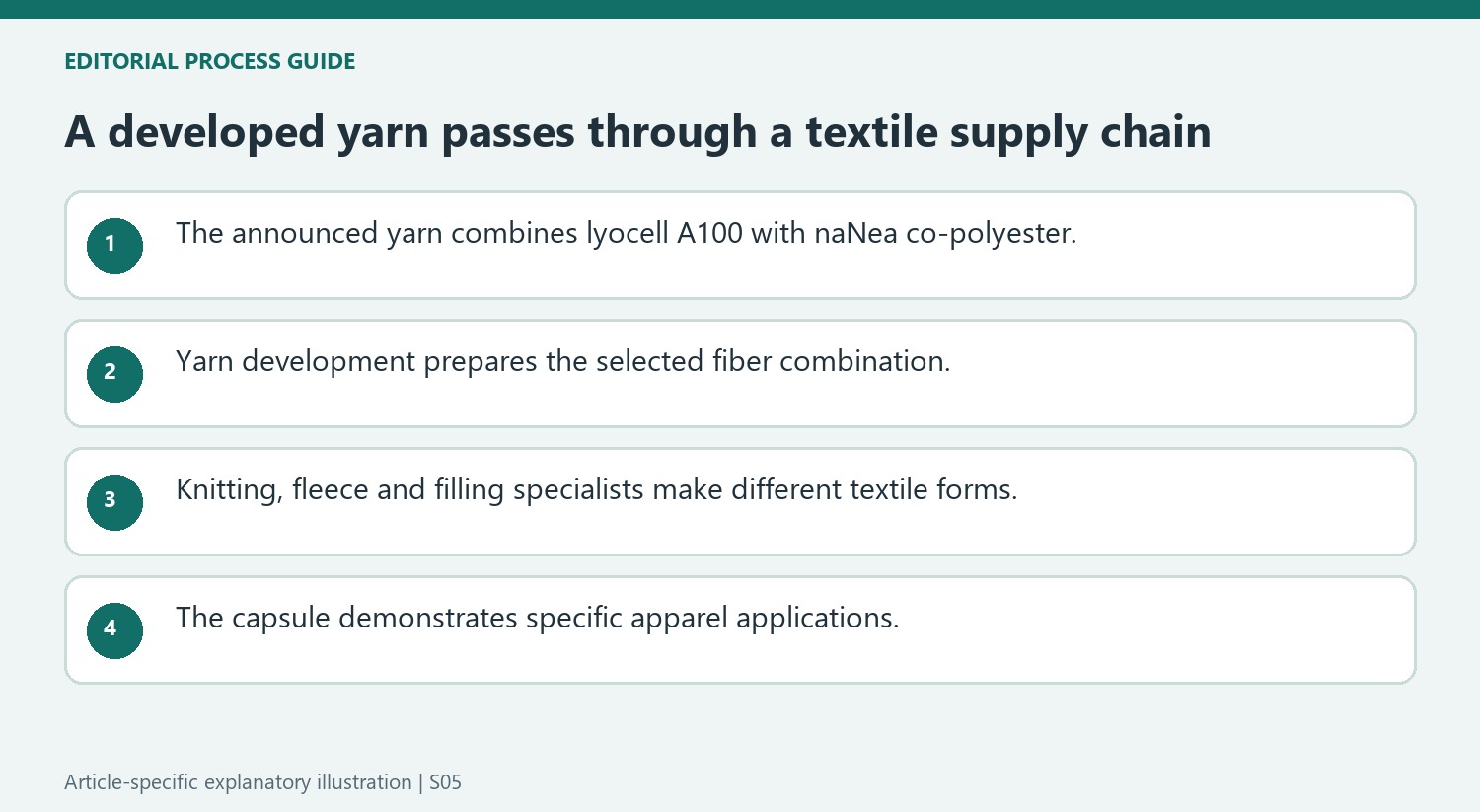
A capsule collection demonstrates intended applications
The announced collection includes women's yoga wear, men's athleisure T-shirts, and fleece jackets. Lenzing identifies contributions from Tearfil for yarn development, Impetus for knitted and seamless fabrics, Kingwhale for fleece, and G-LOFT for jacket filling technology. These examples show how multiple production stages contribute to the final clothing rather than attributing every feature to a single fiber alone. The companies also discuss potential uses in footwear, bags, home textiles, and technical applications. Treat those as development possibilities alongside the demonstrated collection, and check the actual product specification before assuming that every suggested application is already a finished commercial garment.
The collaboration assigns different roles to two fibers
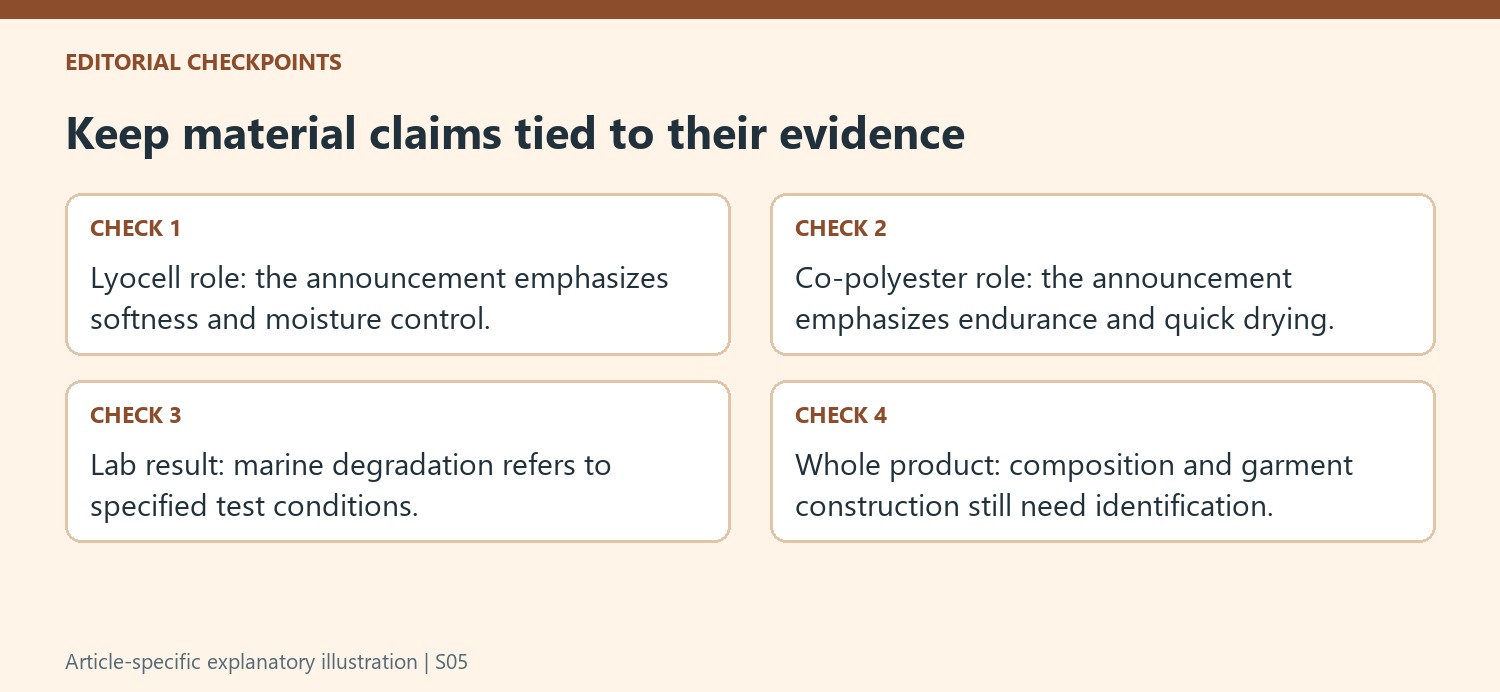
Lenzing's announcement combines TENCEL Lyocell A100 with OceanSafe's naNea co-polyester, rather than presenting one fiber as a complete replacement for every role in the yarn. The source associates the lyocell with softness and moisture control and the co-polyester with durability and quick drying. Those are the partners' descriptions of the developed combination. A complete product still needs its actual blend and textile construction specified. This is important because the announcement spans several proposed applications, from sportswear to household and technical textiles. A shared yarn platform does not imply that each application uses the same fabric or that every possible blend has already been demonstrated in a finished product.
The capsule involved several manufacturing specialties
The announcement names Tearfil for yarn development, Impetus for knits and seamless fabrics, Kingwhale for fleece and G-LOFT for jacket filling. These contributions show that the demonstrated clothing range relied on a wider production chain. The women's yoga wear, men's athleisure shirts and fleece jackets were not simply identical cloth cut into different shapes. Different textile roles required different development work. That makes the collaboration useful as a case study in connecting a new fiber combination with usable garments. It also sets a limit on the inference: the capsule shows specific examples described by the partners, not an independent test of every claim for every future product that might adopt the same branded materials.
Laboratory and lifecycle conditions remain essential
The announcement's marine-biodegradation statement cites a particular laboratory method and a measured result over a stated period. That evidence should stay tied to the tested material and conditions, rather than becoming permission to discard clothing into water or a guarantee that a whole garment disappears everywhere at the same rate. Its production figures for lyocell also use defined comparison boundaries and reference materials. Those are different questions from the durability of a shirt in use. Read each claim with its scope intact, including which fiber, process or product it concerns. This preserves the significance of the reported development without treating certification language, laboratory results and everyday garment performance as interchangeable proof of one broad environmental outcome.



Comments
0