 FabricKnowledge Lab

Fineness is the starting distinction
Microfiber refers to very fine fibers rather than a single woven pattern or one chemical material. Sewport discusses combinations of polyester and polyamide, along with other synthetic possibilities. The fine scale contributes to the soft surfaces associated with many microfiber products, but the name does not guarantee one identical hand or performance. A cleaning cloth and a piece of upholstery can both be called microfiber while having different fiber arrangements, density, and finishes. Read the specific product description before assuming that all textiles carrying the term are interchangeable.
Fiber structure supports particular jobs
The source describes polyester and polyamide working together in cleaning-oriented microfiber constructions. Different components contribute structure and absorbency, while the fine fibers provide extensive contact with a surface. That helps explain the popularity of microfiber cleaning cloths without making every microfiber fabric a disinfectant or a substitute for an appropriate cleaning process. Product construction and use still matter. A smooth apparel fabric and a cloth designed to trap soil do not become the same tool simply because their fibers are described with the same fineness-related word.
Applications extend beyond cleaning
Sewport lists towels, sheets, pillowcases, upholstery, rugs, blankets, clothing, and industrial filtration among microfiber applications. Each use emphasizes a different combination of softness, absorbency, surface behavior, and durability. This range is a reason to compare the actual textile rather than infer a universal property from the label. Check composition, construction, and the manufacturer's care instructions for the particular item. The guide also discusses environmental concerns associated with synthetic fibers, so a fine, soft surface should not be interpreted as evidence of a natural origin or as proof that the product has no shedding or end-of-life impacts.
Fine fibers can be organized for very different tasks
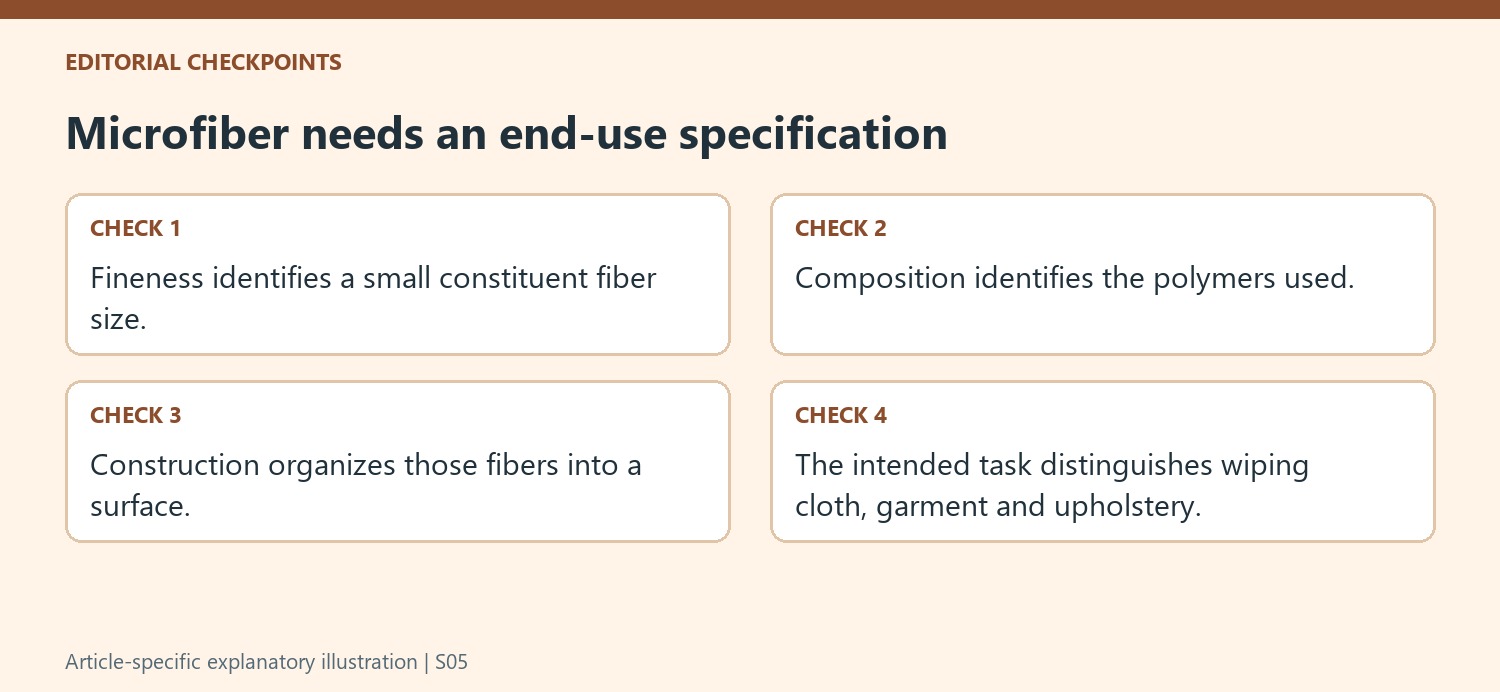
The microfiber guide emphasizes the small size of the constituent fibers, but its examples include cleaning cloths, clothing, upholstery and imitation suede. That range shows why fineness alone is not an end-use specification. A maker still selects the fiber materials and the way they are assembled into a textile. A soft cleaning cloth and a structured accessory can both use very fine fibers while asking them to perform different jobs. When comparing microfiber products, begin with the actual category and composition rather than assuming that the name establishes a universal surface. This is particularly useful where a seller emphasizes softness without explaining whether the item is intended to absorb, wipe, cushion or form part of a garment.
Cleaning behavior depends on more than a small diameter
The source discusses polyester and polyamide combinations and describes how different parts of a fiber system contribute to cleaning and moisture handling. These explanations concern an engineered textile, not the claim that every cloth containing polyester cleans in the same way. The fiber arrangement and finished surface matter alongside composition. A product intended for wiping should be evaluated under its own use and care instructions, including the type of surface it is meant to contact. Do not transfer a cleaning-cloth claim automatically to microfiber bedding or apparel. Shared fiber fineness does not establish the same absorbency, abrasion behavior or suitability for every material a user might want to clean.
The product name and shed fibers are different concepts
Sewport distinguishes microfiber as a textile category from the broader environmental discussion of fibers released from textiles. That distinction prevents a name from doing more explanatory work than it should. A product marketed as microfiber can contribute to fiber shedding, but other fabric categories can also release small fibers. Conversely, a cleaning-cloth label does not supply a measurement of emissions over the product's life. Any environmental comparison needs the materials, construction and conditions being assessed. For purchasing decisions, keep those questions beside the practical specification rather than substituting one for the other. The most useful description identifies what the product is made from, how its surface is intended to work and what evidence supports additional performance or environmental claims.





Comments
0