 FabricKnowledge Lab
The fiber family is broader than one cloth
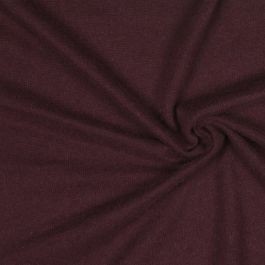
Polyester describes a polymer-based fiber family, with PET widely used in textiles. Sewport identifies applications ranging from clothing and upholstery to filling materials and rope. This variety matters when comparing garments: a polyester label identifies material content, not one inevitable texture or fabric structure. A smooth lining, a brushed fleece, and a blended shirt can all contain polyester without sharing the same weight or surface. The way the fiber is produced and organized into yarn and fabric helps determine the qualities a user actually experiences.
Filament and staple forms serve different purposes
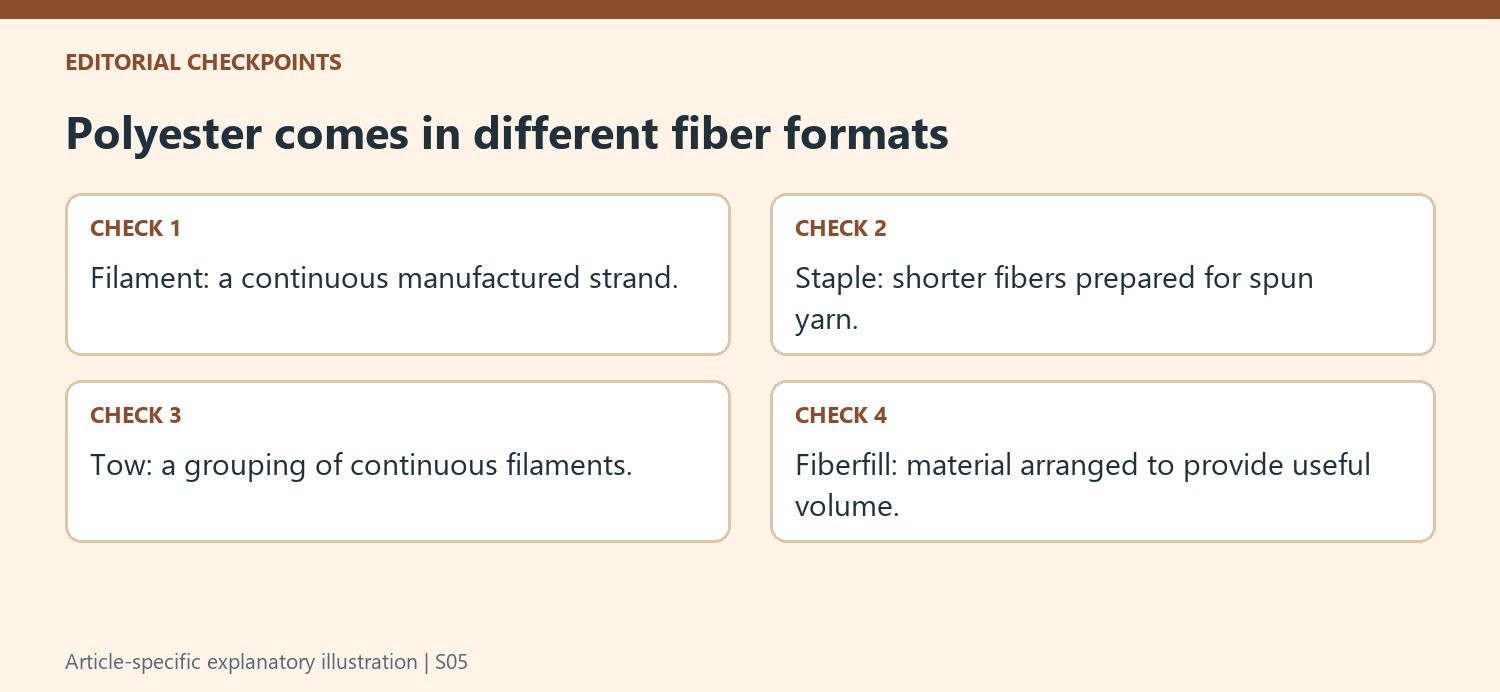
The source distinguishes continuous filament, cut staple, tow, and fiberfill forms. Continuous filaments can support a smooth yarn, while cut fibers can be prepared and spun in a way resembling other staple-fiber yarns. Fiberfill is intended to provide bulk in products such as pillows and padded clothing. Polymer is melted and extruded through a spinneret to create fiber, with further processing chosen for the intended form. These distinctions explain why the raw chemical name cannot alone predict whether the finished product will be a fine fabric, a substantial textile, or a loose insulating filling.

Blending changes the finished product specification
Sewport discusses polyester blended with cotton and other fibers, associating those combinations with changes in durability, shrinkage behavior, and wrinkling. The percentage and construction are therefore important alongside the presence of polyester. A small amount in a blend is not the same specification as an all-polyester textile. The guide also notes the material's response to high heat, so product-specific care instructions matter. Compare the intended use, fabric structure, and full composition rather than treating a general fiber label as proof that every polyester item has identical comfort, moisture behavior, or maintenance needs.
Filament and staple are different fiber formats
The polyester guide distinguishes continuous filament from staple fiber and also discusses tow and fiberfill. These terms concern the form in which the manufactured fiber is supplied, rather than names for four identical finished fabrics. A continuous strand can be used in yarns with a different appearance from yarn spun from shorter staple material. Fiberfill is selected for volume in products such as pillows and insulated items, not simply woven into the same surface as a smooth clothing textile. Following these distinctions helps explain polyester's unusually wide application list. The polymer name is only the beginning; the fiber format and subsequent textile construction determine how that material is presented in a product.
The spinneret does not complete the whole textile
Sewport describes preparing polymer material and extruding it through a spinneret to form fibers. Further operations prepare those fibers for their intended format and use before fabric manufacture. This separates chemical production, fiber formation and textile construction into distinct stages. A garment label saying polyester does not reveal each of them. When comparing a smooth lining, a fleece and a bulky filling, identify the actual function of the polyester in each case. Their surfaces differ because the material has been organized for different jobs, not because one broad fiber name requires every product to have the same appearance, warmth or handling. The source's variety of examples is best understood through that manufacturing flexibility.
A blend percentage needs a construction beside it
The guide discusses combining polyester with cotton and other materials. A blend introduces more than one fiber into the specification, but the percentage still does not identify the weave, knit or finishing. Two garments with similar composition numbers can therefore behave differently. Compare like-for-like products and read any stated construction or weight alongside the percentages. The source also discusses environmental questions around common polyester production and persistence. Those concerns should be attached to the actual material and claim, rather than assuming that a plant-derived input automatically establishes biodegradability for every polyester product. Likewise, laundering and pressing depend on the finished item's requirements. The useful decision combines fiber identity with format, structure, intended function and care instead of making one polymer label answer all of those questions.




Comments
0