 FabricKnowledge Lab
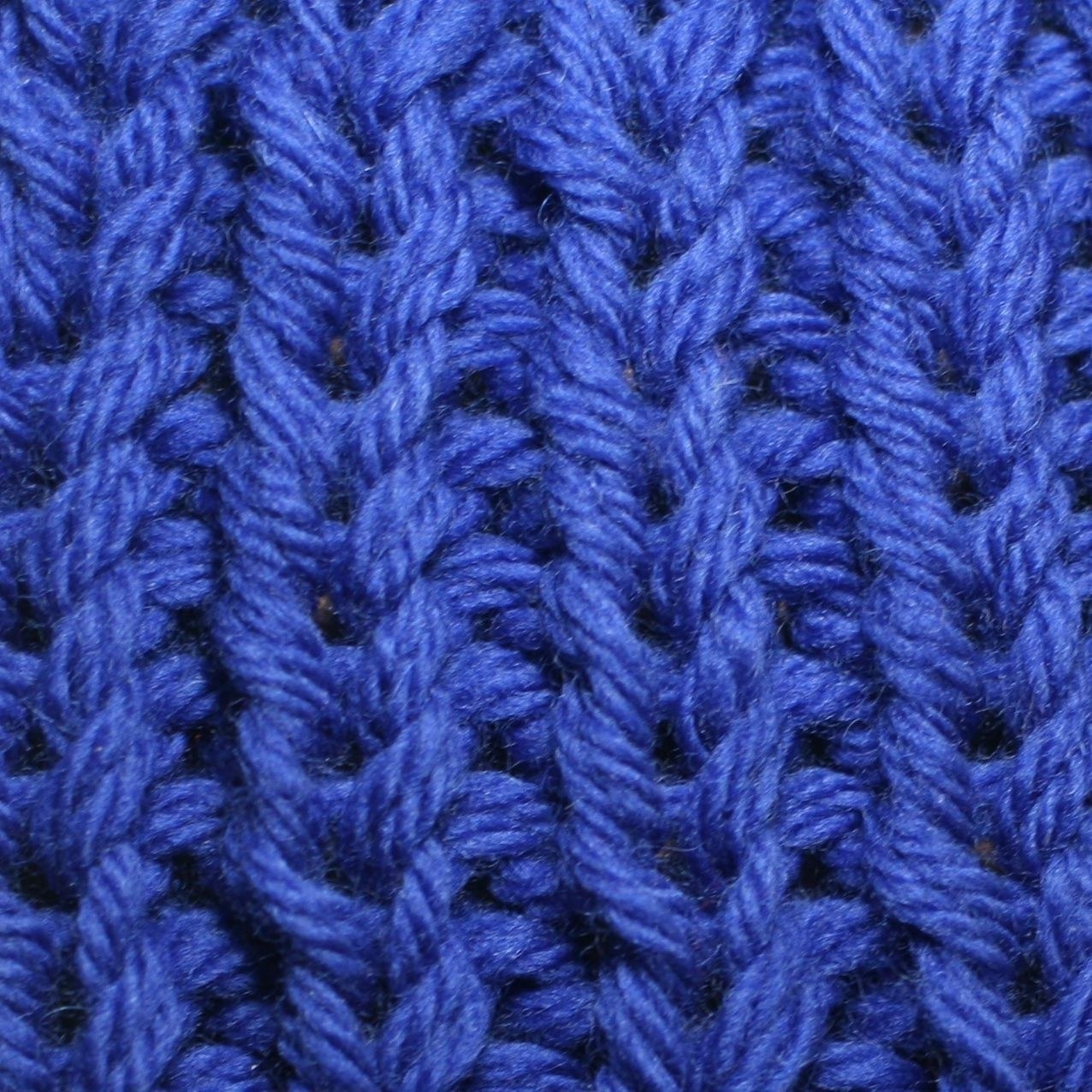
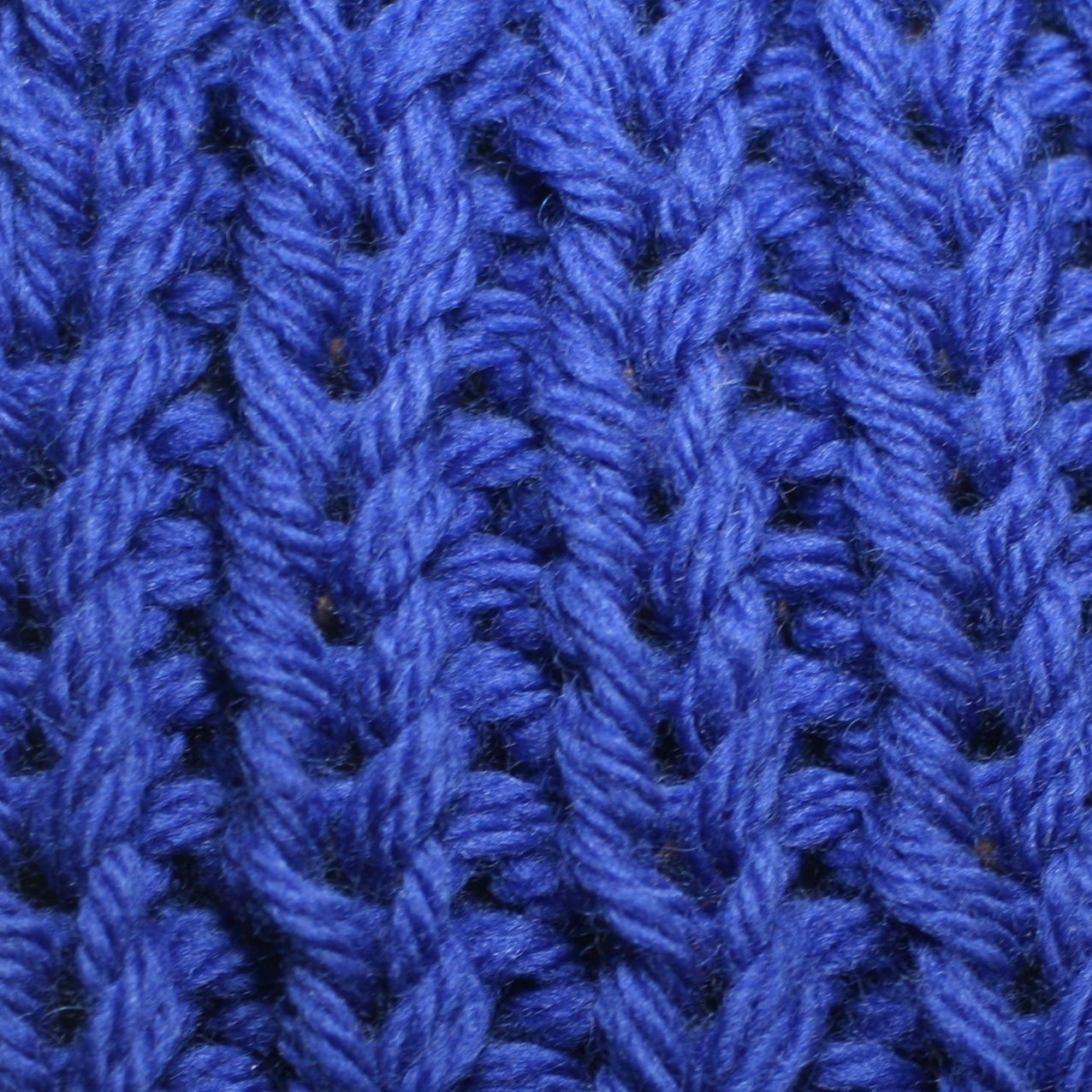
Alternating stitch columns create the ribs
Rib fabric uses vertical columns of stockinette stitch alongside columns of reverse stockinette stitch. In knitting terminology, these columns are wales. Their alternating knit and purl surfaces create the ridges and channels visible in ribbing. The notation describes the repeated stitch counts: a 1 x 1 rib alternates one knit stitch with one purl stitch, while a 2 x 2 rib groups two of each. Equal numbers are common, although other arrangements are possible. Balanced ribbing looks alike on both sides and avoids the curling tendency associated with plain stockinette.
Why ribbing suits cuffs and hems
The structure contracts across its width as the purl columns recede and the knit columns stand forward. This pleated behavior helps explain why ribbing is frequently chosen for sweater hems, cuffs, and other edges intended to fit close to the body. The number of knit-to-purl transitions also matters: the reference describes 1 x 1 ribbing as more elastic than 2 x 2 ribbing. These structural observations do not provide a universal stretch percentage for every rib fabric. When evaluating a sample, identify its stitch arrangement instead of treating every ridged knitted surface as interchangeable.




Comments
0